

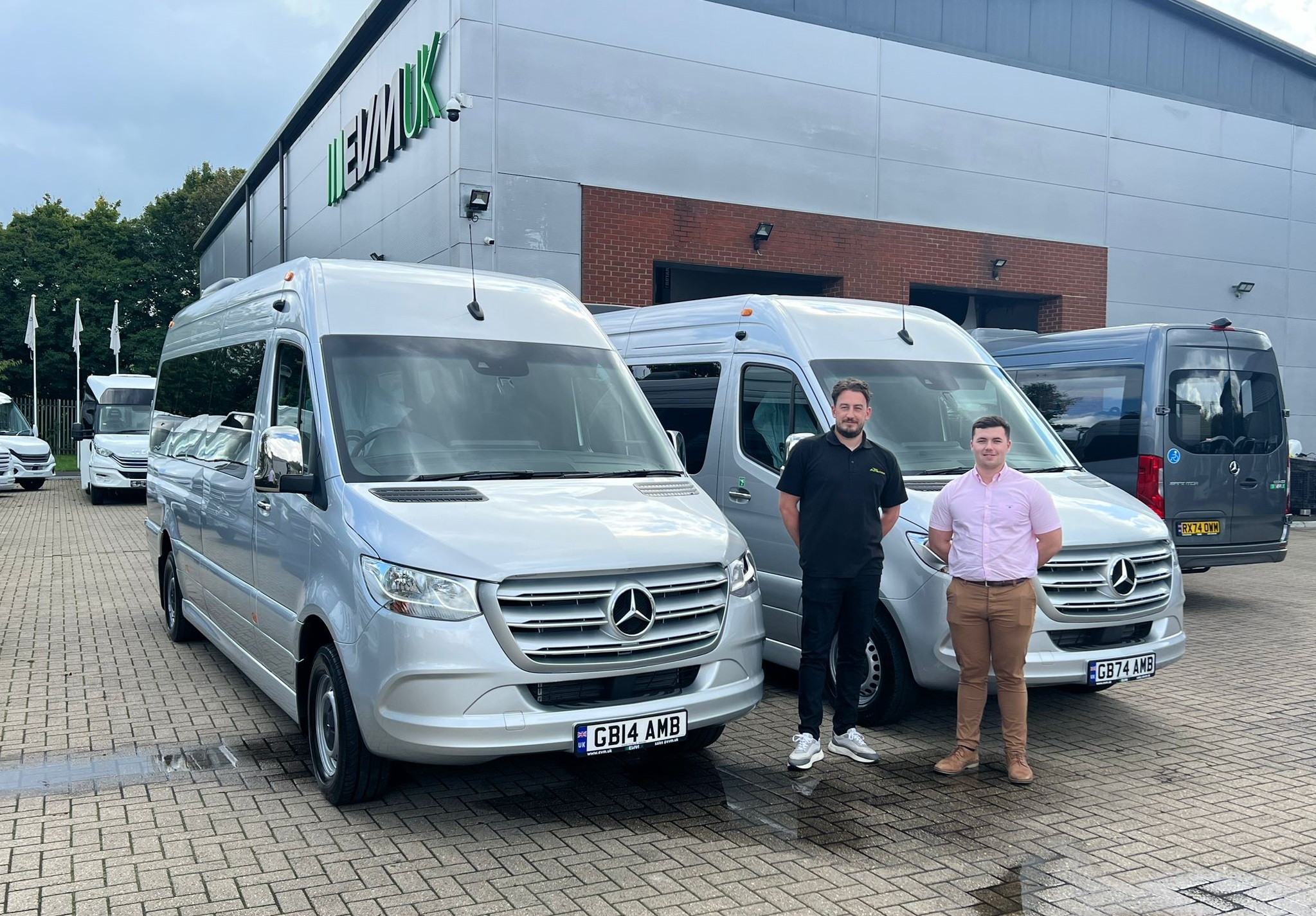
AMb Travel adds two EVM Elegance minicoach conversions
AMb Travel of Ashford in Kent has added a pair of Mercedes-Benz Sprinters with Elegance conversions to its fleet, supplied by EVM. Both carry 16 passengers, with seats having recline, three-point belts, aisle-side folding armrests, and artificial leather upholstery.
Above are luggage racks with passenger service units on the undersides. The minicoaches are also equipped with decorative curtains including tiebacks. USB charging points are provided at each row.
A Webasto roof-mounted 13.4kW air-conditioning unit is fitted and side windows are panoramic and double-glazed.
The OEM hinged entry door is retained, behind which EVM has fitted a three-stage step with LED strip lights and stainless-steel inserts. The Mercedes-Benz rear doors are also kept, but a towbar and trailer light socket have been added.
The driver gets a reversing camera with a seven-inch touch-screen display, and a Bosch PA system.
EVM side skirts are fitted along with a chrome pack. The Sprinter 417CDi base vehicle has been used for both AMb Travel deliveries, with drive taken via a nine-speed 9G-Tronic automatic gearbox. External colour is Mercedes-Benz iridium silver.
[adrotate banner="44"]

RoadPump Eco showing at Euro Bus Expo 2024
Leading global bus pump manufacturer, Vogelsang, is pleased to showcase its popular products for the first time at this year’s Euro Bus Expo.
The RoadPump Eco will be demonstrated by the Vogelsang team on stand 113, alongside the CollectingMax trolley and BusPlug.
“This is our first time at Euro Bus Expo, and we’re pleased to be demonstrating our RoadPump to visitors,” says Richard Love, Sales Manager at Vogelsang. “The RoadPump is becoming increasingly popular with bus and coach companies whose operators are looking for a clean and easy way to empty their vehicles’ toilet waste, so we’ve designed the RoadPump to be as user friendly as possible.
“We’re finding that coach operators want more control over how their coach toilets are emptied. Many we speak to travel tens of miles to an emptying facility, or worse, get caught short and sometimes dispose of the waste down a public drain. This can be costly with the additional traveling, and of course, no one wants a fine for using public drains. TheRoadPump provides a fantastic solution to this problem.”
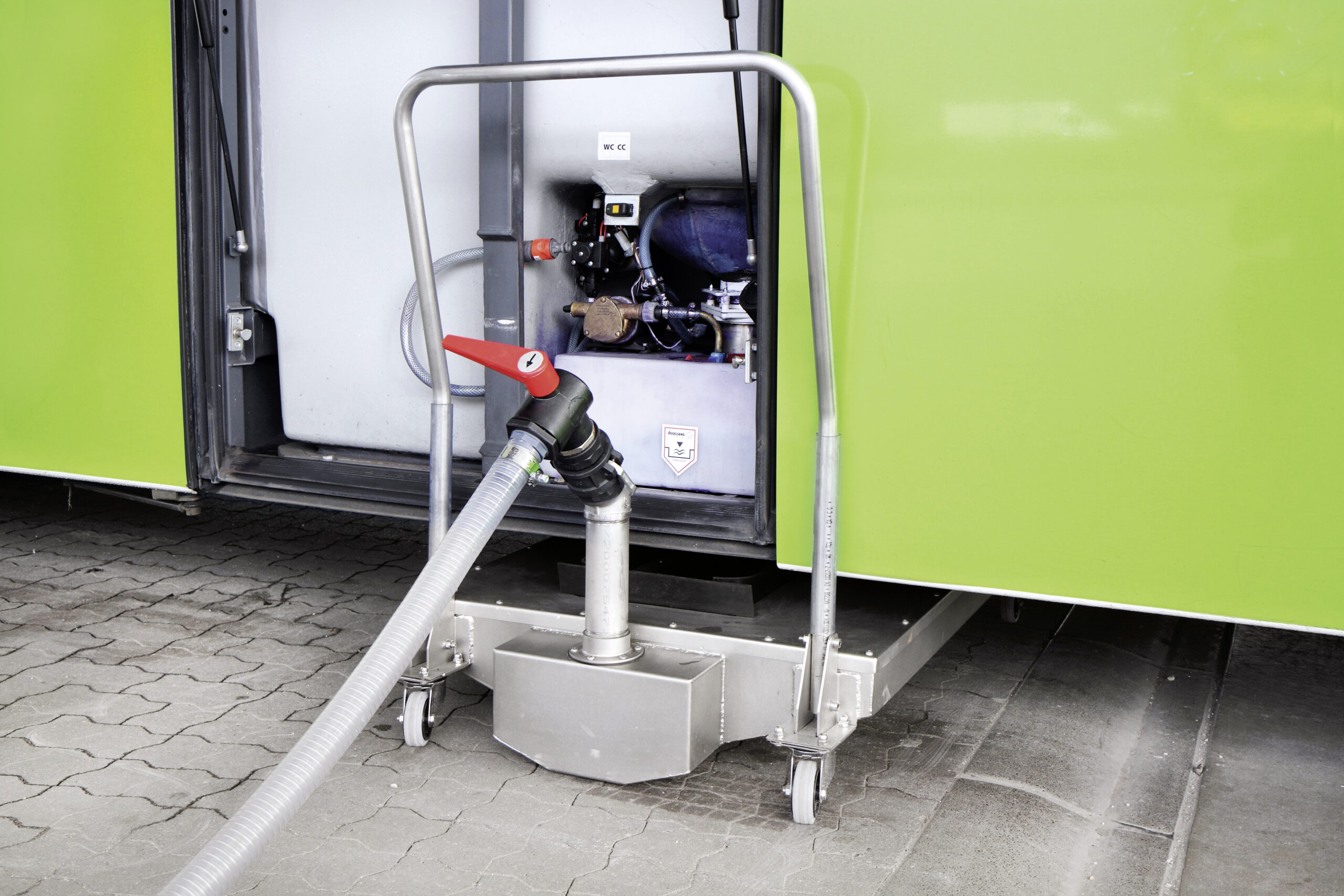
The RoadPump is a disposal and supply station for washroom and toilet wastewater, specifically designed for bus stations, bus depots or stopping places and rest stops.
It uses various collecting devices and its built-in pump system disposes wastewater safely and hygienically in the connected sewer system or collection tank. At the same
time, it supplies tap and drinking water.
The robust vacuum technology of the RoadPump and the intelligent design of the collection facilities prevent contamination of the road. To ensure a high level of user acceptance, the RoadPump has a simple structure. It can be operated without difficulty by any bus driver or station employee. At the heart of the RoadPump is the established rotary lobe pump technology.

Vogelsang – the market leader in the field of toilet wastewater disposal in passenger train coaches – has been using pumps in this design around the world for more than twenty years. They have an outstandingly compact type of construction, are very easy to maintain, and are extremely resistant to foreign matter. Toilet paper, pieces of fabric and other contamination that is commonly present in wastewater do not impair the rotary lobe pump’s operation.
RoadPump Eco:
The RoadPump Eco is a mobile, cost-effective alternative to the stationary emptying solutions. It can be used together with the CollectingMax or with a BusPlug, if it is already installed on the bus.
CollectingMax:
The CollectingMax consists of a large drip tray made of chrome-nickel steel and is quickly and easily connected to a RoadPump using a standardized camlock coupling. It fits therefore perfectly for all bus types.
BusPlug:
The BusPlug is made of plastic and aluminum and can be easily retrofitted. It is quickly and easily connected to the RoadPump using a standardized camlock coupling.
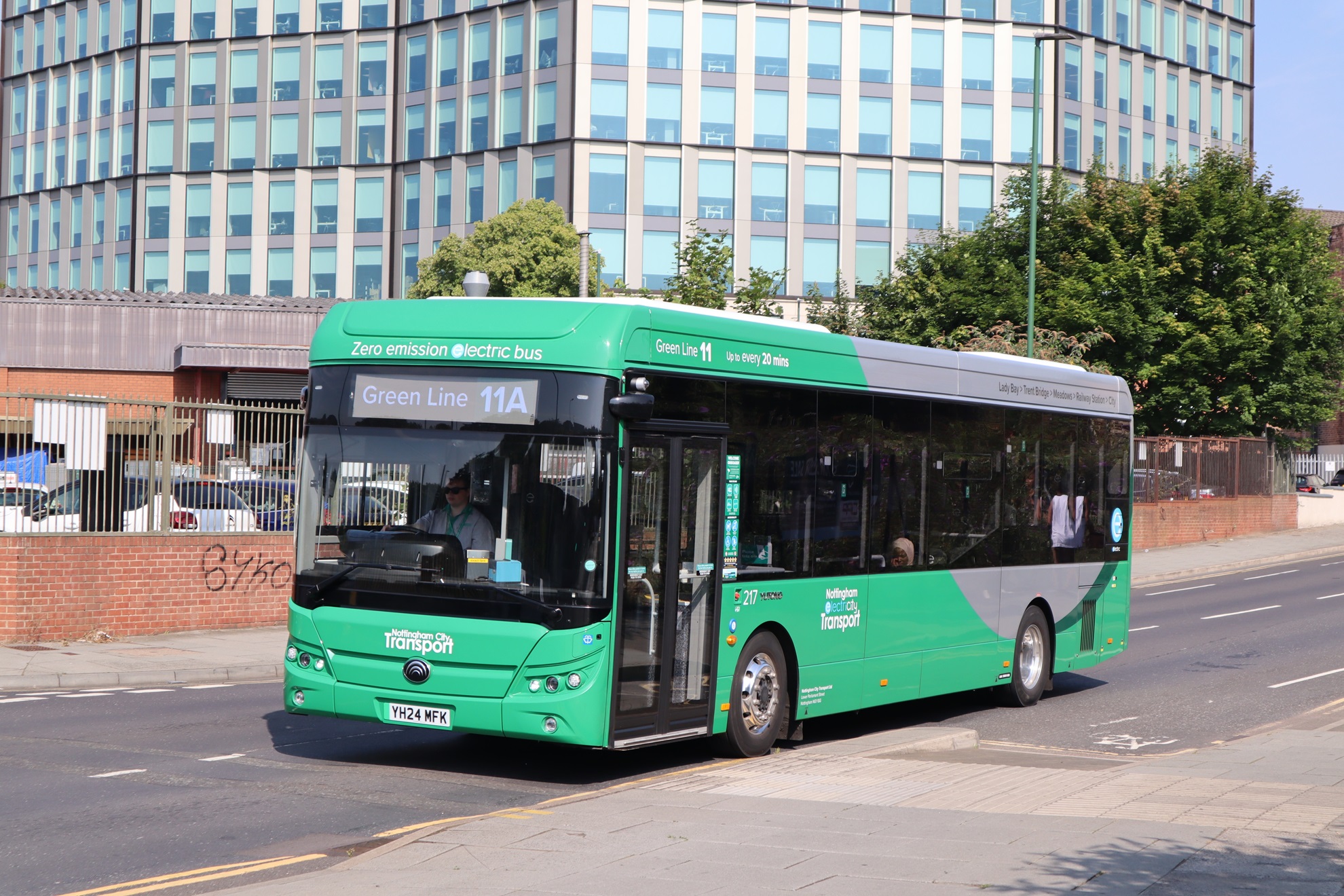
Nottingham City Transport electric bus shift: Time the critical factor
A need for comprehensive planning by coach and bus fleets embarking on the battery-electric shift has been illustrated by Nottingham City Transport (NCT), which is rolling out 62 such Yutong E10s and E12s at its Trent Bridge depot.
Trent Bridge is one of two operating centres for the municipal operator. It is walkable from the city centre, largely surrounded by housing, and will house all the Yutongs. Currently 24 are in service and performing well. The buses and their infrastructure are part-funded by the first round of the Zero Emission Bus Regional Areas (ZEBRA) scheme.
NCT’s larger depot at Parliament Street on the outskirts of the city centre will go electric eventually, but no concrete plans are yet in place.
The operator expects similar challenges there to Trent Bridge. Parliament Street is double-deck dominated, and NCT is yet to identify a battery-electric product in that sphere that suits its needs. For now, the focus is on single-deck rollout, with learnings taken into later stages.
Electric bus fleet at Trent Bridge represents full circle
Trent Bridge is a former tram and trolleybus depot. NCT Managing Director David Astill thus notes that work underway now represents completion of a circle back to electric power. The big change from trams and trolleybuses is the new fleet’s charging requirement.
“We did not initially expect a problem with bringing power in, but it turned out that there was insufficient grid capacity,” David explains. “That meant we needed a new connection from 1.5 miles away at a cost of £4 million. ZEBRA covered 75% of that, but we still had to find £1 million. The biggest issue for us has been unforeseen costs.”
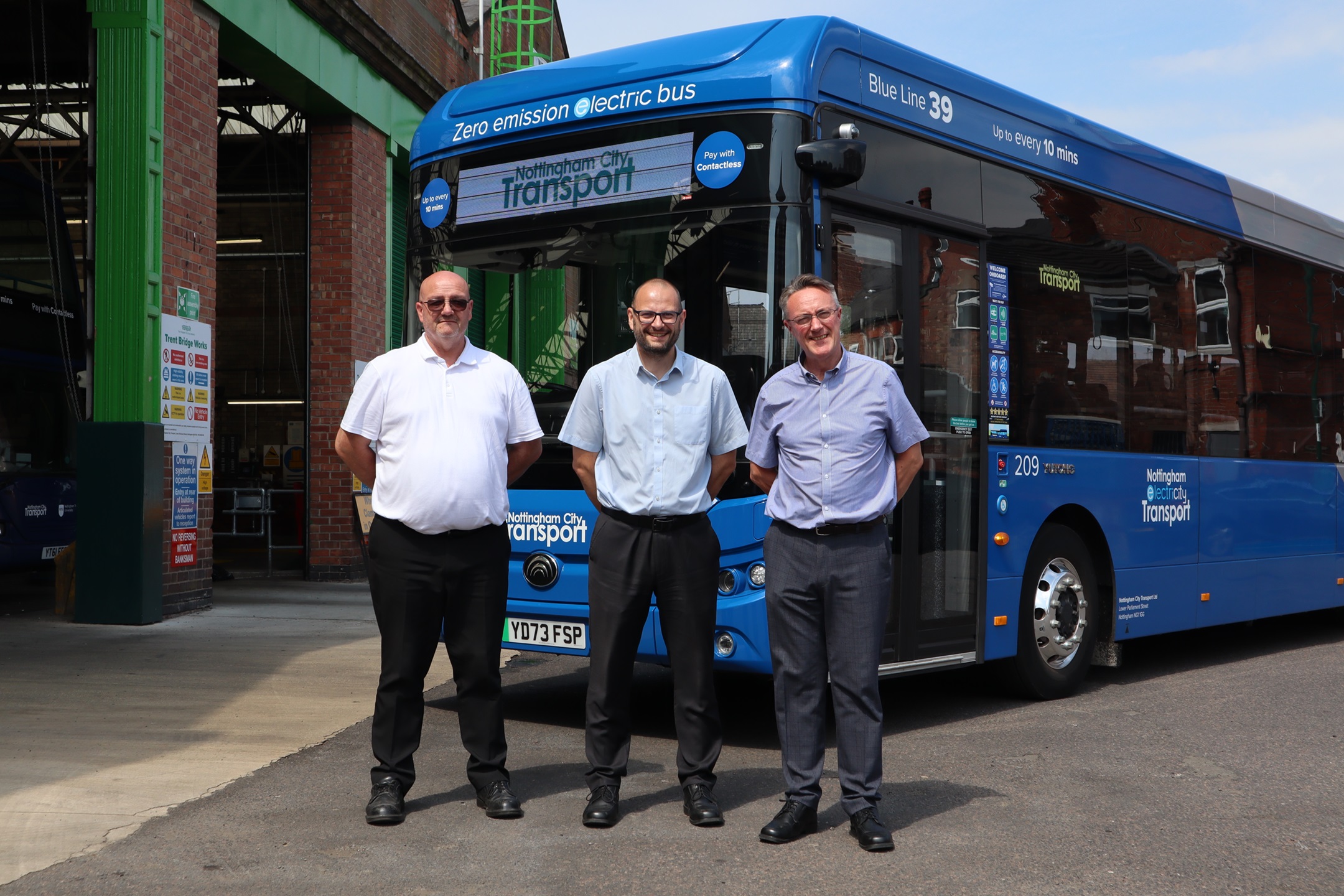
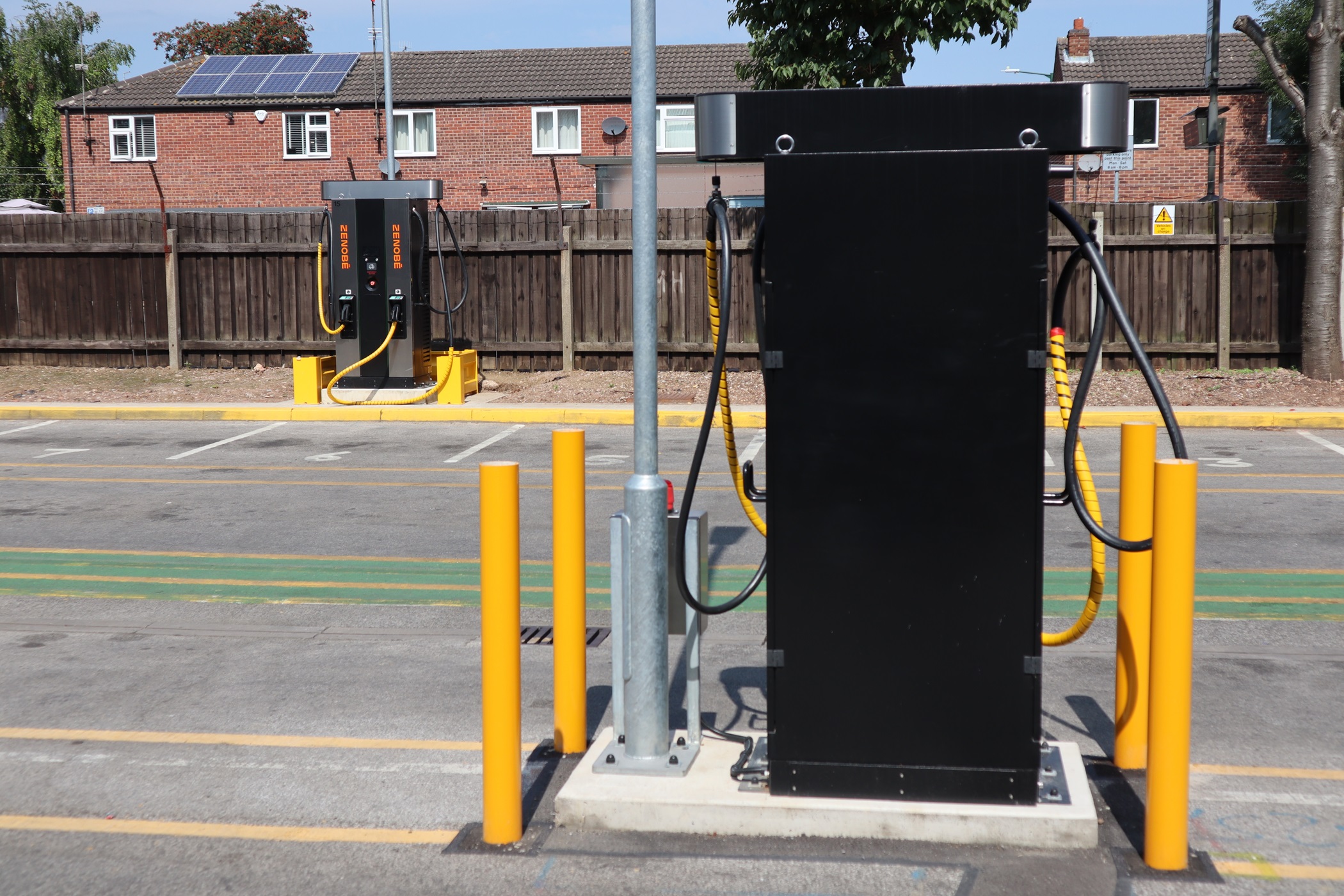
A substation is on site at Trent Bridge, and the power supply is futureproofed for subsequent buses. Zenobē handed infrastructure installation, starting in July 2023 and concluding early this year. Its responsibilities included dealing with the network operator.
Charging is undertaken at a maximum of 120kW per bus, with a ‘smart’ approach to flatten peak grid draw. All is done at night when electricity is at its cheapest, with NCT having negotiated with power suppliers to get the best rate. Although much of Trent Bridge is roofed, solar panels are absent because of the site’s Grade 2 listed status.
Such stresses lead to the question of why NCT did not seek to move to a location custom-built for battery-electric buses. David answers by explaining how finding suitable alternatives is impossible. “Now the infrastructure is in place, we are staying at Trent Bridge,” he adds.
Learning on electric continues for bus engineers in Nottingham
Deployment of the first vehicles has been successful. On day one, the only problem was a driver switching off regeneration, which had a noticeable influence on power consumption. It was identified via the monitoring platform and put right quickly.
Driving staff appreciate the battery-electrics’ smoothness and the Yutong cab ergonomics. NCT produced a handbook as part of vehicle familiarisation. David notes that it is important for staff – drivers and engineers – to receive the right training to adjust to a new technology, while launch of the buses in Old Market Square saw a driver on each vehicle to engage with the public.
From a behind-the-scenes perspective, battery-electric is also working well. Assistant Engineering Manager Kerry Cousins says that while training has been delivered by vehicle supplier Pelican Bus and Coach, learning among garage staff continues.
In July NCT carried out the first full traction battery discharge. That sees energy storage drained to its minimum before being recharged to 100%. It balances cells and maximises longevity. The operator will install a ‘pen’ at Trent Bridge to allow a bus to be segregated while work on electrical systems takes place.
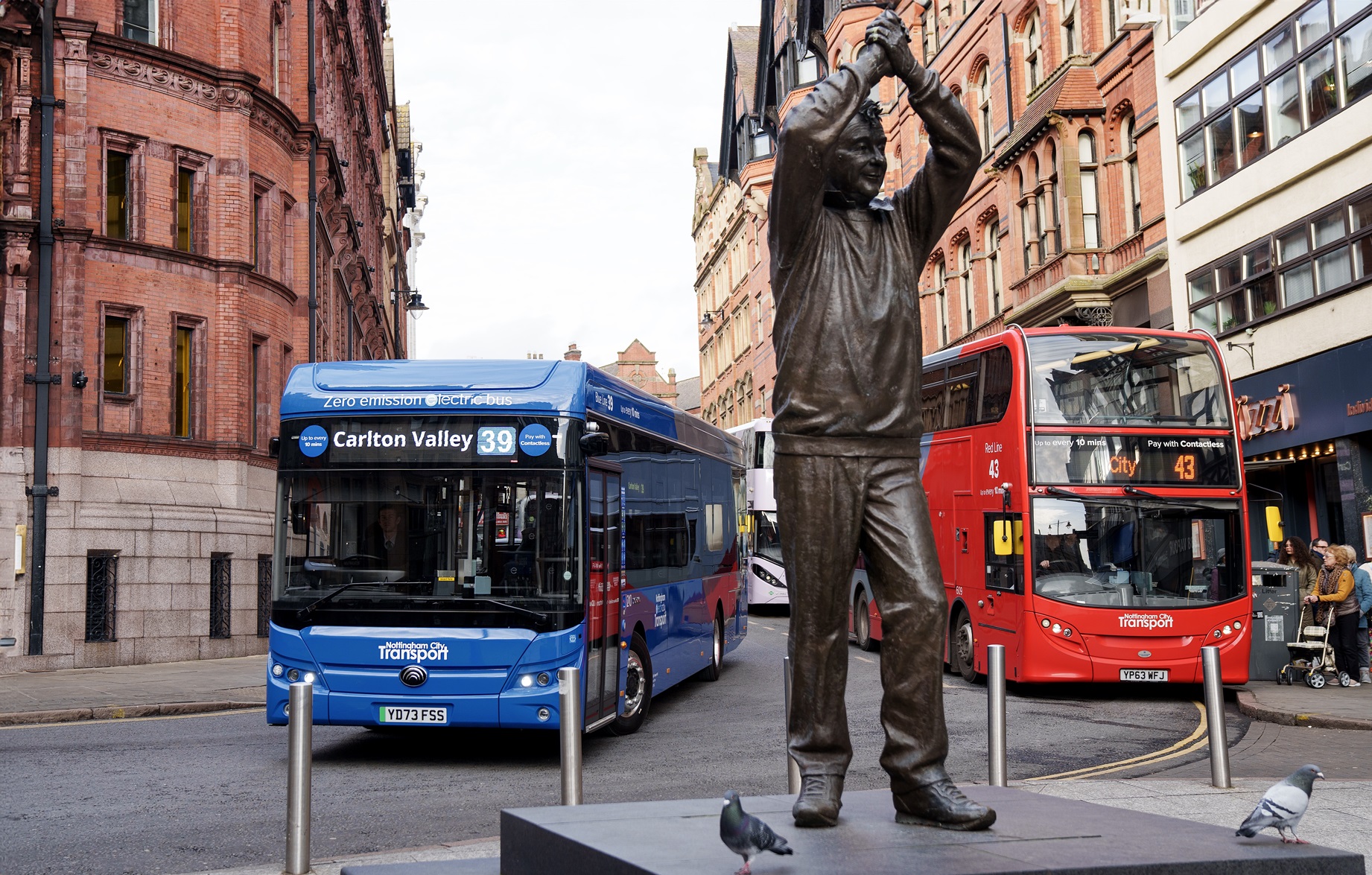
NCT specified the Yutongs highly. They each have separate wheelchair user and buggy bays; in the former, no tip-up seats are fitted in a bid to keep the area clear of other passengers. Meanwhile, traction batteries on the first 24 buses are owned by Zenobē and leased by NCT, which owns the remainder of the vehicles. Battery-related risk thus sits with the supplier.
“We did that because we have no experience with battery-electric,” says David. “We may do things differently in future, but on these buses, we wanted the security of knowing that we don’t hold financial responsibility for the batteries.” That could potentially be seen as over-cautious, he adds, but it suits the operator at this stage on its electrification journey.
Electric double-decker approach uncertain for NCT
Once all 62 Yutongs are delivered, NCT’s single-deck fleet will be entirely zero-emission. Attention will then turn to double-deckers. That work is currently at the nascent stage and the operator has evaluated some demonstrators.
“We want lithium iron phosphate chemistry on double-deckers, as on our single-deckers, and a suitable seating capacity,” says Head of Marketing and Projects Anthony Carver-Smith. Feedback on the Yutong U11DD has been given to Pelican and NCT acknowledges the positive way in which it was received.
While the operator wants to maximise seating capacity on eventual battery-electric double-deckers, David accepts that somewhere in the low-70s is likely to be what results. That contrasts with previous generations of NCT diesel double-deckers, to the point where around 90 seats were accommodated on some Scania-based two-axle examples.
Ongoing funding support needed for more electrics
The new UK government is yet to reveal whether it will maintain financial support for purchase of zero-emission buses. Under-Secretary of State for Transport Simon Lightwood’s first visit in that capacity was to NCT, where David was able to stress the need for that backing if decarbonisation is to continue at its current pace.
One large group believes that battery-electric in some cases is now within touching point of diesel in terms of affordability if ‘pump priming’ support is for infrastructure is forthcoming. But NCT’s chief thinks that government underpinning will be required “for the foreseeable future because there are so many unpredictable costs.”
A local consideration for the future is how long zero-emission buses serve with NCT for. The operator sells diesels with life left in them. It expects that battery-electrics will serve cradle-to-grave in Nottingham, but that is not guaranteed.
“Our diesel buses have typically gone to other operators at around 12 years of age, but there is yet no clarity on any second-hand market for electrics,” David notes. “Will those businesses have charging on site in 2036? We don’t know.”
An elephant in the room is NCT’s customer makeup. 40% of its users have access to a car, and on some routes that figure is 60%. Those passengers are thus easy to lose, and NCT has doubts whether they would all continue to use buses that are at a latter stage of their lives.
“That could leave us with a 12-year life even for battery-electrics,” says David. The operator’s large biogas fleet poses a similar conundrum. A decision will be needed whether those buses are retained for a full term, or if they are sold for further use as diesels, either after conversion in-house or at a suitable price point to allow the subsequent owner to carry out that work.
Taking time as a virtue in electric coach or bus deployment
Approach to second life will be among the later learnings of battery-electric operation. The biggest lesson so far from NCT’s early days of the transition is simple, David explains: Don’t go too fast. “Time is key to a project like this. You cannot rush it. Leave sufficient space, and don’t think it will be a quick shift. It is not.”
That is now well understood by NCT and will come into play in later stages of electrification. The 24 buses already in use perform well; battery-electric suits the operator’s needs, and hydrogen is not being considered. Like others, the municipal expects that when it comes to moving more testing double-deck applications, battery technology will have advanced to suit.
For now, the Yutongs cover relatively low mileages. NCT’s city routes average around 12mph. That has allowed replacement of diesels on a like-for-like basis with no changes to duties. While the ongoing funding argument must be answered by the government, NCT is another operator demonstrating that battery-electric is an entirely viable option for urban landscapes.