
TfGM orders 125 further Wrightbus electrics for the Bee Network
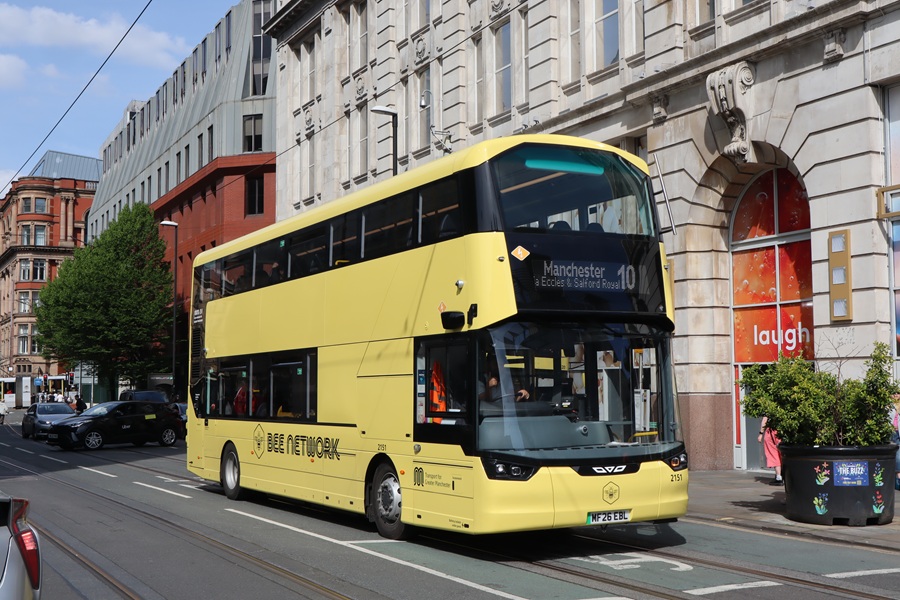
Transport for Greater Manchester (TfGM) has ordered a further 125 battery-electric buses from Wrightbus for the franchised Bee Network. The procurement is a mix of the double-deck StreetDeck Electroliner (pictured) and the single-deck GB Kite Electroliner.
Those buses will follow 76 StreetDeck Electroliners that are in the process of delivery and 55 more electric buses from Wrightbus that are in hand. All continue work on moving the Bee Network towards its target of running an entirely zero-emission fleet by 2030.
Of the latest batch, 100 buses will go to Hyde Road depot to the south-east of Manchester city centre. It is operated by Metroline Manchester and is being upgraded to support the electric fleet. The other 25 are for Stagecoach. Of those, nine will be StreetDeck Electroliners and 16 will be GB Kite Electroliners.
From the batch of 76 StreetDeck Electroliner double-decks under delivery, 33 are in service with Go North West from Bolton depot primarily on routes 8 and 10 into Manchester city centre.
The other 43 are to a higher specification for V1, V2 and V4 services that utilise the Leigh Guided Busway. Those buses “have passed inspection at the Ballymena factory” and will enter service with Go North West over coming weeks, TfGM says.
Speaking about the work with Wrightbus, Transport Commissioner for Greater Manchester Vernon Everitt adds: “It is brilliant to see these new yellow electric buses come off the production line and onto the streets of Greater Manchester. There will be many more to come.
“Placing these orders for another 125 zero-emission vehicles from Wrightbus puts the Bee Network on track to meet our target to have a fully electric fleet by 2030, bringing huge benefits for our passengers, air quality, and the fast-growing economy.”
Half of the Bee Network’s depots have been electrified so far. Those at Ashton-under-Lyne and Middleton are both now fully zero-emission.
Wrightbus Managing Director Christian Reynolds has thanked the franchising authority for its further business. “This latest order for our battery-electric buses from TfGM builds on our existing fleet of vehicles in operation and reflects a strong commitment to UK manufacturing and the domestic supply chain,” he says.
“It demonstrates the competitiveness of both our product and our integrated supply ecosystem against international alternatives.”
WYCA orders 193 Wrightbus electric buses for Weaver Network
The West Yorkshire Combined Authority (WYCA) has ordered 193 battery-electric vehicles from Wrightbus for its franchised Weaver Network in the region, which will commence rollout in mid-2027.
Worth up to £100 million, the purchase captures double- and single-deck models from the StreetDeck Electroliner and GB Kite Electroliner ranges. Each will have twin wheelchair user spaces and flexible accommodation for pushchairs and luggage, the combined authority says. Latest generation batteries will be fitted to maximise range.
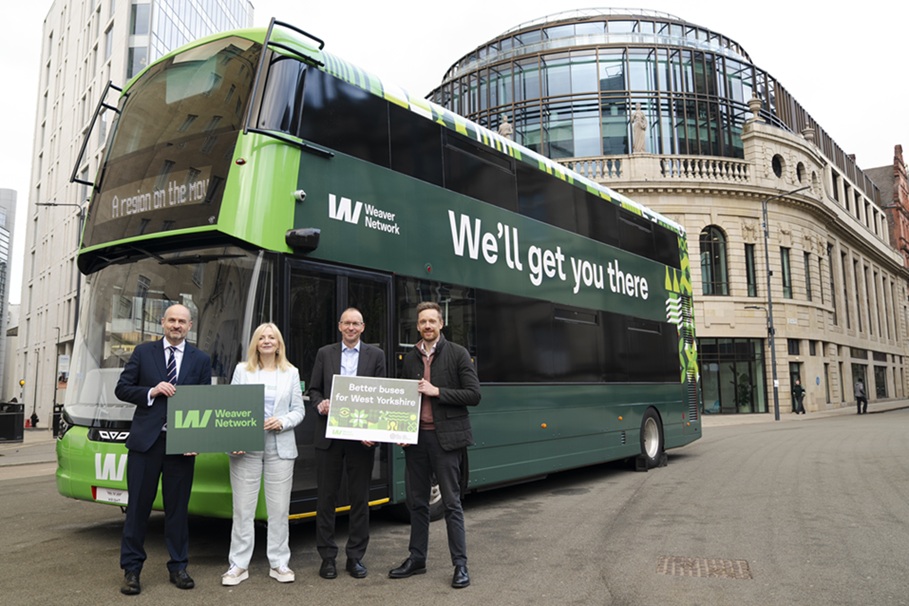
Wrightbus will build the Weaver Network buses in Ballymena. Mayor of West Yorkshire Tracy Brabin (pictured, second from left) says that WYCA is “proud to be buying from a UK firm” and adds that such a position is “another benefit of a publicly-controlled bus network.”
An opening example of a Weaver Network-liveried StreetDeck Electroliner was recently displayed in Leeds. WYCA earlier confirmed that Huddersfield-based supplier Camira will produce seat upholstery for all Weaver Network buses.
Success in West Yorkshire for Wrightbus follows purchase of StreetDeck Electroliners for franchised networks in Greater Manchester and the Liverpool City Region. Both StreetDeck and GB Kite Electroliner models are already in service in the deregulated West Yorkshire environment with First Bus.
Says Managing Director Christian Reynolds: “This award reflects a clear commitment to UK manufacturing and the domestic supply chain in a highly competitive global market. Securing this contract enables us to demonstrate the strength, quality and competitiveness of UK-built zero-emission vehicles.
“For over 80 years, Wrightbus has sustained a nationwide supply chain, and the West Yorkshire Combined Authority’s successful franchising model ensures that this economic contribution continues – driving investment, innovation and long-term industrial growth in the UK. We are proud to see these vehicles serving key routes in West Yorkshire.”
Contract awards for the first round of bus franchising in the region are expected to be made by the end of June. That opening tranche will capture Dewsbury, Huddersfield, and one of two Leeds zones.
LibertyBus is launch user of TransMach digital radio addition
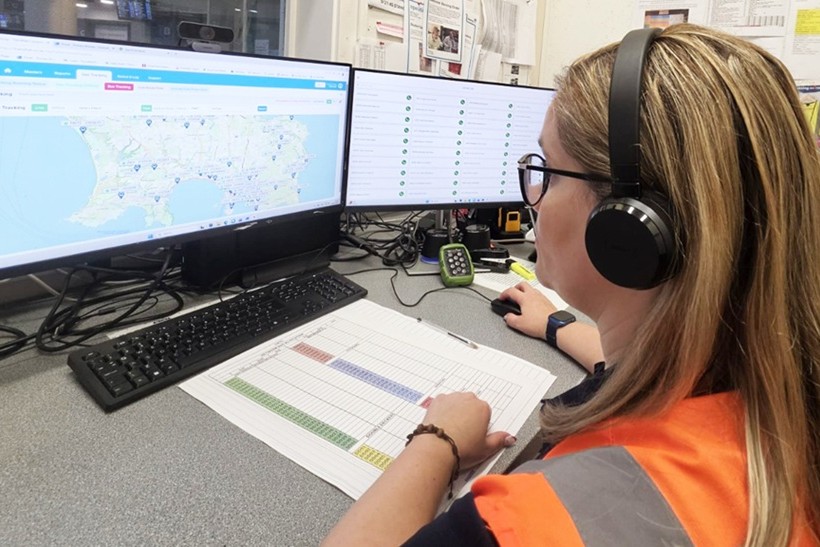
LibertyBus has adopted the TMComms Hub digital radio system from TransMach to deliver what the supplier says is “seamless and targeted communication” across the operator’s network on Jersey.
Rollout follows an extensive period of development, testing and real-world operational trials. It enables operators to deliver voice broadcasts with precision and flexibility, whether to an individual driver, specific route, depot, device, or all staff on duty and logged into the TM700 ticket machine.
TransMach says that the TMComms Hub has been created to replicate the clarity and reliability of a digital phone call. It eliminates the sound degradation that can be associated with analogue-based radio systems, ensuring that information is transmitted clearly and accurately.
The supplier has made the TMComms Hub platform available to all customers currently using the TM700 at no additional cost, reflecting what it says is a commitment to innovation and value in public transport technology.
Integration of the platform with the TM700 gives drivers a single interface for all operational communications, including texts, voice notes, and incident reporting. TransMach adds that by minimising the need for movement in the cab, TMComms Hub enhances driver safety and allows greater focus on the road.
All interactions are securely logged within its TMCloud back-office, enabling operators to review communications with drivers at any time. A transition from analogue to digital radio removes the need for licences and ongoing equipment maintenance, giving cost savings.
LibertyBus Regional Director Kevin Hart notes how the operator approached TransMach to enquire whether integration of two-way radio communications into existing ticket machines would be possible.
“TransMach responded by developing an innovative solution, while LibertyBus invested significant time in testing and providing detailed operational feedback. Several months of real-world trials enabled the system to be carefully developed and refined to meet the demands of a live public transport network,” he continues.
The operator has dispensed with legacy analogue radio equipment and modernised its communications infrastructure.
“We have been very pleased with the performance of the system since its implementation,” says Mr Hart. “The improved clarity and reliability of communications has significantly enhanced our day-to-day operations, enabling more efficient coordination between our teams across the network.”
He adds that the new digital system has provided greater coverage and consistency, reducing communication gaps and giving faster response times, particularly in periods of disruption or high-demand.
“Overall, this investment in digital radio technology has delivered tangible operational benefits, contributing to improved service delivery and a batter experience for our customers.”
TransMach Director Minesh Vandra says that launch of TMComms Hub is a major milestone for the supplier.
“By embedding high-quality digital radio functionality directly into our industry-leading TM700… we are enabling operators to simplify their technology stack, while significantly improving clarity, reliability, and operational control,” he explains.
“Our collaboration with LibertyBus has been instrumental in shaping a solution that is not only technically robust, but also proven in a live operating environment. TMComms Hub is designed to give operators complete confidence in their communications, ensuring that the right message reaches the right people at the right time, every time.”