
In-ground or mobile brake tester: Which is right for you?
If you’re looking to invest in a brake tester for your workshop, it’s not always easy to sort through your options.
So to make things easier, we’ve put together a rundown of our two most popular bits of kit – the In-Ground Brake Tester, and the Mobile Brake Tester.
But before we dig into the differences between them, we need to talk about what they have in common.
Whether you choose an In-Ground Brake Tester or a Mobile Brake Tester, you’ll be getting:
- A brake tester that’s DVSA-approved and Connected Equipment-ready
- Handheld wireless tablet controls – so you can perform the test alone from the driver’s seat
- A maximum axle load of 20,000kg (if you choose the upgraded Mobile Brake Tester)
- Bi-directional rollers (if you choose a customised In-Ground Brake Tester)
- And options for axle load simulation and tachograph calibration
- Now that we have a baseline for both, we’re ready to look at how they differ.
Here are the questions every workshop needs to ask:
1. Is floor space an issue?
In almost every workshop, floor space comes at a premium. And it’s likely to be a huge factor when choosing workshop equipment.
But when it comes to choosing a brake tester, the answer isn’t always black and white:
In terms of raw area, an in-ground brake tester is usually a smaller piece of kit. Because it’s a fixed installation that’s securely attached to the floor, it doesn’t need to be spread out to have the same stability.
A mobile brake tester usually covers a bit more floor space. Because it sits above the ground, it needs longer ramps to get the vehicles up onto the testing area, and these extended ramps add to the total area it covers.
But for each option, there’s a little more to it than that:
An in-Ground brake tester can be fitted onto an existing pit or ATF lane. So in terms of floor space, it’s only a small addition to an area of your workshop that’s already occupied – which means you’re making more efficient use of a space that’s already being taken up.
And while a mobile brake tester may be larger, it’s also removable and flexible. On the days when you don’t need it, you can take it elsewhere or put it in storage – freeing up extra space that you can use for other equipment or activities.
Therefore, when you’re choosing a brake tester based on space, it really comes down to your current workshop setup, and how often you need to perform brake tests.
Which brings us nicely onto the next question:
2. Does your workshop already use a pit?
Some businesses swear by their vehicle inspection pits – and some workshops get by just fine without one.
And because an in-ground brake tester can be fitted over an inspection pit, that can make it more attractive for workshops that use them.
But it’s not just about saving floor space (although that is a huge factor).
It’s also about efficiency and productivity – minimising the movement of your vehicles and completing as many jobs as possible in a single location.
With an in-ground brake tester installed over a pit, you won’t need to reposition your vehicles when it’s time to switch jobs. You can work on the chassis below the vehicle, and then move straight to brake testing – all in one place, with a dedicated workstation that covers multiple tasks.
3. Do you test brakes every day?
Our mobile and in-ground brake testers are both perfect for everyday use. That’s what they’re built for, and that’s how our customers use them.
But if you’re running a workshop that rarely performs brake tests, you might not need a fixed installation taking up space that’s not always in use.
With a mobile brake tester, you don’t need to keep it in place every day. You can keep it in storage (or even at another premises), and only bring it out for the infrequent occasions where you need to test brakes.
And when it’s out of the way and not in use?
You’ve got a whole new section of your workshop ready and available. So you can set up different equipment, position new vehicles to improve your through-put – or open up new routes through your workshop to make life easier for your staff.
4. Does your workshop use an outdoor space?
We’ve already mentioned how space comes at a premium. And for some workshops, that means moving some jobs to an outside area.
Your premises might come with an expansive loading bay or courtyard – and if it’s not being used for anything, it makes sense to start putting it to good use.
It’s unlikely that you’ll have a vehicle inspection pit outdoors (unless you’re talking about our galvanised Compact Pit and Brake Tester).
But if you’re looking to get more out of an outdoor space, and you’re about to invest in a brake tester, our Mobile Brake Tester could be the perfect choice.
Made of fully galvanised metal, it’s designed for use outdoors in all types of weather. And with its adjustable feet, you can use it on all types of outdoor surfaces – from concrete and asphalt to uneven sand and gravel.
So, if you’re running a workshop that makes use of an outdoor space, a Mobile Brake Tester can help you free up more space indoors, service more vehicles per hour, and increase flexibility when adapting to unexpected changes in your workshop’s schedule – which can all give you a sizeable boost to your productivity and efficiency.
5. Do you ever change your workshop's layout?
No matter how carefully you’ve planned your workshop, there’s almost always room for improvement.
And especially if you’re a younger business that’s set to grow and expand, it’s important to have options that can help you stay flexible in your workplace.
With an in-ground brake tester, you’re already saving space with a smaller installation – and if you’re fitting it over a pit or ATF lane, you’re automatically maximising the space that you’re using.
On the other hand, with a mobile brake tester, you’ve got an extra level of flexibility: with the potential to rearrange the layout of your workshop as the needs of your business change.
That could mean opening new routes through your workshop, allowing more vehicles to drive through and access different workstations more easily.
Or it could mean that when you change contracts to a new customer – one that doesn’t need any brake testing for its vehicles – you can close your brake-testing facilities and literally wheel them out of sight.
With this added layer of flexibility, you can make sure you’re using every inch of your workshop to its full capacity, maximising the number of vehicles you service and making the most of your entire premises.
Still not sure what's right for you?
A brake tester is a big investment – and that means you need to be sure you’re making the best decision for your business before you buy.
So if you’re looking to learn more about the options you have, check out our full range of Brake Testers in our online shop – or chat to one of the Totalkare team, and we’ll help you find the equipment that fits what you need.
Euro Bus Expo: a must-attend for transport planners
Better, greener, more connected transport
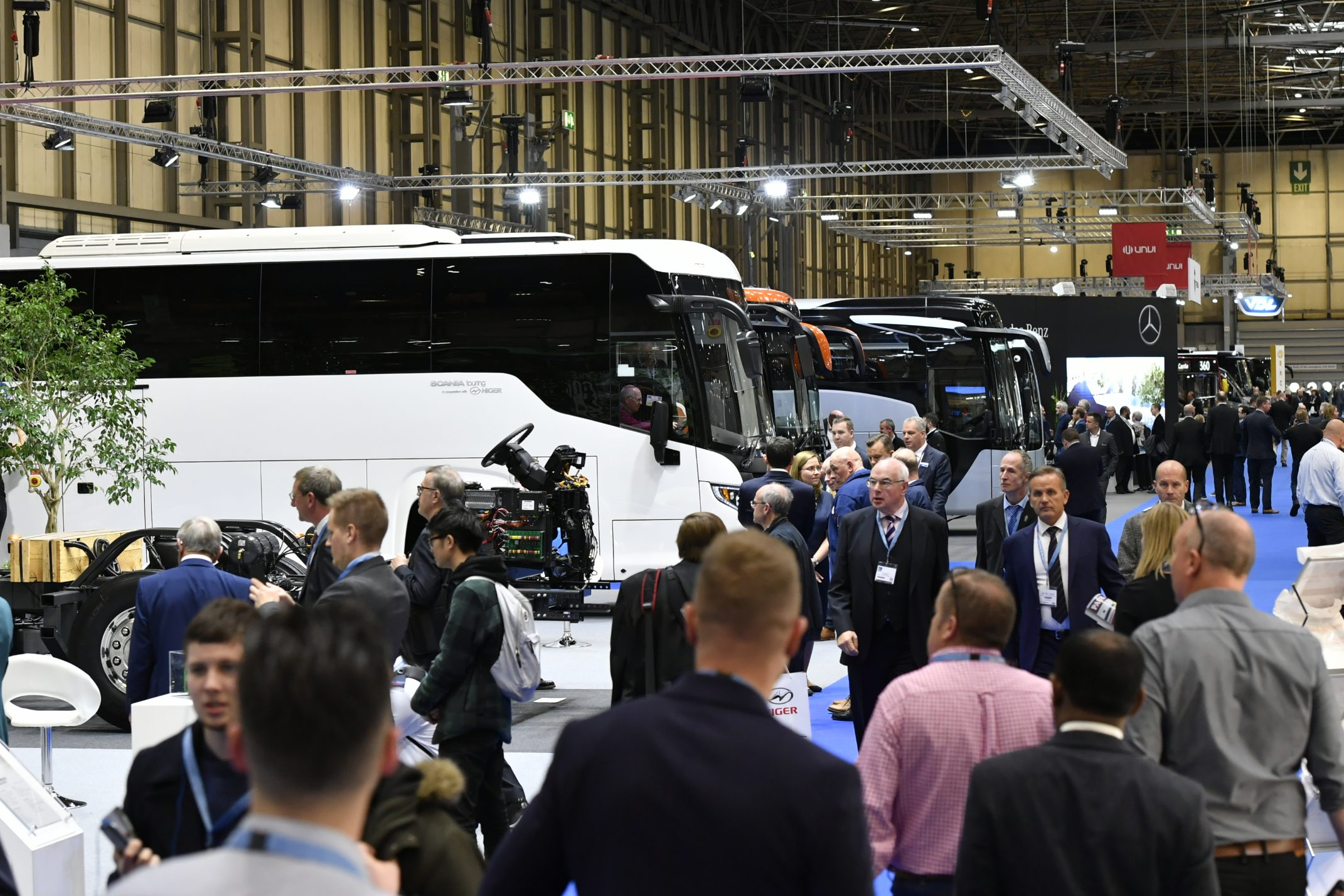
Euro Bus Expo returns to the NEC, Birmingham on 1-3 November 2022. The premier bus, coach and mini vehicle exhibition is a must attend for local authorities.

The industry showcase will bring together thousands of thought leaders, suppliers, manufacturers, operators, transport planners and strategy influencers. Each has a critical role to play in connecting communities, encouraging bus patronage, improving services, and not least - achieving net zero.
To this end, transport planners are managing more regulations and contract decisions than ever before. All while dwindling government resource and rising inflation rates are increasing focus on investment returns. Visiting Euro Bus Expo can help to alleviate these mounting pressures.
Achieving net zero
Free to attend seminars will inform about the milestones, challenges, and possible solutions to make the vision for carbon free transport a reality. Visitors will hear about the practicalities of implementation, infrastructure requirements, and how others are adapting to similar circumstances. There will be also sessions dedicated to game-changing technologies and industry developments.
Informed investments
With hundreds of suppliers in one place, it’s easy to find and compare all the new emission-reducing products and technologies available. And, to research which of these quickly developing opportunities deliver the best value for money.
The exhibitor line-up includes over 20 vehicle manufacturers that will be showcasing the fleets of the future – including brand-new launches. Several will be demonstrating vehicles in the dedicated Zero Emission Zone. Here, visitors can experience the latest carbon-free battery electric and hydrogen fuel cell vehicles first hand. They will also see new features designed to lower the costs of operating and make the passenger experience more desirable.
Behaviour change
To convince people to use greener travel options, services need to be available, accessible, and convenient. Exhibitors will be showcasing an array of products and services to help with these challenges.
Among hundreds of exhibiting brands are suppliers whose technologies can make seamless journeys a reality. From route mapping and traffic flow modelling, through multimodal ticketing and on-demand bus and coach services.
There will be smart passenger information systems that can keep commuters informed about expected arrival times and any delays, and products to increase on-board comfort.
In the miniplus Area, visitors will find mini vehicles fitted with modern accessible aids including step-free design, wheelchair lifts, bespoke seating, and more safety items.
The show will be brimming with developments that can create the new customer experience needed to drive a shift from cars to buses.
Public-private partnerships
To drive this shift, collaboration is necessary between authorities, businesses, supply chain partners, policy makers – and not least, communities. As the entire industry comes together this November, there will be ample opportunity to network. Visitors can meet new contacts, develop relationships, share ideas, learn from others, and forge new partnerships.
An industry challenge
Buses and coaches have vast potential to reduce pollution and congestion, to connect people and support economic success. And they have a central role to play in achieving decarbonisation goals. This is a collective industry challenge. Attend Euro Bus Expo this November and find out how it is being addressed.
Free registration and free coach travel
Free coach travel to the venue is available from 6 locations including Brighton, Cardiff, Colchester, Liverpool, Portsmouth and York. For more information and to register for the free-to-attend trade exhibition, visit www.eurobusxpo.com.
Fabric manufacturer Camira launches revolutionary digital print technology
In a year in which the global company celebrates its 200-year anniversary in transport textiles, Camira has signalled its commitment to remaining at the forefront of the industry with the introduction of the innovative Camira Print.
Perfectly complementing the manufacturer’s renowned weaving capabilities, the launch expands its offering to encompass digital printing – providing customers with an unparalleled level of flexibility and freedom when choosing the optimal textile for their bus or coach interior.
Revolutionary design potential
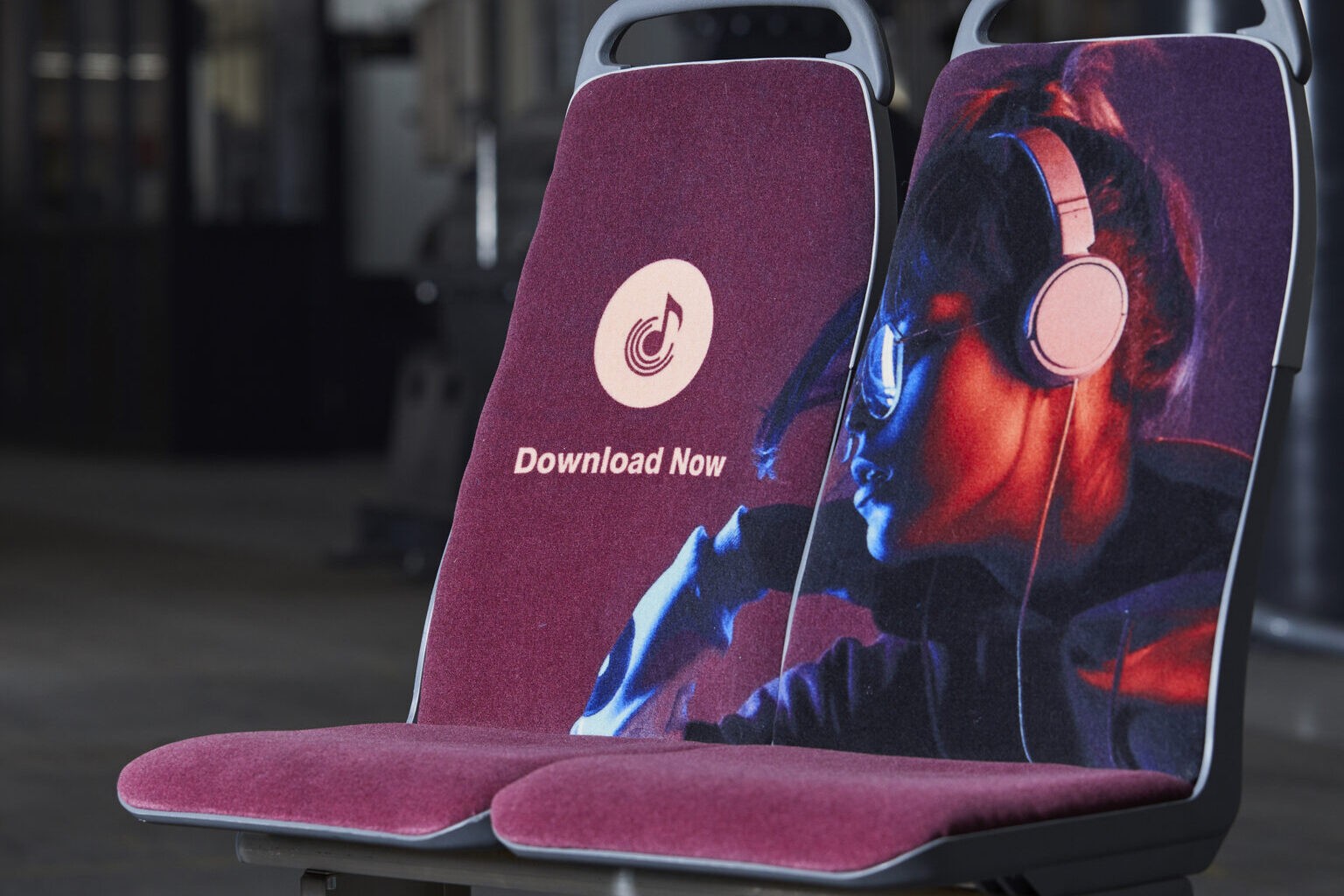
Removing many of the design constraints associated with traditional woven textiles, Camira Print fabrics can be created without restrictions on pattern repeats, scale, or colour, as well as significantly reducing lead times and minimum order quantities. With a variety of design options, customers also have the flexibility to choose from a range of readymade prints in standard colours, opt for custom colours, or create something entirely new - working with Camira’s in-house design studio to develop a totally bespoke creation.
Ciara Crossan, Transport Creative Manager at Camira, explains, “We’ve really worked hard to provide customers with a design option for every need. With the Camira Print collection, we have brought together a selection of carefully curated palettes and trend-led patterns to provide customers with a readymade range of printed fabrics which can be dispatched within days.
For those who would really like to push the boundaries in terms of creativity, there is truly no limit to what is possible with Camira Print – they can create immersive advertising campaigns, recreate photographs, go as big as they like in terms of scale, as bold as they like in terms of colour – this technology really does unlimit so much of what is restricted at the moment.”
Moquette fabric, made from wool
In an appealing blend of tradition and innovation, each Camira Print creation is applied to a lightweight moquette fabric – the construction on which Camira’s rich heritage is built. With a velour finish, the textile has been created exclusively for digital print and is woven from naturally sustainable wool to deliver saturated colour and comfort.
High technical performance
Meeting the industry’s key technical performance standards, Camira Print textiles achieve the European flammability regulation, ECE Reg 118.03, and the North American flammability regulation FMVSS 302. Indicating high durability, the newly launched textile capability also has an abrasion performance of over 100,000 rubs.
“A light shed moment for the industry.”
Peter Daly, Director of Transport Sales at Camira, comments on the launch, “We’re incredibly excited to introduce Camira Print to the transport market; not only is it a first for Camira, but also for the industry. Providing an unmatched level of design, colour and manufacturing freedom, customers can create truly unforgettable fabrics which it has just not been possible to create – until now. Truly a light shed moment for the transport industry, Camira Print will revolutionise the way in which fabrics are designed and made. We can’t wait to see the ways in which our customers use this new technology.
Website: https://www.camirafabrics.com