

Acklams Coaches introduces Yutong GTe14 battery-electric tri-axle
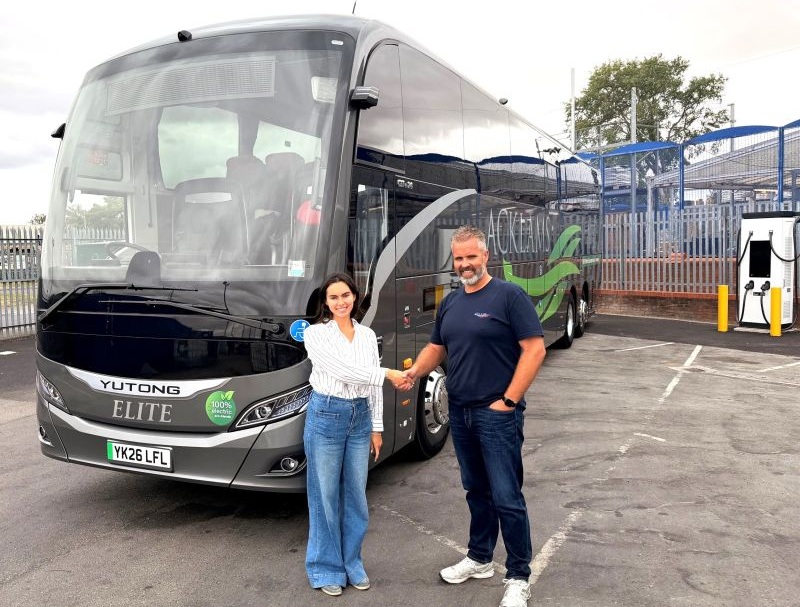
Acklams Coaches added its first zero-emission vehicle earlier this year in the form of a Yutong GTe14 battery-electric tri-axle, supplied by Pelican Bus and Coach.
It comes with 563kWh of onboard energy storage and has completed a wide variety of duties for the Beverley operator. Those include round trips along the full length of the M62 motorway to Liverpool and back thanks to the model's claimed range of up to 300 miles.
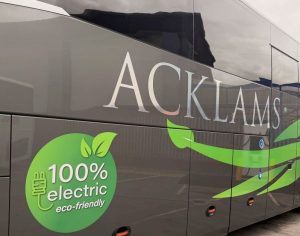
Acklams’ metallic grey Elite livery is carried, to which have been added green decals to highlight the emission-free nature of the GTe14.
The family operator has invested in high-power on-site charging to support the GTe14 for rapid battery replenishment. Also on hand is a smaller mobile charger to give maximum flexibility .
Funding for the battery-electric coach came from Heron Funding Partners. It has 57 seats to a high specification including adjustable headrests, USB-A and USB-C charging points, mood lighting, and a tablet-based digital dash layout to give what Pelican describes as an excellent first impression for all passengers.
UK and Ireland Coach and Truck Sales Manager has thanked Acklams for its business as the operator begins its zero-emission journey.
“Previous internal combustion engine purchases made this decision an easy one,” Mr Collins continues. “We look forward to seeing this vehicle in many locations in the UK.”
Handover to Acklams Coaches Managing Director Alan Acklam (pictured top, right) was by Pelican Area Sales Manager Amelia Crump (pictured top, left).
[adrotate banner="44"]

RHA Wellbeing Charter reflects wider workforce considerations
Consideration of staff wellbeing has advanced in leaps and bounds over the past two decades. The days of leaving problems at the door and ‘dealing with it’ are largely over, but more can still be done. That is one of the reasons why RHA developed its Wellbeing Charter, which was launched in July.
It is described as a shared commitment to wellbeing across the UK road transport industry. Participating organisations are encouraged to support employees through measures such as mental health partnerships, discounted gym memberships and peer support networks, yet the detail goes much deeper.
The charter is presented as a document, but there is more to it than that, says Managing Director Richard Smith. RHA believes that better wellbeing is key to a better industry. Members and sector stakeholders have contributed to the charter’s development, a process that took around 12 months. He is clear not to describe that period as one of “making.” The charter is a live document over a rolling 10-year period.
“We are calling it a charter because that is a strong word,” Richard continues. “It means our commitment. This is not something we are dabbling with. It is our commitment to the industry.”
Six pillars are the base upon which the charter sits: learning and development; mental wellbeing; leadership and resilience; connecting with others; exercise; and food and nutrition. “We have knowledge and expertise around each of the pillars, and we will develop that so we can provide more answers or signpost people,” he adds.
RHA membership is not necessary to sign up to the charter. Key to its success it the generation of what is described as a million moments of improvement. “Talking about it is one moment,” Richard observes. “Publicising it is another.” Use of the trade body’s member assistance services, including around mental wellbeing, is one more.
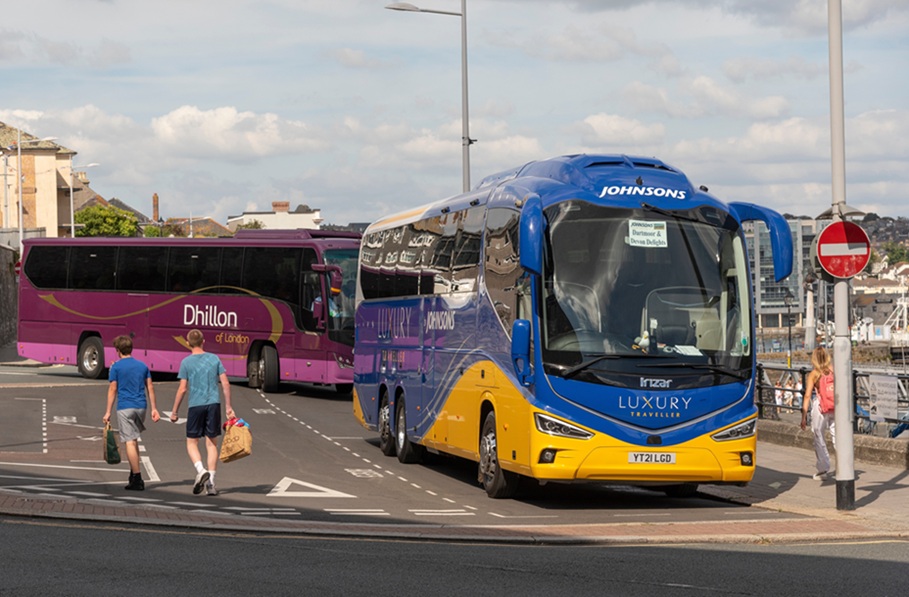
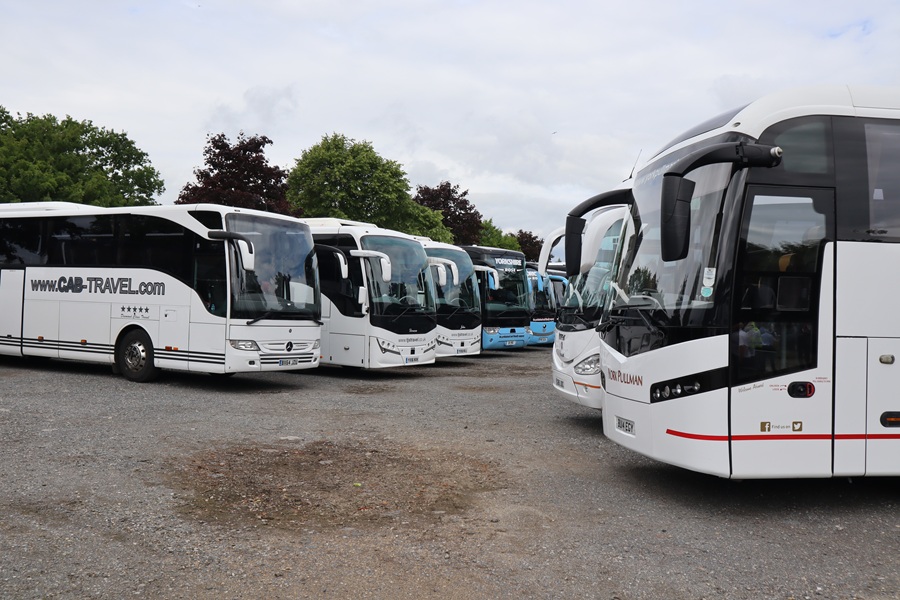
“There can also be interventions where someone steps in to support a challenge in a colleague’s wellbeing,” he adds. The wider approach reads across into more strategic areas; campaigning for better coach parking, for example, so less stress is placed on drivers. Bringing together products that can assist is a further avenue, although Richard notes that the Wellbeing Charter has not been produced by RHA as a commercial tool. Far from it, he says.
Challenges to wellbeing are widespread, trade body believes
Wellbeing challenges exist throughout the industry. While coach drivers through the places they visit may benefit from a greater breadth of food choices, Richard points to the reality for HGV drivers at motorway service stations. Gregg’s and Burger King might be the most obvious options beyond self-catering.
RHA member contributions to the charter include those from the coach segment. Those was combined with input from experts on the respective pillars. “That is how we started, but I cannot stress enough that this is a 10-year journey where the pillars will stay ‘alive’,” Richard continues. “In five years’ time, we could have seven. But the fundamentals I am happy with.”
All of the current six pillars are relevant to staff. RHA notes how the charter is not solely for drivers; it is for everyone in road transport, including suppliers, stakeholders, and those who set its policy as well as the operating side. But the often solitary nature of driving for a living is a key part of the mental wellbeing pillar.
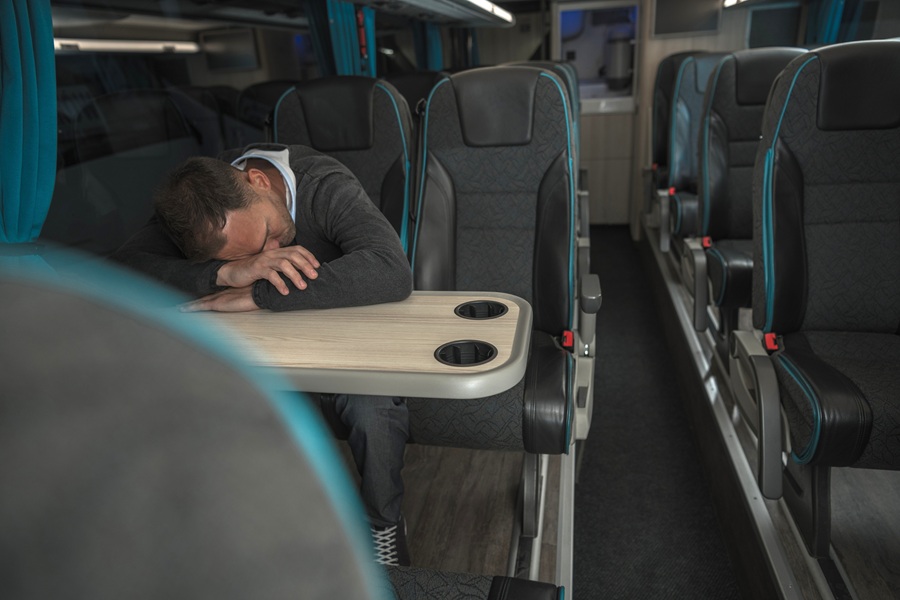
“Some drivers can be on the road for weeks at a time. If they have problems when they are away, who do they speak to? Starting a conversation about mental wellbeing is thus one of our million moments.”
Signed up to the charter as of mid-July were around 130 organisations. Formal accreditation is under development, but signing up is effectively a pledge to recognise the six pillars. A signatory may not necessarily pursue all of them actively.
“Two coaches or two hundred – it does not matter. This is about saying how you see life from a wellbeing perspective,” Richard continues. “It is not an award and you are not going to win something, but you are signing up to something and pledging your commitment to it.”
Constructive feedback on Wellbeing Charter sought by RHA
Many operators may already have policies that align with the Wellbeing Charter. Others may challenge what it contains. RHA is keen to hear constructive feedback. “It is our role to show how the six pillars are relevant and to get stakeholders thinking about them. That is why it is a 10-year commitment,” Richard says.
He points to generational change as evidence of why it is important for an employer to take wellbeing seriously if they are to compete in the labour market. Particularly to younger people, personal wellbeing is important. Understanding that, and demonstrating it within a business, has increasing relevance.
One of the biggest wellbeing challenges in transport is that those working within it spend most of their professional lives sitting down. RHA acknowledges how work on wellbeing cannot all be done internally; strategic lobbying efforts to improve parking and food and other parts of life on the road are just as pertinent.
Richard points to Driver CPC as an area where wellbeing could be more prominent. While compliance-related items are important, it is no stretch to argue that mental health and food and nutrition could feature. Members of a steering group for the Wellbeing Charter are likely to be well-positioned to drive that.
Leaders’ own wellbeing is critical to business success
For owners and managers within operators – and particularly SME businesses – the pillars of leadership and resilience and mental wellbeing are critical. Considerations are not just about staff members; they are also central to those in leadership positions.
“Everyone goes to leaders with their problems. Where does the leader go?,” Richard muses. “Who leads the leader, and who helps them when they are struggling?” A lack of support in that field can foster personal difficulties. More than one member of the coach industry has been open about mental health challenges posed by the loneliness of leadership.
He looks back 20 years to an earlier senior role elsewhere within logistics. The employer decided that it would stage an emotional resilience training course. “That was a lightbulb moment. I got it. A leader has to deal with challenges all around, and you have to be trained how to do that. Very few people can just do it.
“You have to recognise when you are stressed, when it is too much, when to say no, and when to delegate. The leadership and resilience pillar is highly important. God may love a tryer, but you are at risk of burnout. One of our key points is supporting the people who run businesses. I have seen some people at that level really suffer.”
Nobody has all the answers to the wellbeing conundrum
Development of a Wellbeing Charter builds on existing work by RHA around workforce matters. It already has a mental health app and a benevolent fund. At the core of that overarching effort is how a happier and healthier employee is more productive and likely to stay for longer.
Such a position is not unique to road transport, although Richard believes that some of the specific wellbeing challenges that the sector sees may be. In addition to the present, there is a planning element; he cites research that has shown how younger generations can look to change jobs as often as every two years, and fields every five.
“What that says to an employer is they need to plan for different expectations in the workforce. Young people want to know what is a good, safe, clean industry to work in. This is about helping to change [road transport’s] image and make it attractive to people as a career,” he observes.
Nobody has all the answers in the wellbeing field, but collating a framework specific to road transport is a major step forward, the RHA chief concludes. “We have a job to convince people that they need to participate in the charter. What will success look like? A million moments of improvement, and hundreds of thousands of pledges.”
To download the RHA Wellbeing Charter, click here.
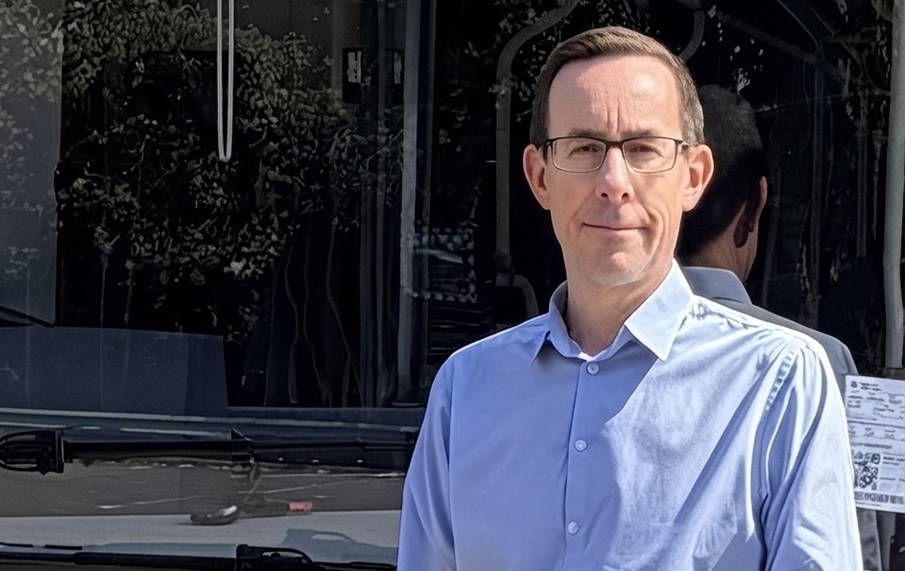
Martin West is Custom Denning Head of Sales and Commercial
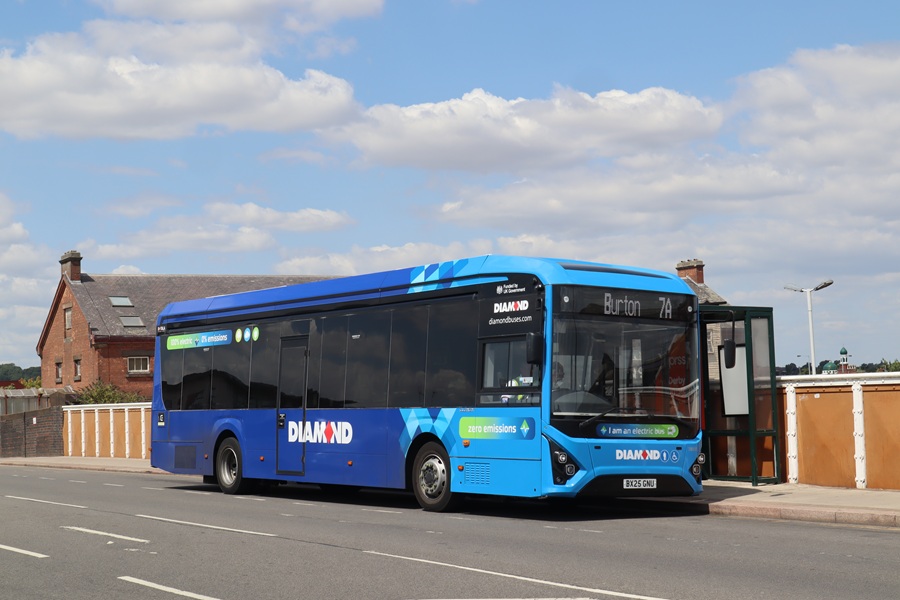
Custom Denning has appointed Martin West as Head of Sales and Commercial, where he will drive the Australian brand’s presence in the UK coach and bus market.
Mr West is the first addition to the Custom Denning team in the UK since the naming of Antony Goozee as CEO – Europe in July. The appointments bring high-level experience of the domestic coach and bus sector from the vehicle supplier and operating sides, respectively.
The former Scania and Alexander Dennis man's leadership of the sales and commercial function is part of what Custom Denning terms a “strategic push” to establish its Element battery-electric bus range as “a compelling choice for UK and European operators navigating their transition to zero-emission fleets.”
Custom Denning is preparing to open its UK and European headquarters in the East Midlands and to launch the new Element 2.2. It says that growing demand for battery-electric buses will be met “with high-quality, competitively priced vehicles, backed by [a] customer-centric approach to aftersales and technical support.”
Speaking about his appointment, Mr West says: “After meeting [Custom Denning owner] Scott Dunn and Antony, I was enthused by their deep understanding of operators’ requirements and how passionate they were to offer a product and service that is uniquely built to exceed those.
“Custom Denning has built a product that is proven to withstand the rigours of a tough operational environment in Australia, achieving a balance between style and longevity. Beyond the bus, a suite of additional services will deliver intelligence and efficiency for a long operational life and high value for our customers.
“We will harness those solid foundations to offer the new Element 2.2 to UK customers with finishing in our new facility in the East Midlands, bringing a very compelling alternative to the current market propositions.”
Mr Goozee has welcomed Mr West to Custom Denning, noting: “Martin brings more than 30 years of industry experience and a customer focus that aligns perfectly with how we plan to launch our proposition for UK operators and authorities.
“His sales and commercial background includes senior strategic positions at Scania Great Britain for three decades and more recently with Alexander Dennis that will complement the operational experience of our existing team.
“Our ambition is to deliver an exceptional product and service that is built around the operator – and that starts with a team with experience and customer focus. This latest appointment is proof of our commitment to that ambition and to the UK for the long-term.”
The Element is already in service with Rotala Group businesses. Custom Denning says the model brings proven zero-emission technology to a market where reliability, whole-life cost and passenger capacity are paramount. Construction is fully integral in stainless steel for corrosion resistance and durability.
[adrotate banner="37"]