

Translink progressing with full-fleet Wheely-Safe rollout
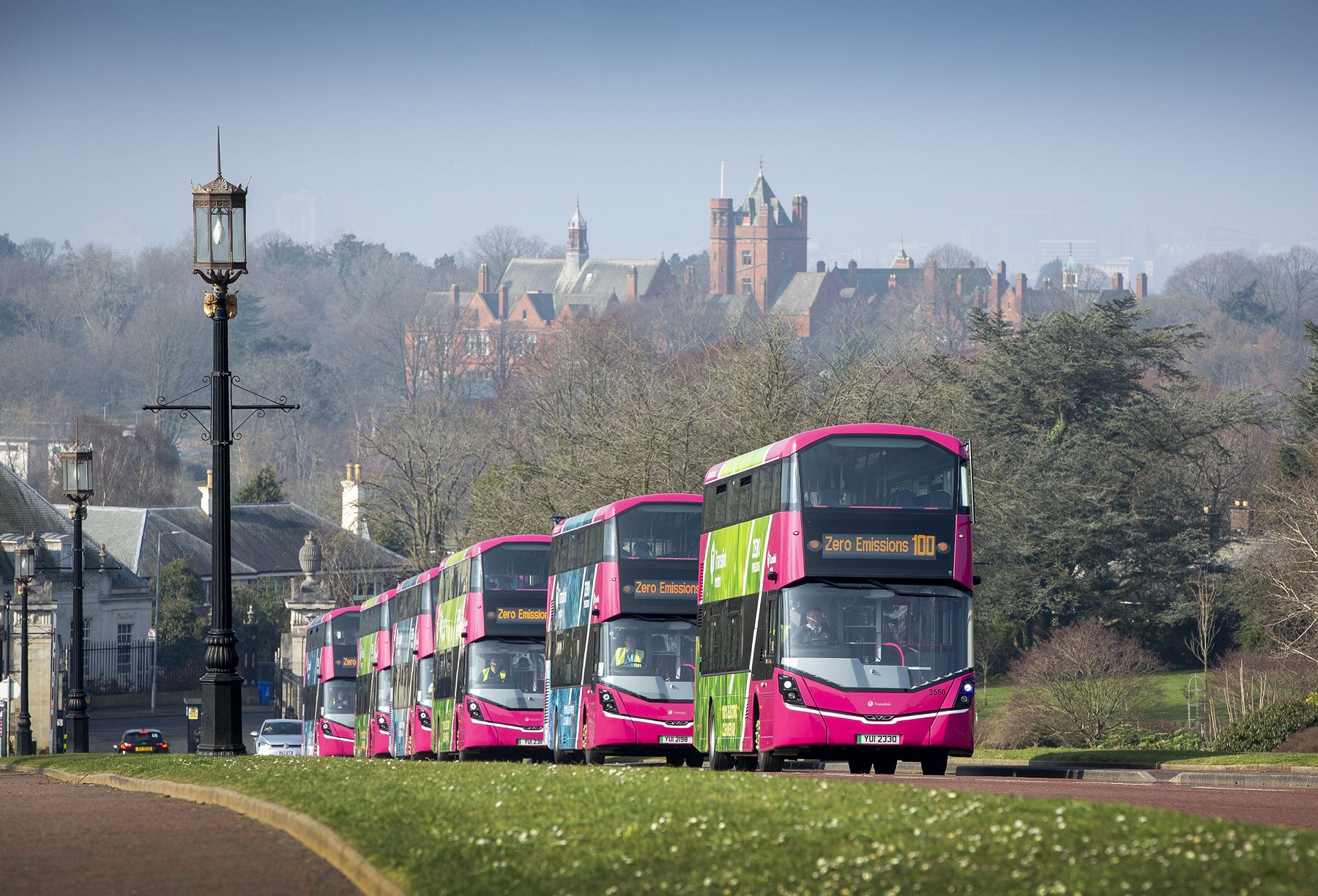
Northern Ireland operator Translink says it is in the process of completing a full-fleet rollout of Wheely-Safe technology across its 1,400 coaches and buses.
The product, which received an Innovation Challenge Gold Award at Euro Bus Expo in early November, is an in-motion wheel loss detection system that combines brake and hub temperature monitoring with an intelligent tyre pressure monitoring system (TPMS).
As installed by Translink, the Wheely-Safe product has external TPMS sensors replacing the conventional valve cap. They auto pair with an in-cab receiver and work alongside a pair of wheel loss sensors on each wheel. Diagnostic software built into the receiver confirms that all sensors are working and paired correctly.
Translink signed a contract with Wheely-Safe in 2021. The operator's General Manager Engineering David Barnett says rollout of the technology is "another important part of our ongoing process to install industry-leading health and safety standards across our fleet."
Mr Barnett adds that a trial was completed before completing the order. It "confirmed all the positive reports we had previously heard about the product. Having one system in place that alerts our drivers to a drop in tyre pressure, brake or hub overheating or a wheel nut loosening gives us real peace of mind."
Comments Wheely-Safe Group Managing Director Gary Broadfield: "This is a significant contract, one of the largest since we first brought the technology to market. It is great to know our latest generation technology is now protecting Translink's entire bus fleet, and all its customers in Northern Ireland."

New DRT service "The Robin" reaches people in rural areas
Over 6,000 households which have no access to a car in Gloucester now have access to buses on demand.
A new on-demand bus service, ‘The Robin’, launched in mid-October, offers rural residents in the Forest of Dean and Cotswolds new access to public transport.
The new service will serve over a hundred small towns, villages and hamlets that have no public transport links or services with extremely low frequencies. These areas also include a large number of households with no access to a car: 5,000 households in the Forest of Dean and 1,600 household in the Cotswold area. Lack of transport options means that thousands of local people have very limited transport options – and may be dependent on friends or family to access essential services, jobs, education and go shopping.
The Robin will cover two areas. One minibus serves the southern area, the Forest of Dean, covering an area about 23 miles long, with the village of Huntley in the north and the small town of Chepstow in the south. The service can be booked from 70 villages and hamlets across the area, from over a hundred ‘virtual stops’. Two minibuses cover the northern section – the Cotswolds area, from Chipping Campden in the north to Windrush, 20 miles south, serving over 50 villages and hamlets. The service runs from 7 am to 7 pm, Monday to Saturday.
Users can book the service by phone, app or online and tickets can be bought online and in the app or with cash or card payment on the bus. The trips cost £2.50 for up to 7 miles and £4.00 over 7 miles, concessionary pass holders are free and children travel at reduced fares. The 16-seat minibuses are fully accessible by wheelchair and the wheelchair space is reserved on booking.
The service’s areas were designed to improve connections for people who have few or no public transport links close to their homes. As demand is difficult to predict in sparsely populated areas, fixed-line services can be difficult to run efficiently. DRT services run when people need them and the ability to book in advance offers certainty for people requiring onward connections. The new service is aimed at ensuring people can get where they need to go – including connecting them to fixed-line bus and rail services. People can book upto two weeks in advance and upto an hour before they want to travel. The DRT platform designs and optimises routes to ensure that people reach their destinations on time. The algorithm ensures that the service cannot be booked in competition with fixed route buses when are running – ensuring that any existing services are not undermined.
The Robin service is a two-year trial designed by Gloucester County Council, which was awarded £1.35 million funding by the government’s Rural Mobility Fund. Buses are operated by local bus operators, using the Padam Mobility DRT platform.
Data generated by the platform will help shape the services and inform future planning to meet the needs of Gloucester residents beyond the end of the trial.
DVSA earned recognition announces Guild of British Coach Operators module
The Driver and Vehicle Standards Agency’s earned recognition scheme has launched a new module to help apply for membership of The Guild of British Coach Operators.
The new module will provide earned recognition Public Service Vehicle (PSV) operators with the opportunity to join over 20 of the UK’s top coach companies in the prestigious Guild membership that has been established for 37 years.
Like the DVSA earned recognition scheme, The Guild of British Coach Operators membership is only open to coach operators who can demonstrate the highest standards in their operations.
Customers can be confident that by hiring any Guild member, they are choosing a supplier who is customer-focused and delivers a quality service.
Both DVSA earned recognition and The Guild of British Coach Operators audit standards, supports and encourages operators to have the best policies and procedures in place to exceed and maintain the highest standards.
These standards include maintenance reporting and driver management, helping keep vehicles roadworthy, drivers well trained and unfatigued.
The collaboration will provide businesses and local authorities additional reassurance that coach operators who are both members of the earned recognition scheme and the guild demonstrate they are the most competent, safe, and socially conscious operators within industry.
Before the launch of the earned recognition module, only operators who were nominated by other Guild members could apply to become a Guild member. The new ER module will enable earned recognition members to apply directly without a nomination.
The Guild of British Coach Operators module is optional, and in addition to the recently updated audit standards that operators need to demonstrate to qualify for earned recognition. It follows DVSA’s recent Transport for London earned recognition module announcement.
DVSA’s Enforcement Director, Marian Kitson said:
“We are delighted to work with The Guild of British Coach Operators to further incentivise passenger vehicle operators proving they are among the ‘exemplary’ within industry.
“Every passenger should expect a safe journey, and we hope working with The Guild will provide local authorities and travel businesses assurance that member operators are doing everything they can to deliver on these expectations.”
Steve Whiteway, from the Guild of British Coach Operator’s said:
“The Guild of British Coach Operators has always set itself the highest standards of operation, with membership only available to those who choose to follow the same path through an exacting audit.
"Earned Recognition mirrors many aspects of the Guild audit and therefore, is a natural fit to partner with DVSA and more generally, a positive move for the coach industry, to publicly demonstrate quality and safety of operation”.
Further information about the ER scheme and the module is available on GOV.UK or by emailing: [email protected].