
Tech and tools to keep your coach and bus fleet on the move
Tech and tools to keep your coach and bus fleet on the move
Operators looking to avoid expensive outsourcing can reap dividends by investing in tools such as wheel alignment equipment and wash systems
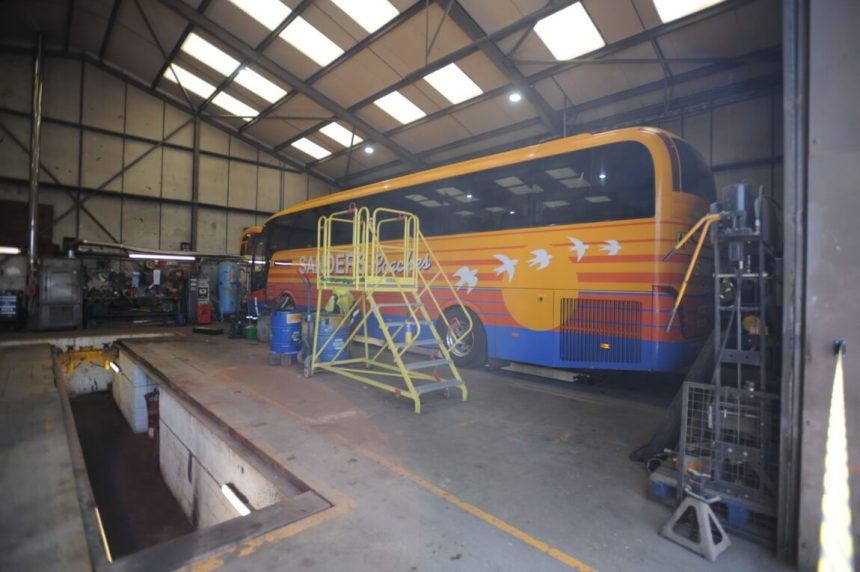
Behind every reliable coach or bus fleet is a well-equipped workshop working tirelessly to keep vehicles roadworthy, efficient, and compliant.
Investing in the right tools and equipment is a significant consideration for operators. From vehicle lifts to brake testers and diagnostic systems, a variety of tools are essential for operators to limit the time expensive coaches and buses spend out of service.
In this article, we focus on two particular types of workshop equipment that play a critical role in fleet performance.
Why wheel alignment is critical for coach and bus fleet operators
Proper wheel alignment is essential for managers of coach and bus fleets, directly impacting safety, fuel efficiency, tyre lifespan, and passenger comfort.
The risks of misaligned wheels
When wheels are not correctly aligned, the vehicle may pull to one side, creating a significant safety hazard, especially at higher speeds. Misalignment also leads to uneven tyre wear, which can dramatically increase costs for operators managing large fleets.
In addition, poor alignment can reduce fuel efficiency by up to 10%, according to industry studies. This means higher fuel bills and a bigger carbon footprint. Misaligned wheels can also place extra stress on steering and suspension components, leading to more frequent and costly repairs.
With many operators already facing challenges due to the deteriorating condition of UK roads, wheel alignment becomes even more crucial to ensure a smooth and comfortable ride for passengers.
What should wheel alignment equipment check?
When investing in wheel alignment systems, operators should look for technology that checks five key elements:
Camber – the vertical tilt of the wheels when viewed from the front.
Toe – the inward or outward angle of the wheels when viewed from above.
Caster – the angle of the steering axis when viewed from the side of the vehicle.
Thrust angle – the relationship between the rear axle, front axle, and the centreline of the vehicle.
Scrub – the alignment between the steering axis and the tyre contact point on the road.
Checking all these factors ensures the wheels are properly aligned for optimal safety, performance, and cost efficiency.
For operators with an in-house workshop, Totalkare’s Heavy Duty Wheel Alignment System is one solution. This advanced system uses six wireless optical sensors attached to the wheels to deliver live data across up to three axles. It accurately measures the toe and camber on the front axle, as well as the thrust and scrub on the rear axles.
Innovative wheel alignment solutions from Totalkare
For smaller operators or those looking for a quick daily check, Totalkare offers the Quick Check Instant Wheel Alignment system. This user-friendly solution allows drivers to check critical alignment measurements themselves — no technician required.
Totalkare Marketing Executive Pavan Jheeta explains: “By fully automating the process in a drive-through procedure and removing the need for an extra worker, the Quick Check is one of the easiest and fastest ways to get an instant scan — offering the highest throughput with the least amount of labour.”
Investing in proper wheel alignment equipment not only enhances safety and passenger comfort but also helps operators cut costs through improved fuel economy and longer tyre life. For coach and bus fleet managers looking to maximise operational efficiency and minimise downtime, regular wheel alignment checks are an absolute must.
Vehicle wash systems as an investment
While most workshop equipment is designed to keep your fleet mechanically roadworthy, the importance of keeping your vehicles clean is not to be underestimated.
A mop and bucket will do the job, and outsourcing to a valeting company might also be an option. However, for operators with a large enough fleet, much time and money can be saved by investing in a commercial vehicle wash system for your site.
Wilcomatic, a distributor of gantry wash systems, recommends its new NOVA commercial vehicle wash system to reduce staff workload and water.
“The wash process is a major area for improvement, and one which is often overlooked by fleet managers,” says the business.
“Fleets relying on third-party companies to take care of their washing needs often pay a very high cost per wash and have to contend with greater downtime when transporting vehicles to the wash site… What’s more, it’s a scalable solution, meaning your average wash price per vehicle decreases as your fleet grows.”
Designed by German-based Otto Christ, its coach and bus wash systems are fitted with sensors and cameras to detect potential problems before they become more serious.
Vehicle wash systems and the environment
At a time when more and more operators are helping the environment by switching to battery-electric or hydrogen, further green points and cost-savings can be gained by adding Wilcomatic’s water-recycling machine, which can be installed as part of a new or existing wash system.
The business claims that up to 95% of the water used in wash systems can be reused.
“We get the most out of water,” says Wilcomatic. “Our working water systems save money and they’re better for the environment.
"We offer water reclamation, recycling and rainwater harvesting features that can be built in as part of a new system or can be retrofitted to an existing installation. Our environmentally friendly chemicals are an integral part of our ISO 14001 accreditation.”
Go South Coast switched to Wilcomatic after being dissatisfied with the standard of cleaning provided by a competitor’s machine, and has since made several purchases for its depots. Other users of the supplier include Transport UK London Bus and Lothian Buses.
Bespoke vehicle wash systems
For operators for whom space is at a premium, Wilcomatic’s “semi-stationary system” might be a worthwhile option.
Designed for small wash bays, the process begins as soon as the coach or bus is in place, meaning no external operators are required and the driver does not need to leave the vehicle.
Wilcomatic installed a bespoke solution for Go South Coast which completes a full wash in just two and a half minutes.

Transport Design Forum puts inclusivity at the heart of bus design
Transport Design Forum puts inclusivity at the heart of bus design
Adherence to inclusive legislation is a natural desire for transport authorities and government bodies. Such legislation is a moving beast, and when it comes to accessibility, it can be difficult to cater to everyone’s individual needs.
As PSVAR discourse sometimes shows, discussions on accessibility can often be steered to what is easily seen — i.e. the needs of users with visible mobility issues. But equally important to remember are persons with non-visible disabilities.
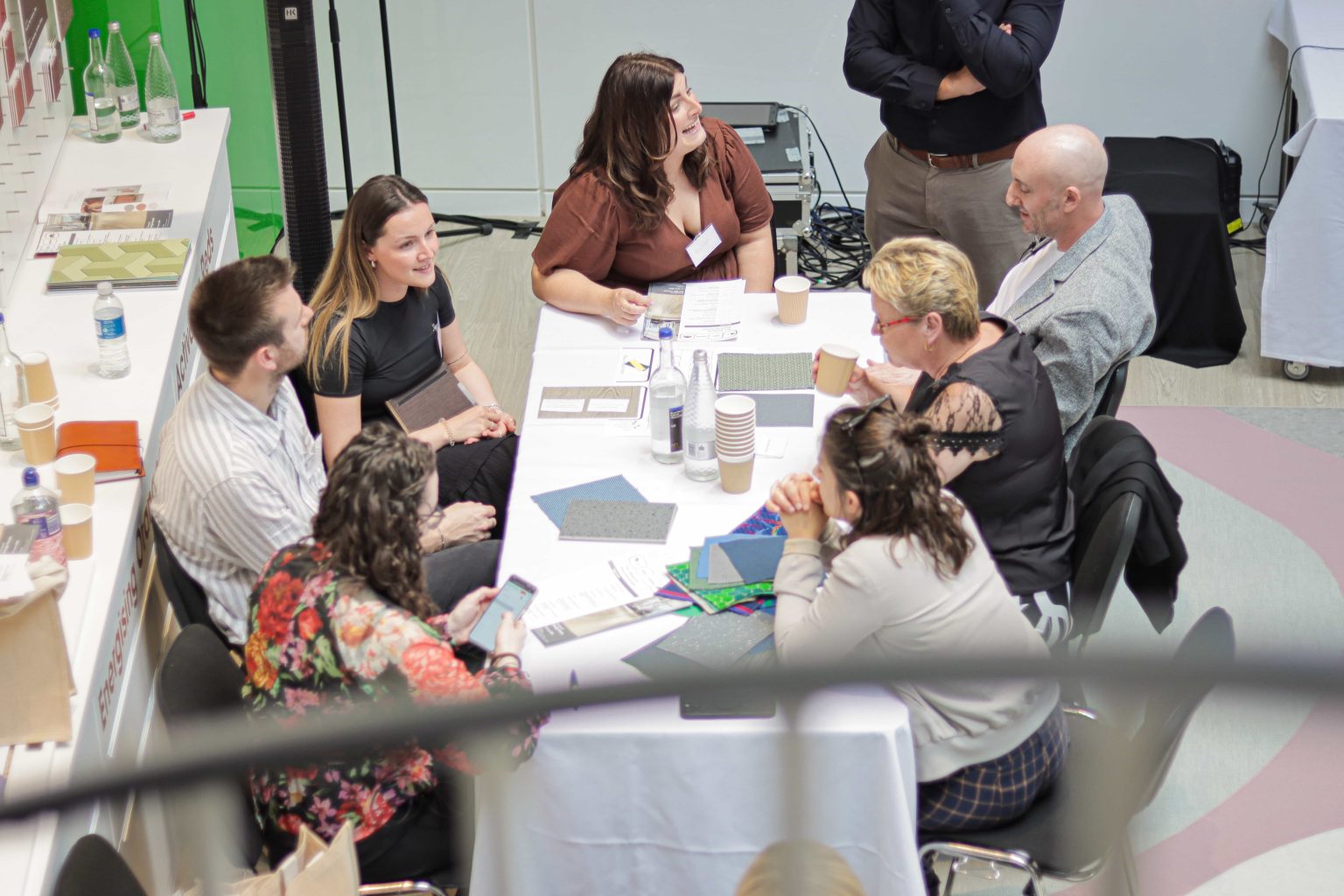
Altro’s Transport Design Forum is shining the spotlight here. Stephanie Kyle of Floyd Slaski Architects, speaking at this year’s forum, highlighted the prevalence of — and criticises — a singular approach to accessibility. “Architects and designers think of wheelchair users, and believe placing a ramp or a lift in that building therefore makes it inclusive,” she says. “It does not.”
Her presentation summed up the forum’s focus: To increase the consideration for hidden disabilities and, more specifically, neuroinclusivity, in public transport design. Other speakers at the forum included Lydia Horbury from Bus Users UK, who gave an overview of where the bus industry is in terms of neuroinclusivity, and German design house Neomind, which presented a concept for a neuroinclusive ‘bus for everyone’.
In addition to advocacy groups, the forum was attended by members of Transport for London (TfL), and organiser Altro hopes that transport bodies and OEMs will take away learnings that can be implemented in the future design of vehicles.

Hidden disabilities
A better understanding of accessibility begins with an understanding of the breadth of recognised disabilities.
Floyd Saski Architects specialises in this area. Its portfolio includes healthcare facilities such as community clinics, operating theatres and intensive care units, as well as a focus on education, mental health, autism, and special educational needs. It reveals that while 24% of the UK population have a disability, only 3% of that pool are full-time wheelchair users. 80% have what is classed as a non-visible disability. The Hidden Disabilities Sunflower organisation recognises 900 non-visible disabilities.
While Floyd Saski aims to demonstrate through its work the positive impact that inclusive spaces can have for people with hidden disabilities, Altro recognised that, unless public transport is equally as inclusive, users still risk being locked out of accessing those spaces.
Chris Edwards-Thorne, Marketing Manager at Altro (pictured), says the topic of neuroinclusion is becoming more prevalent in transport. The Transport Design Forum exists to build on that momentum. Now in its third iteration, its focus on neuroinclusivity is two years in the making. It is backed by Autistica, a research body that conducts research into the experiences of neurodivergent people in transport; and partners include fellow coach and bus industry stalwart Camira, and coach and bus care product supplier Autoglym Connect.
“The Forum is about more than public transport,” he says. “It’s about dignity, independence and a sense of belonging for every passenger. We have to learn to see the needs of neurodivergent people and go beyond where we currently sit as an industry. At the moment we’re good at identifying physical mobility issues and impairments, but we need to think beyond that into sensory and cognitive aspects as well.”
That public transport should be inclusive to neurodivergent people is emphasised by the fact neurodivergent people are less likely to drive regularly — only 39% compared to 60% of neurotypical people, according to Autistica. That means more reliance on public transport, or on other people.

Making transport inclusive
So what are the challenges that neurodivergent and autistic people face on public transport?
Policy Manager at Autistica, Georgia Harper, brought to the forum a report into the experiences of passengers who are neurodivergent that is hoped will inform positive changes moving forward — and made recommendations based on that research.
The report explores how and why neurodivergent people use public transport, what barriers and challenges exist, and what facilitators would make public transport more accessible for the neurodivergent community.
The main challenges recognised were the sensory demands such as lights, advertisements and sounds; crowding; unexpected changes; the attitudes of staff (suggesting there is scope for more training within Driver CPC) and other passengers; access to information; and the reliance on support from others when it comes to journey planning.
While there is little research on solutions and facilitators, that’s where forums such as Altro’s come in. Autistica’s recommendations are to establish a national steering committee for neuroinclusion in transport; work with community members to improve vehicle and stations designs for sensory sensitivities, and invest in research to develop, test and produce evidence of effective solutions. It also wants to standardise signage and information across public transport, improve the integration of services across transport systems and modes (such as ticketing and complaints procedures), invest in digital infrastructure across transport by enhancing existing online travel information and promoting and encouraging the sharing of transport and travel tips/hints on online community platforms.
Understanding and respect is also a key theme. Autistica recommends investment in evidence-backed neurodiversity training for transport service staff, and more public campaigns that promote awareness and acceptance of neuroinclusive behaviour.
Finally, the organisation emphasises the need to address overcrowding and improve staff support on public transport. That includes more staff presence on vehicles as a point of contact other than the driver.
These implementations need not come at the expense of other passengers. Over 80% of Autistica’s respondents, which included both neurodivergent and neurotypical people, endorsed some of its facilitators. The idea is to make transport more accessible to neurodivergent people, and improve the experience for everyone.

The universal bus?
To convey what some of these implementations might look like today, Altro recruited German design house Neomind to interpret a ‘universal bus for everyone’ for the London market. Director of Customer Experience Kasia Foljanty says many of the current status elements of the bus, including flooring, handrails, reader devices, wall panels and seats, request buttons, and windbreakers were rethought. “The idea was not only to focus on neurodivergent passengers, but to have a design that works for every group, for young people, for people commuting every day, for tourists.”
The resulting concept is based on the Mercedes-Benz Citaro.
Challenges were placed into two groups — sensory overload and lack of guidance. Colour coding is used (with an emphasis on softer palettes and high contrast) with the floor as a visual guide for orientation to direct passengers. Icons on the flooring and on the sides of passenger areas guide passengers to different zones. There is flexible use for different spaces and layouts can be customised, akin to a train.
Priority seating includes dividers between seats to grant a sense of space. Children and families have been considered with a dedicated family area. Wood effect vinyl is suggested for luggage areas and side panelling while seats come in an off-white colour swatch. The three different upholstery accent tones are matched with flooring. Indirect lighting on the floor and ceiling allows control of lighting during night and day.
An emphasis is also placed on information screens. A main screen behind the driver’s cab area is joined by three side-mounted overhead screens, and optional mounted screens in the centre.
“We tried to reduce the stress throughout the whole journey to guide the passengers without overwhelming them,” Kasia says. “The colour palette is toned down, frosted glass elements are used for windbreakers and powder-coated aluminium for hand rails. Contrast elements include soft buttons that gives rhythm through the bus.”
No constraint was placed on Neomind in conjuring up this design and the concept is intended to show a broad spectrum of what could be possible. The company has done many projects with commuter trains and underground rail, and it says much of what has been achieved can be done within a modest budget. But Kasia emphasises that designs such as these are not just about making a bus more inclusive for certain passengers — a thoughtful approach to design is a selling point and can be used to encourage modal shift. TfL’s route 63 initiative includes such a push, with a focus on high-spec buses and customer-friendly features.
“Everybody has an opinion when it comes to design, colours, materials and textures,” Kasia adds. “It will be impossible to make one design that works for everyone. But if you want more users, you have to listen to them. This perception is changing. You have to fight for your users and one way is through design. Make it attractive and welcoming for everybody.”
What is neurodivergence?
Neurodivergence encompasses a range of neurological differences, including those associated with autism, ADHD, dyslexia, dyspraxia, and other conditions. One estimate puts the UK neurodivergent population at 9.7 million.
According to the National Autistic Society, autism “influences how people experience and interact with the world”. Key to that is a variation in how autistic people think, feel and react to stimuli compared to non-autistic, or neurotypical, people. It is recognised under UK law as a lifelong disability.
Last year, data from the Labour Force Survey revealed that, despite an ambition to work, only three in 10 working age autistic people are in employment, compared with five in 10 for all disabled people and eight in 10 for non-disabled people.
David Ogden Holidays celebrates 50 years as Scania Irizar arrives
David Ogden Holidays celebrates 50 years as Scania Irizar arrives
David Ogden Holidays is a further coach operator to celebrate a significant anniversary in 2025 as it marks 50 years in the industry.
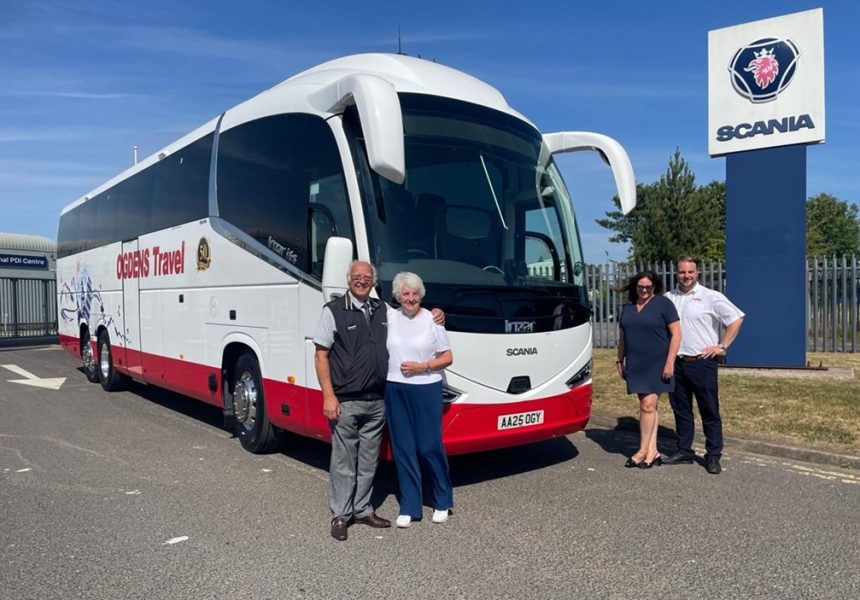
The St Helens business was founded by David and Joan Ogden (pictured above, left) in 1975 with a minibus. A birthday party will be held at the Imperial Hotel in Blackpool on 8 and 9 December, including entertainment and accommodation.
In addition, several other special tours will operate this year upon which Mr and Mrs Ogden will travel to recognise the milestone. The operator now has 10 coaches and several smaller vehicles that are used for feeder work.
Over 300 departures from its own programme are delivered per annum by David Ogden Travel, representing around 80% of overall workload. Its brochure is compiled by Mr and Mrs Ogden’s daughter Carol.
Short breaks in Britain and Ireland dominate alongside a smaller number of trips to mainland Europe, although Mr Ogden notes that the latter tours will not return to pre-2020 volumes.
Nevertheless, part of the 50th anniversary celebrations will be a departure in August to Lake Bled in Slovenia and onwards to Austria. Mr Ogden notes how the business delivers such a ‘special’ tour each year, and for the 2026 edition, not only will he and his wife travel, but Mr Ogden expects to cover some driving.
To help celebrate the half-century, the operator recently took delivery of a Scania Irizar i6S Efficient coach. It will be used on the Slovenia and Austria departure next month and was collected by the Ogden family from Scania UK at Worksop in early July.

David Ogden takes delivery of the brand new coach from Scania UK Regional Account Manager Richard Austin
The new arrival is a 53-seater that is prepared for PSVAR. Fitted are a centre sunken toilet, a boiler, a fridge in the dash, twin monitors, wood-effect flooring, USB charging points, and more. It is finished in the standard Ogdens Travel red and white livery with the addition of 50th anniversary decals.
In its earlier years, the operator favoured Leyland and then DAF coaches, but another Scania represents a continuation of the more recent choice of that marque. “In 2023 I bought a Scania Irizar i6S Efficient to see how it went – and it went well,” says Mr Ogden.
A second-hand example formerly with City Circle then followed, and while an issue with that coach developed while it was in continental Europe, Mr Ogden notes that backup was excellent.
The manufacturer’s service point at Trafford Park has supported the first two Scania coachesbut the 50th anniversary vehicle will be looked after by Haydock Commercial Vehicles, which is now owned directly by Scania. A further coach from the Swedish builder is expected to join in March 2026, Mr Ogden adds.
Scania UK Regional Account Manager Richard Austin (pictured above, right) handed over the new vehicle. He has congratulated Ogdens on the 50th anniversary and describes the arrival as “a stunning coach.” A cherished 25-plate registration mark completes it.