
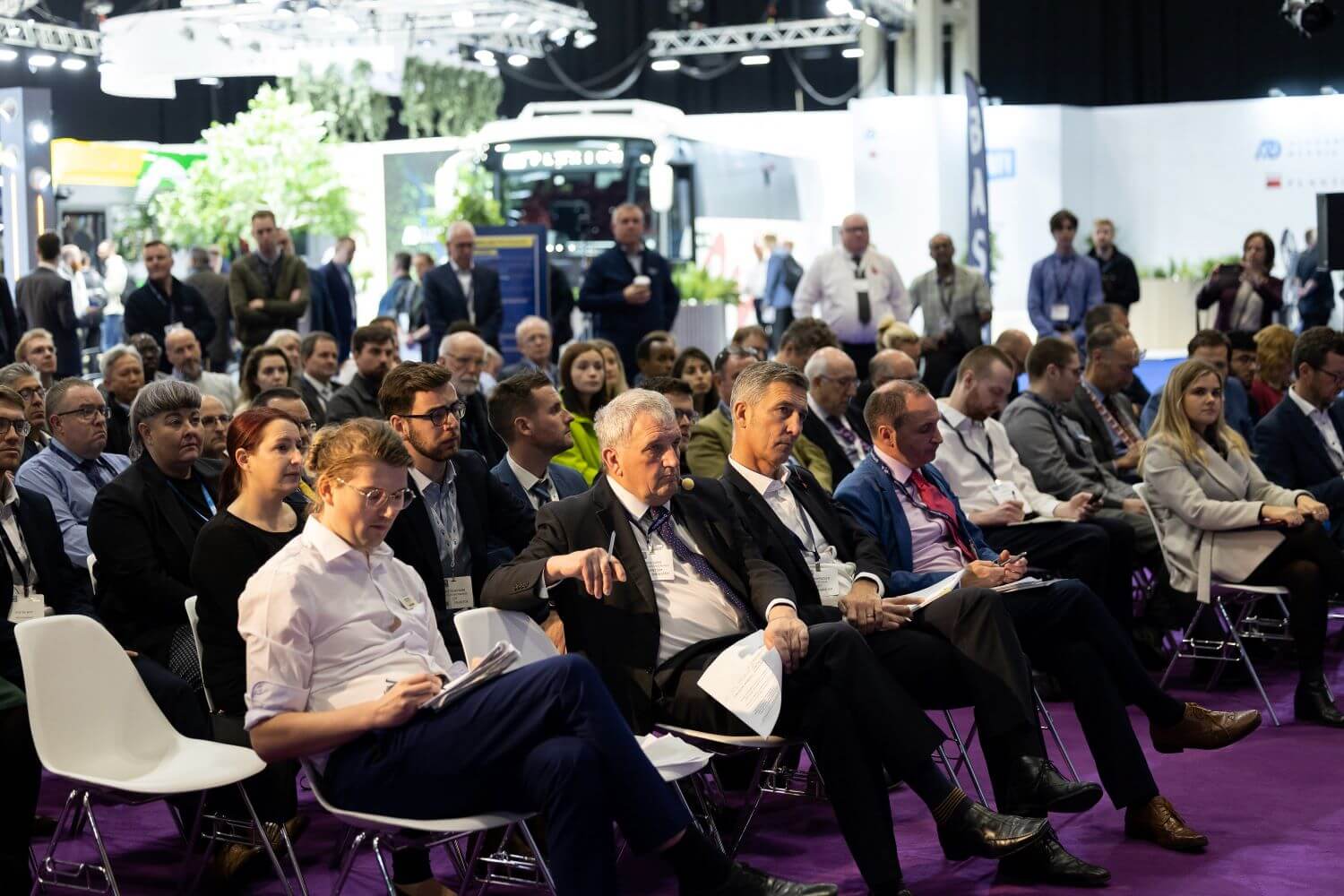
Your chance to be part of the Euro Bus Expo speaker roster
The organiser of Euro Bus Expo at the NEC Birmingham on 12-14 November, Diversified Communications, has for the first time invited applications to speak in the Masterclass Theatre at the industry’s leading trade show.
Stakeholders including operators, suppliers, industry bodies and government officials can participate in eight themes: investing in our people, fleets of the future/sustainable travel, funding and finance, cities and transport, operations and compliance, back to basics, and innovation.
A range of speaking opportunities are available — from keynotes to lightning talks, panel discussions, case studies, roundtables, workshops, fireside chats, interviews, and one-to-one clinics.
Diversified is looking for presentations that will, for example, help operators to grasp changes in attitudes or upcoming trends, tackle business challenges, improve a practice or process, learn about legislative or regulatory updates, or plan for projects or business developments.
Applications will be reviewed by a panel of operators and authorities. Presentations will be selected based on quality, originality, relevance, and audience interest.
Event Director Helen Conway says: “Euro Bus Expo has always been the go-to platform for discovering what’s new and next in coach and bus. This year, due to popular demand, we’re inviting speaker proposals to shape show content. We strongly believe that diverse perspectives, on-the-ground experiences, shared best practices, and thought-provoking debates are crucial elements for an enriching experience.
“This is a unique opportunity for operators and suppliers to contribute to a community-driven event that leaves a lasting impact on the sector. This new approach to creating the programme reflects our commitment to creating an inclusive platform at Euro Bus Expo.” Applications close on 30 June.
Click here for more information or to apply.

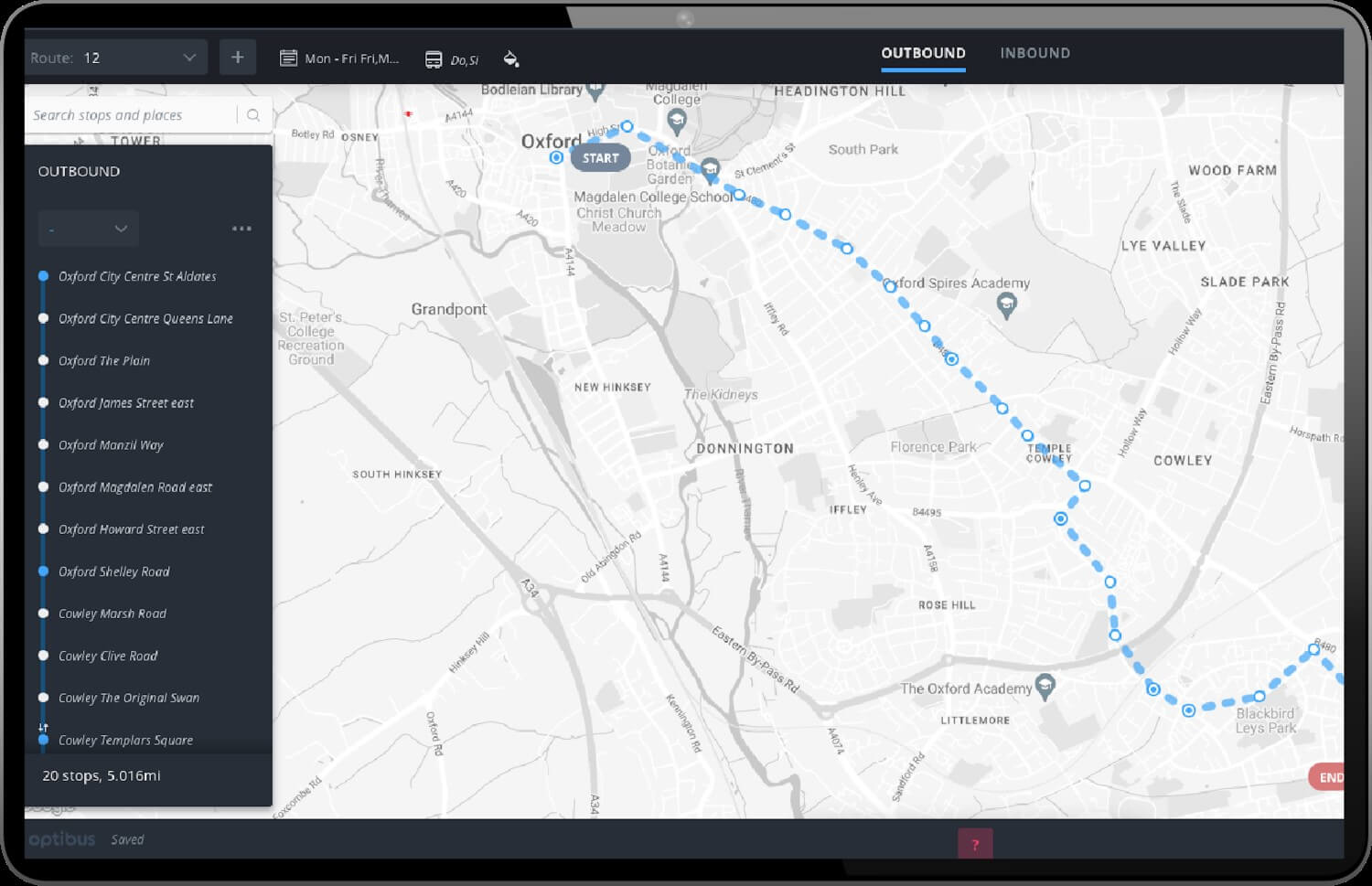
Optibus announces collaboration with Snapper Services
Optibus has partnered with Snapper Services in a move designed to offer operators improved data analysis.
The link-up integrates the Optibus planning and scheduling suite with Snapper Service's Mosaiq Insights, a transportation analytics platform.
According to the partners, the collaboration will allow operators and local authorities the ability to "visualise complex data sets easily, implement improved runtimes, and monitor the impact of service changes".
Optibus’s Performance Suite is enhanced by comparing static data with historic automatic vehicle location data.
It is claimed this will enable managers to see both datasets side by side and identify the exact cause of service disruptions.
"Reliable, on-time services are key to increasing public transportation ridership," says Amos Haggiag, Chief Executive and Co-Founder of Optibus.
"With stronger data insights, operators and agencies worldwide can more quickly identify the cause of service disruptions and offer innovative solutions for on-time performance issues.
"We look forward to partnering with Snapper Services to continue bringing the most advanced planning tools to the public transportation industry."
Snapper Services Chief Executive Miki Szikszai adds: "We’re delighted to partner with Optibus to enable excellent network performance for public transit authorities and operators around the world.
"With Optibus, we are making it easier than ever for transit organisations to take advantage of the power of data-driven insights to continuously improve their networks in service of their communities.
"Together, we’re paving the way for a sustainable future where every journey is optimized for efficiency and passenger satisfaction, accelerating our shared vision for a greener, more connected world."
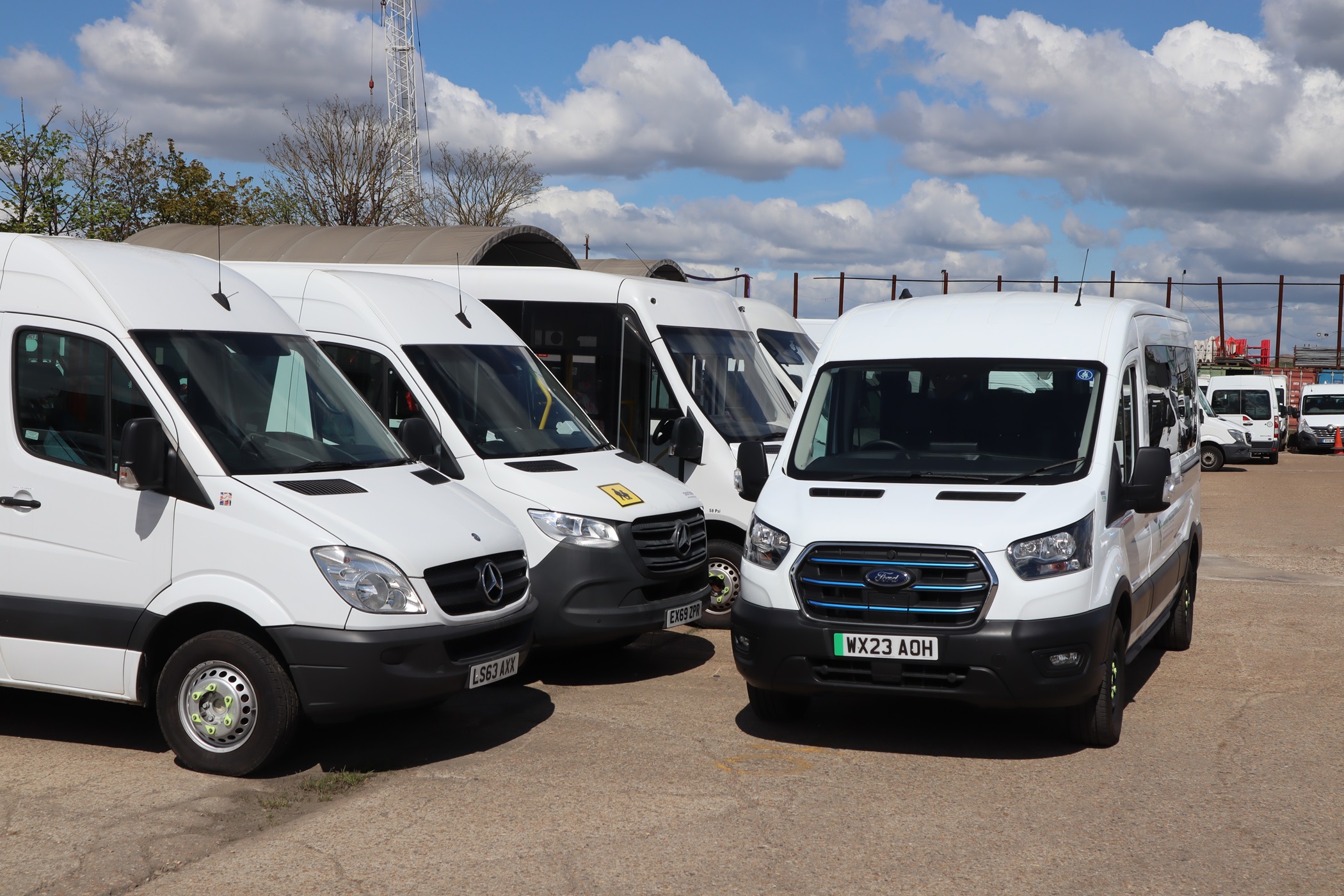
London Hire maintains focus on zero-emission despite headwinds
Local authority (LA) and other social transport minibuses are an ideal vehicle class to make the zero-emission shift if funding is in place: They often cover low mileages and have downtime for charging.
For London Hire, which works in that field via its rental and vehicle-plus-driver operations, battery-electric is also developing into areas including demand responsive transport (DRT), which is increasingly seen as a source of future zero-emission business. That comes against a core market for diesel minibuses, which the supplier says is as busy as it has seen for a long time.
Procurement and supply of zero-emission minibuses is nothing new for London Hire. Sales Director Peter Moxom told routeone in 2021 that the company’s reach there was growing and was expected to pick up further steam in the years after.
Engagement with commercial bus operators on zero-emission vehicles is still in hand, while Peter says that the supplier is always interested in working with coach operators where suitable mutually beneficial opportunities on vehicles may present themselves. “Long-term is key in those areas, but we will purchase to suit customers’ needs,” he explains.
Zero-emission momentum currently with smaller vehicles
For now, zero-emission momentum for London Hire is with smaller vehicles, including the Ford E-Transit and examples of the Mellor Sigma. The Sigma 7 high-floor is seen as comparable to a coachbuilt Mercedes-Benz Sprinter diesel accessible minibus.
London Hire currently has three Sigmas placed with customers. It is working with Mellor on a small number of changes to the high-floor models in that range, including around the entrance.
Provision of vehicles for DRT is a growing market for London Hire. The EVM Cityline low-entry diesel minibus satisfies that need, and a number were recently supplied to an LA customer as part of a wider procurement. But Peter notes that a Sigma 7 low-floor has gone to Shropshire County Council for Connect on Demand work, giving rise to hope of further business for the Sigma in DRT applications.
LA customers must understand the economics of zero-emission, however. “Battery-electric is a lot of cost upfront, but with an expected longer life we can spread the investment over a greater period,” he says. “We first saw interest in zero-emission generated by smaller vehicles such as LDV products and the E-Transit, but that is now expanding to larger models.”
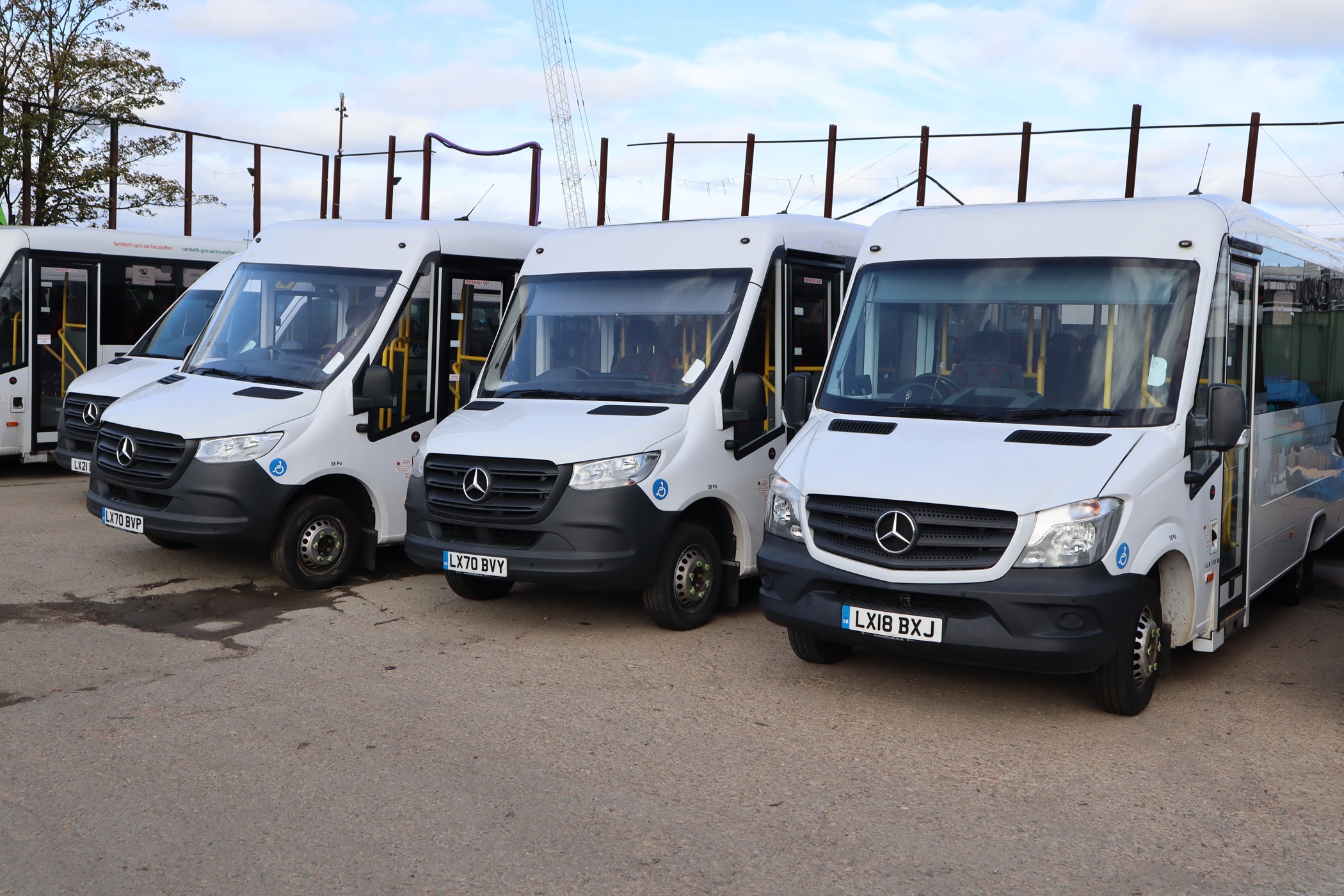
Unhelpful to the wider move away from diesel among LA customers is the government’s deferral to 2035 of a mandatory shift to zero-emission for new cars and vans.
Those optics have removed an element of the impetus for LAs, leading some of them – but by no means all – to adopt a more cautious approach to the transition. However, other councils are keen to get zero-emission small buses into their fleets, with demand for the E-Transit minibus remaining strong.
London Hire develops zero-emission understanding
That bump aside, London Hire continues to advance its understanding of zero-emission. Peter observes that many years ago, the supplier quickly adopted Euro IV in minibuses.
“People laughed, but we were right to do it. We also purchased some LPG-powered vans for a customer when that fuel was of interest. We have never been shy about looking at zero-emission or low-emission alternatives, as we recognise that we have a responsibility in those areas.”
Whole life costs and battery management are key to the supplier’s knowledge of zero-emission, he believes. While London Hire is already a master at drawing the maximum life out of diesel vehicles, it expects battery-electrics to last longer, at 15 years. Zenobe is on hand to look after batteries and infrastructure where required, including second life applications for the energy storage assets.
Peter highlights a significant benefit that is specific to zero-emission in the accessible field. Those vehicles often carry people with special educational needs and disabilities, who may be sensitive to noise and vibration. An electric driveline removes much of that influence on the travelling environment and renders the trip easier. “That should gain much more focus,” he believes.
Added value a key driver for wider business
While government flip-flopping has cooled some interest in zero-emission minibuses, the wider London Hire business is as busy as ever. Diesel vehicles are in strong demand, and during mid-April its premises were full of stock.
Account Manager John Shier notes how that is because of the exchange with customers of existing vehicles for new arrivals, although he adds that many off-hire minibuses are immediately rehomed.
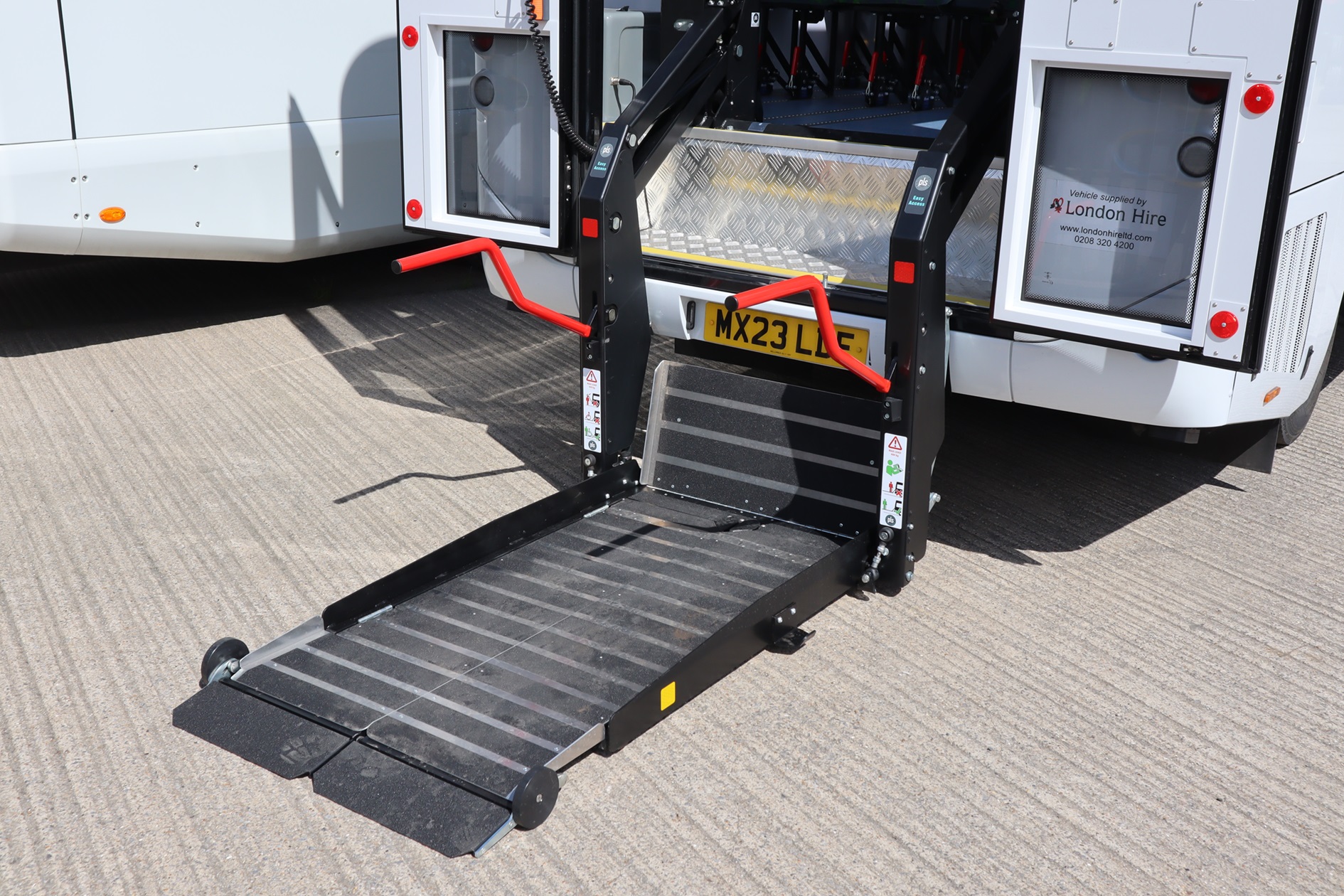
The business is also working on expanding its warranty agent capabilities. It collaborates in that manner with lift supplier PLS, but efforts are in hand to do the same for Mellor and Treka Bus.
Such added value is part of what Peter describes as “a one-stop shop approach” for London Hire. That strategy is gaining traction via its driver-and-vehicle offering, and resulting expansion of operating sites sits well with provision of warranty support. It will be a further string to the bow of an ever-growing business.