
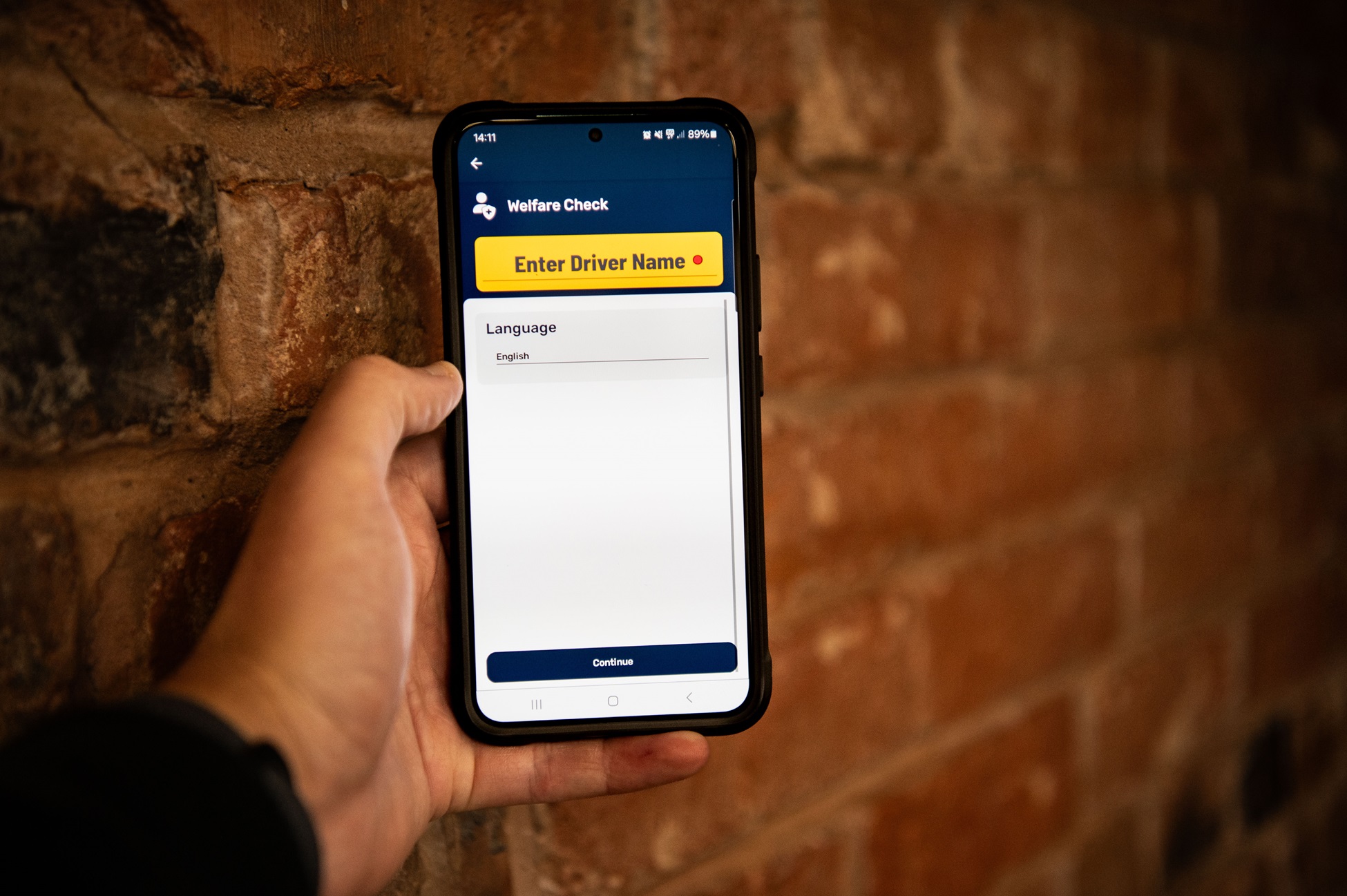
Aquarius IT adds welfare and safety check capability to its app
Aquarius IT has added a customisable driver welfare and safety check into its Aquarius app. It says that provides a simple tool for line managers to assess and record driver information during safety spot checks to make sure that staff are fit, healthy, and safe to drive and work.
In a similar manner to all other ‘check’ modules in the Aquarius app, the welfare and safety check has a pre-set list that can be customised or added to based on the customer’s needs.
Those can range from recording the results of routine breathalyser and drug tests, to spot checking the cab area so as to ensure that there are no obvious wellbeing issues and that everything is safe and comfortable for the driver.
Written and photographic checks could also include making sure that mobile phone policies are being adhered to and that the right PPE has been issued and is being worn.
Taking such items seriously not only considers drivers’ health, safety and welfare but also factors in protection of an operator and its reputation, Aquarius says.
Speaking about the new module, Aquarius IT Managing Director Mark Johnston says that the supplier has been in conversation with several customers on the welfare and safety check subject for some time.
“We know that there are many companies that already carry out these spot checks on paper as part of their enhanced duty of care policies and are looking for an easier way to capture the information digitally for analysis, traceability, and due diligence,” he continues.
“By prioritising the welfare of drivers, they have found that this not only benefits the individual personally, but also enhances safety and overall productivity.
“The Aquarius app has been purposely designed to aid this process. Line managers responsible for these in-person spot checks will have a company-approved checklist on their phone or tablet, which will make the whole process easier to manage.”
Mr Johnston adds that creation of a digital audit trail allows information to be analysed and investigated further “for even greater back-office insight.” Reminders can be scheduled if any driver follow-ups are needed.
“This will all enable employers to be better informed about their workforces, so that the most effective health, safety and welfare measures can be put in place proactively for the benefit of everyone involved," he concludes.

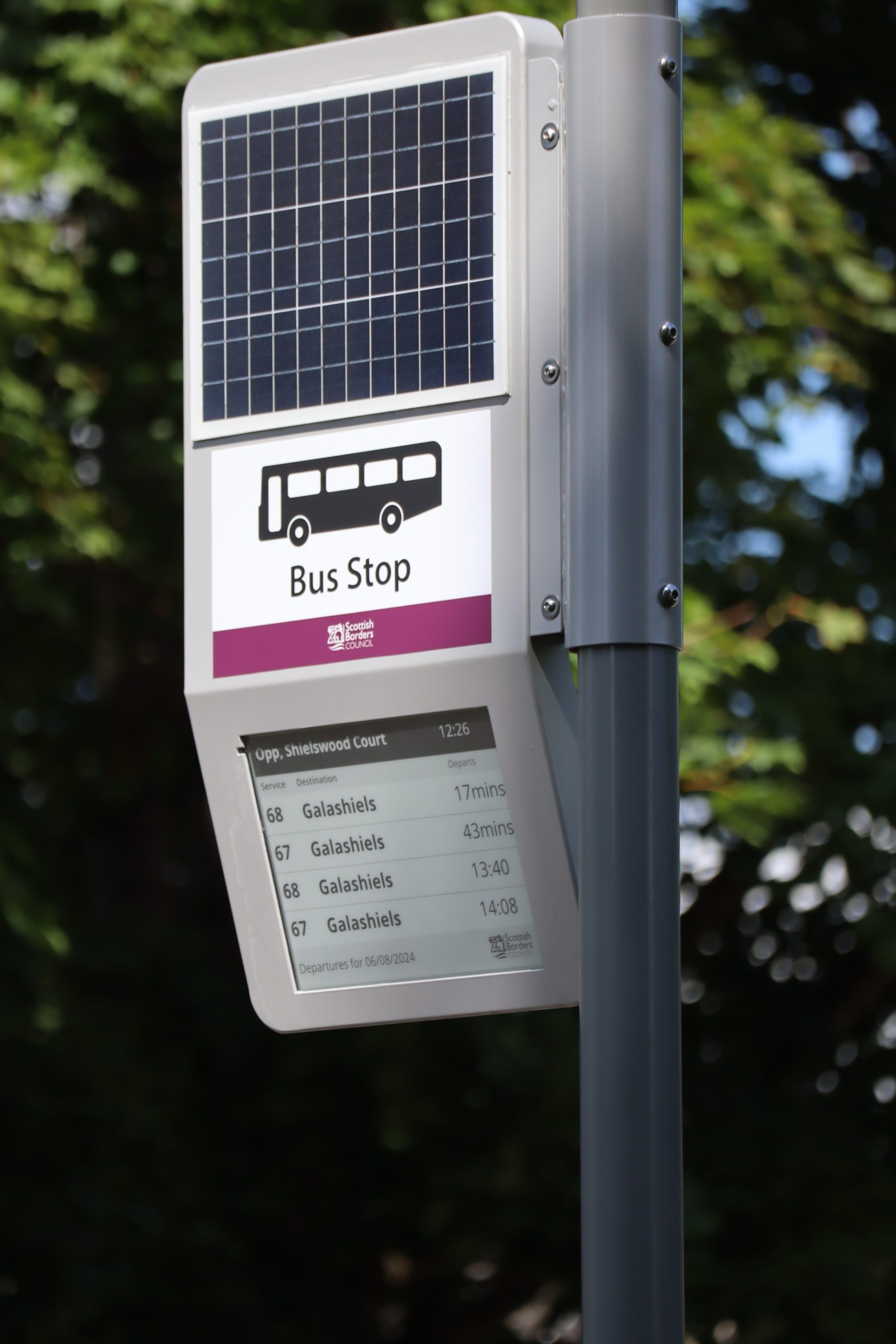
Solar-powered real-time Journeo displays for Scottish Borders
15 Journeo real-time bus stop displays that are solar powered have been installed in remote communities in the Scottish Borders Council area.
They utilise Journeo’s e-paper technology and have significantly reduced cost of installation compared to cabled units, the supplier notes. That saving has come via the lack of civils work required and removal of ongoing costs of grid electricity to power them.
Maintenance requirements of the displays are “minimal” and power draw is low, which Journeo says is important in order to maintain functionality during periods of low ambient sunlight.
Scottish Borders Council has been a client of Journeo for over five years. The latest project is being funded by Scotland’s Community Bus Fund.
The displays form part of the local authority’s long-term strategy to improve the bus passenger experience by providing accurate and timely travel information in rural locations and increasing the number of real-time displays at stops.
Speaking about the work, Scottish Borders Council Localities' Transport Officer Dan Cathcart says: “These innovative displays from Journeo have extremely low power and data requirements. They can be easily fitted to existing poles, and are quickly up and running.
“We do not have to close roads or fund roadworks to lay new power cables. But the big winners are our customers in rural communities, where they will benefit from more consistent information about their bus services.”
Adds Journeo Group Sales Manager Ted Beatson: “The most costly and time-consuming challenge for a local transport authority rolling out real-time information is the need for power infrastructure to be in place.
“If it is not, it is extremely costly and disruptive to carry out the necessary works. Our e-paper displays are ideal in situations where complicated and costly works need to be avoided. Using our self-sustained units, which fit quickly to existing poles, need no power connection, and are proven to work in the region, is a win-win for the council and the community.”
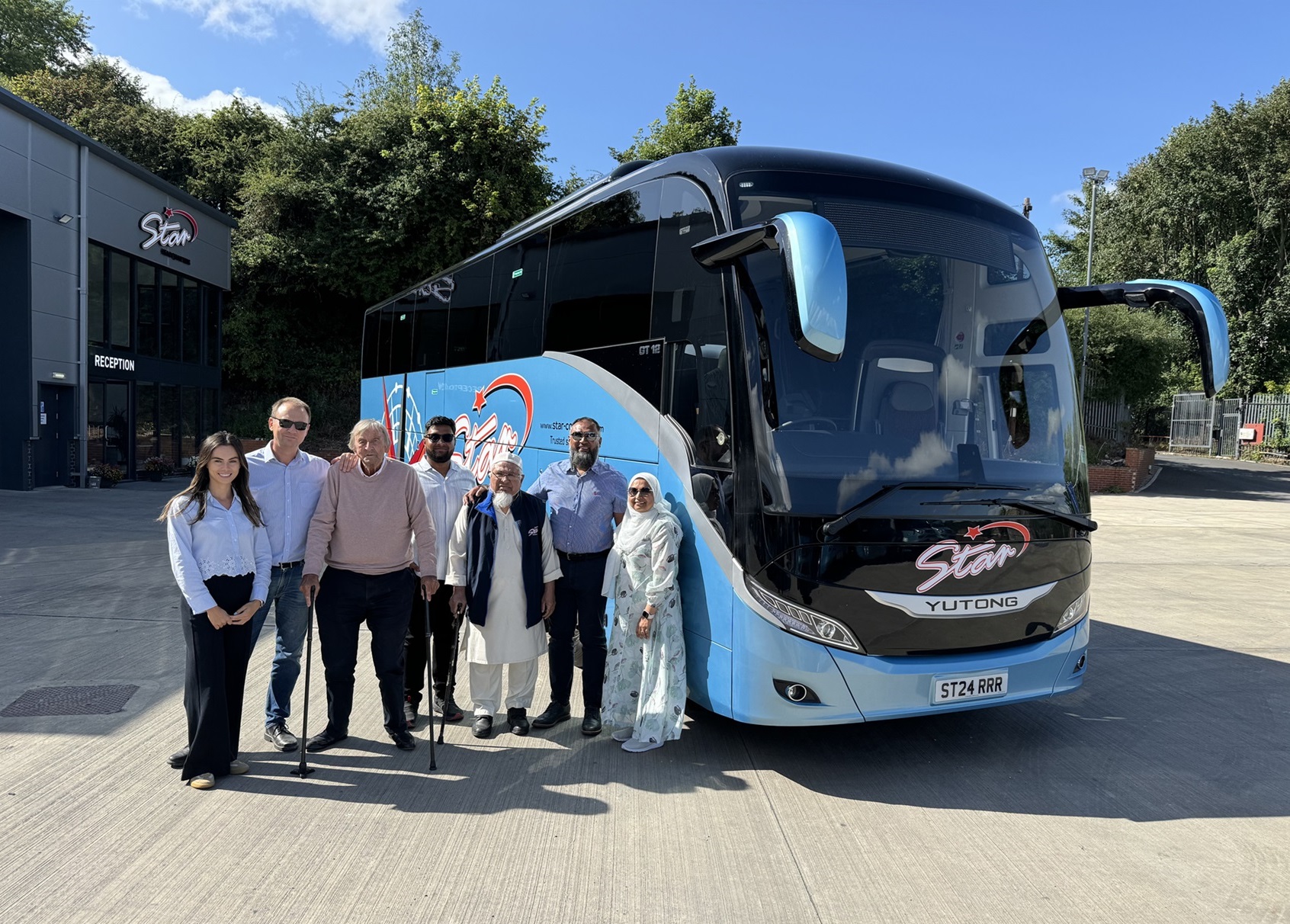
Three generations present as Star Coaches receives Yutong GT12
Star Coaches of Batley has taken delivery of a Yutong GT12, supplied by Pelican Bus and Coach and finished in the West Yorkshire operator’s award-winning metallic blue livery.
It was handed over in a special ceremony where three generations of the Dabhad family – owners of Star Coaches, which was founded in 1982 by Ibrahim Dabhad and his late wife Sabera – were joined at the operator's premises by three generations of the Crump family, proprietors of Pelican. The dealership was established by the late Ernest Crump in 1919.
The handover marked the strong family-based ties between Star and Pelican, where in both cases three generations of the founding family remain actively involved in each business.
Pelican Chairman Bob Crump is father of Managing Director Richard Crump and grandfather of Area Sales Manager Amelia Crump. Ms Crump negotiated the deal with Star Coaches Operations Manager Muhammad Dabhad.
Mr Crump Sr notes: “It is a very special pleasure for us to hand over this GT12 to Star Coaches, a family business that, like ours, places great emphasis on customer service and maintaining a strong family legacy in a multigenerational business.”
The PSVAR compliant GT12 carries a cherished registration and Star Coaches’ distinctive brand, which in its application to a midicoach was crowned winner of the 2024 routeone Livery Competition for vehicles in that size class during August.
[adrotate banner="44"]