
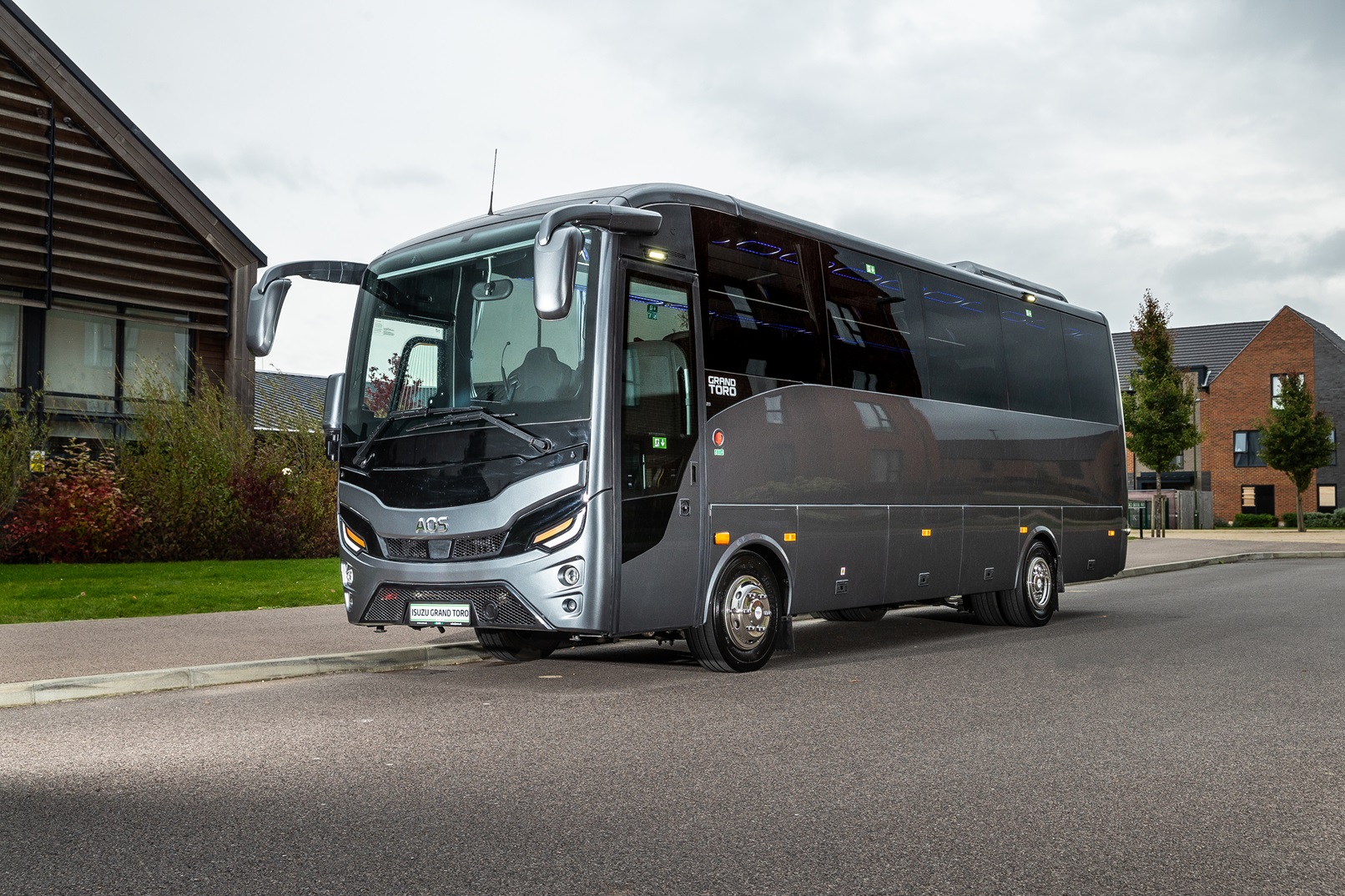
AOS Isuzu Grand Toro midicoach gains interior and exterior refresh
A refresh of the AOS Isuzu Grand Toro front-engined midicoach has been completed that dealership EVM UK hopes will allow already strong volumes for the cost-effective model to grow further under the Grand Toro 2 moniker.
One of the first of those updated vehicles will be on the EVM stand at Euro Bus Expo at the NEC Birmingham on 12-14 November. EVM has also worked with maker Anadolu Isuzu to make more minor changes to the larger, rear-engined Visigo, and it will be a further part of a large EVM stand at the trade show to present the dealer's full vehicle range.
EVM Managing Director Danny McGee says that Grand Toro 2 overhaul has been underway for around 12 months. Key to external change is removal of the previous electric slide-out step along with improvement to the rear-view mirrors.
They are now to a gullwing style and colour coded, while a lower offside mirror has been added. Locker doors have a better latching mechanism to ease opening, while the wheel trims are improved. The driveline of a Cummins B4.5 engine coupled to an Allison six-speed automatic gearbox remains unchanged.
Internally, the window pelmets now include LED lighting and USB-A and USB-C charging points. Curtains are pleated and the interior (including the cab) has lost grey plastics with the introduction of a satin black colour that EVM says will resist dirt better.
Seats now have diamond stitching, height adjustable three-point belts and carbon fibre effect armrests tops. Privacy glass is darker than before, and aisle and steps carpeting is heavier duty. The driver’s seat has been replaced with a higher-specification Isringhausen model.
The Grand Toro 2 remains available in various configurations with up to 37 seats. With a courier position that drops to 35, to which PSVAR compliance or readiness can be added. EVM can also supply the model with two or four saloon tables, which reduce capacity to 33 or 31 passengers, respectively.
Warranty on the Grand Toro 2 is two years or 200,000km, but packages beyond that are available at additional cost. Those are three years/200,000km; three years/300,000km; four years/300,000km; and five years/400,000km.
EVM began supplying AOS Isuzu vehicles in 2022. Mr McGee says that 100 are now on the road in the UK and Ireland. The 8.5m Grand Toro accounts for most of those, although availability of the Visigo has restricted its impact. That position will improve in 2025 and EVM expects that the 9.7m midicoach will grow its numbers from then.
“We have no specific target for the Grand Toro 2 in 2025, but I see it sitting at around 75 units per year,” Mr McGee continues. “It does not compete with the Visigo or other models in that area, but fits the former Plaxton Cheetah and Indcar Next niche.”
Around 75 AOS Isuzu vehicles across the Grand Toro 2 and Visigo are on order for EVM. The Visigo updates include changes to the interior colours, new mirrors, and use of the Sege 410 seat that is seen in various other products sold by EVM.
Register for free tickets to Euro Bus Expo, visit the show website.
Click on any of the following pictures to enlarge:


JHM Butt's Exclusive Show Offer
JHM Butt & Co Ltd have been your one stop shop for garage equipment and workshop tools since 1971. We are delighted to be showcasing our range of commercial garage equipment at Euro Bus Expo 2024.
Between our staff, we have hundreds of years of experience with helping garages and commercial workshops operate, whether it is site planning, renovation, equipment or simply providing spanners.
We are offering a significant price cut on our best-selling Mobile Columns, a special offer for show visitors. We are offering a set of 4 for £19,995, with a free pair of Axle Stands which are worth £685.
We wanted to bring something special for the show, which is why we are making such a big deal about this one-off offer, exclusive for Eurobus.
At 8000kg per column, giving the set a 32-tonne capacity overall, they are capable of lifting almost any commercial vehicle in your workshop.
These columns are simple to manoeuvre; you simply use the pump to hydraulically elevate them so they’re on the wheels, quickly adjust the forks, slide them into position, and press the lever to lower the columns back to ground level. The adjustable wheel pick-up forks accommodate a range of tyre diameters, from 600-1250mm.
Using microchip technology to raise and lower the columns in a synchronised fashion, these lift columns are simple to use. The lifting system is battery-powered, meaning that there are no wires causing limitations and potential trip hazards.
This is a great deal for some quality mobile columns, with an added bonus of some wheeled, tall axle stands absolutely free!
We have other offers on commercial equipment, including a Wheel Alignment System, Battery Booster Packs, ThinkCar Diagnostics, an Oil Drainer and more. come and see us to chat with the team about these deals.
See you at the show!
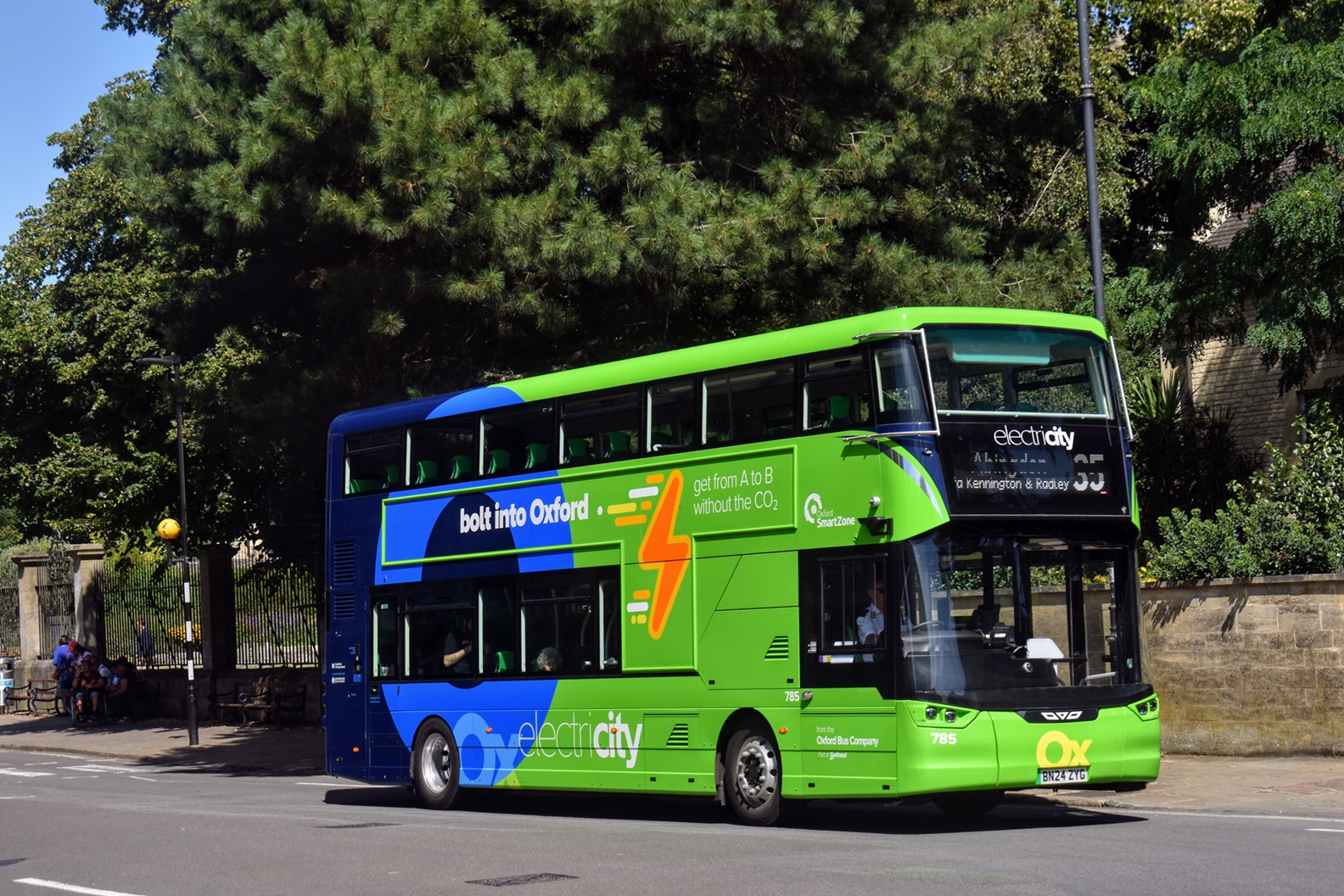
Key advancements and challenges for electric bus tech in 2024

As we settle into the final quarter of 2024, Director of EV Fleet, UK and Nordics Bradley Fox looks back on the year, the major advancements in electric bus technology, and the other elements that still have not fully evolved.
With Euro Bus Expo almost here, Bradley also shares the topics and questions to make the most of your time when meeting electric bus OEMs at industry conferences and events.
As always, if you have any questions, please get in touch with us.
Steven Meersman, Co-Founder and Director, Zenobē
Battery-electric bus advancements in 2024
More efficient vehicles
One of the most noticeable advancements in battery-electric bus technology we have seen this year is the improved energy consumption of vehicles. Leading bus manufacturers have reported a c.20% uplift in efficiency (kWh per mile) over the last three years.
Better energy efficiency means that the vehicles have longer ranges, and less energy is required to charge the batteries, leading to reduced ‘fuelling’ or energy costs. This year has also seen a focus on integrating AI technology into the operating systems of new vehicles for smarter route planning and energy management, making them even more efficient.
Battery advancements and warranties
Battery energy density is improving for longer range and shorter charging times. New double-decker buses typically have a range of 250 miles or more, a 25% increase compared to first-generation vehicles launched back in 2017.
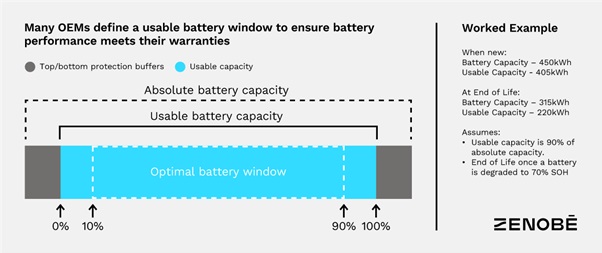
With increased range, and research suggesting that batteries degrade the least when used at between 10-90% state of charge, we should start to see operators overcoming range anxiety and implementing smart charging strategies to charge their vehicles to 90% rather than 100% to achieve decelerated battery degradation.
As the market and technology matures, we have seen a movement to longer battery warranty periods, with OEMs extending from eight years up to 11 years in the past 12 months.
Some OEMs are even starting to offer warranties of up to 15 years as they become more comfortable with the technology. The advantage of longer warranties means that operators can plan the battery replacement cost for later in the vehicle’s life, to a time when batteries are forecast to be cheaper.
Longer battery warranties also enable vehicle lessors like Zenobē to lower monthly lease costs by being able to price in residual values, ultimately driving down the total cost of ownership of electric fleets.
Smart tech, data, and the growth of solar
Electric buses are increasingly being equipped with smart technologies such as Internet of Things sensors for real-time monitoring of performance, battery health and predictive maintenance.
Thermal management systems within buses are also improving, helping to maintain optimal operating temperature while enhancing battery performance and longevity.
This increased monitoring compared to diesel and even first-generation electric buses is providing operators with greater oversight of their electric fleets, from the state of health of their batteries to what the optimal temperature of a vehicle should be depending on the time of year.
More data means more opportunities to operate a fleet more efficiently, and ultimately, to reduce costs.
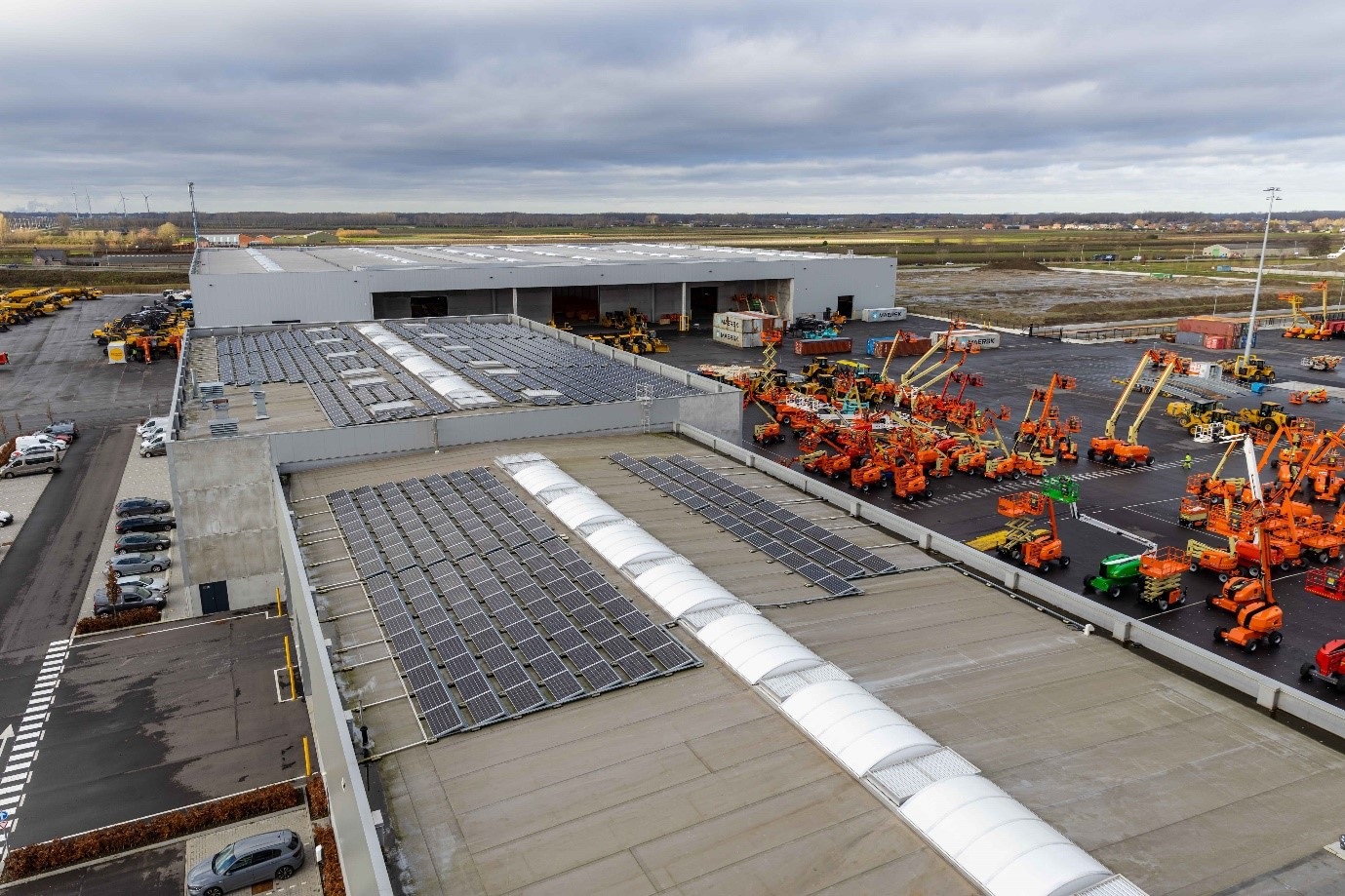
Across Europe, we are seeing a massive growth in solar installations by domestic and commercial users. Annual installed rooftop capacity is expected to reach 183GW globally by the end of this year.
There is an opportunity here for fleet operators to start self-generating their own power and benefit from reduced exposure to volatile energy markets.
We are seeing instances where operators could achieve greater than 70% self-consumption by using advanced scheduling and charger management to oversee their power demands and match it to their on-site solar generation.
Retrofit and repower both part of electric bus advancements
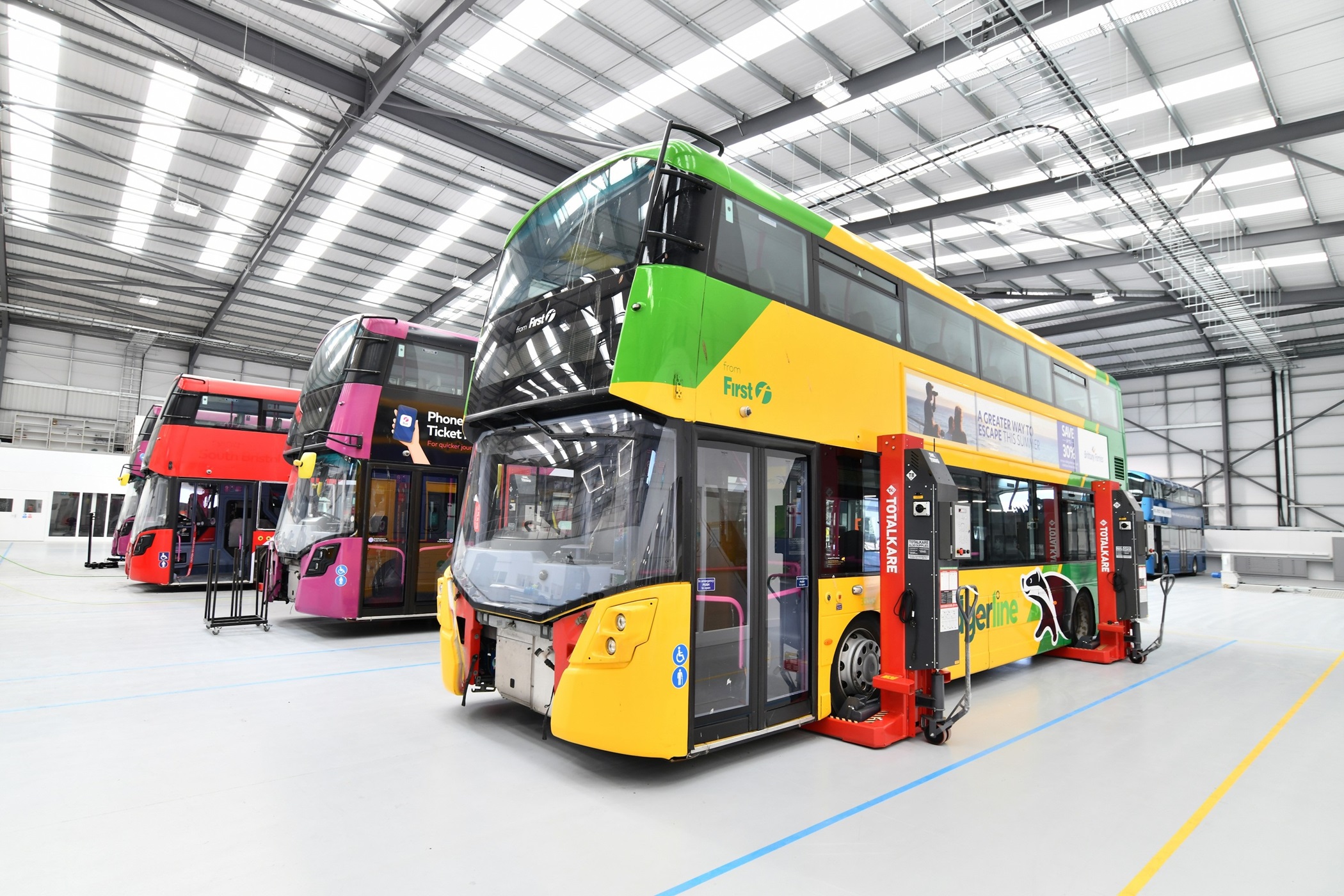
We have seen some big developments this year in the retrofitting and repowering space. Wrightbus launched a battery-electric repower offer for diesel vehicles as part of its NewPower enterprise.
The repowering process involves the fitment of a new battery, drivetrain, and heating, ventilation and air-conditioning system into the existing diesel vehicle, and can take just three weeks to complete.
Earlier this year, we partnered with Big Bus Tours to finance and support the operation of 20 repowered tour buses as part of its London fleet.
What elements did not progress as quickly as hoped?
While looking back on the trends of 2024, it is also important to consider what has not progressed as well as expected, and where that goes next.
Vehicle-to-grid (V2G) technology needs more time
While the prospect of electric buses not only drawing power from the grid but returning stored energy back to it is exciting, we have not seen major developments this year in the rollout of V2G.
With a reliance on bidirectional communication between vehicle and grid, there is an information gap here that is yet to be filled through more engagement between fleet and grid operators around the technology.
There has been some movement in the United States, where the US Department of Energy recently launched a programme to look at how V2G integration could be scaled nationally. While that is a positive step for V2G, it is an indication that more research is required before V2G becomes a viable option for operators.
However, the prospect of V2G and the potential benefits it may bring to bus operators and the energy network are very exciting, and something to watch:
- Bidirectional charging: V2G allows electric buses to use bidirectional chargers that enable power to flow both from and to the grid, facilitating energy exchange
- Grid stabilisation: A fleet of battery-electric buses equipped with V2G technology has the potential to provide services to stabilise the grid and balance supply and demand during peak energy usage times
- Renewable energy integration: Electric buses can store energy generated from renewable sources such as solar and wind during low demand purposes and then discharge it back to the grid when needed – another useful grid stabilisation tool
- Cost savings: Selling this stored energy back to the grid during peak pricing periods can significantly reduce overall operational costs.
Charging speeds have not increased as expected
Pantograph-based charging excluded, the power that electric buses can charge at is still limited to c.200kW, based on a 450kWh battery that takes c.2.5 hours to charge.
Going into 2025, we would expect that electric bus OEMs will be focused on improving the charging rates of their equipment so that charging windows can continue to shorten, ideally to below 90 minutes, to provide significant operational benefits.
However, high-powered charging can increase battery degradation, so route allocation will be key to ensuring that individual vehicles are not repeatedly charged at an ultra-fast rate.
New battery chemistries
We still have not seen any major updates in the development of new battery chemistries for electric buses.
Research into solid-state batteries with a promise of higher energy density, potentially enabling longer ranges and faster charging compared to traditional lithium-ion chemistry, is ongoing.
We would have expected new battery chemistries beyond the traditional lithium iron phosphate (LFP) and nickel manganese cobalt (NMC) to have been tested and deployed.
That said, we are seeing lithium manganese iron phosphate (LMFP) technology start to enter the development and validation phase, with expectations that it will deliver improved performance at a similar cost to existing chemistries.
Taking this knowledge and making the most of industry events
We are excited to be exhibiting at Euro Bus Expo in 2024, on stand 280. While it is a fantastic opportunity to see new technologies available to the market and to get a sense of the latest developments in the industry, getting to the crux of what matters to you in your fleet electrification journey can be complex.
To get the most out of your time at Euro Bus Expo, here are some of the questions and topics to help you kick off your conversations with electric bus OEMs and make an informed decision about the next step of your fleet electrification journey:
- Ask what the expected battery degradation curve is. This is the rate at which the vehicle’s battery will degrade to the end of its first, usable life. It will immediately set expectations on the performance of the vehicles and the battery’s useful life
- Enquire about the battery warranty conditions, including whether monitoring software can detect warranty alerts when the vehicle is out of its warranty period
- Find out whether full access to the electric bus data is provided once the vehicles are up and running so you can make informed decisions on operational behaviour and reduce costs
- Ask for details of battery replacement costs and the process involved to support that. For example, will you be able to use alternative chemistries when the battery needs replacement? That will enable you to take advantage of possible technological advancements
- Ask about energy losses when charging the bus. Some vehicles are more efficient than others, and energy losses through the charging cycle mean additional cost to charge the vehicle.