
UK among tri-axle zero-emission Wrightbus StreetDeck prospects
UK among tri-axle zero-emission Wrightbus StreetDeck prospects
Wrightbus sees UK sales opportunity for its new tri-axle zero-emission StreetDeck double-deck bus platform in addition to core Far Eastern markets for that class of vehicle, it says.
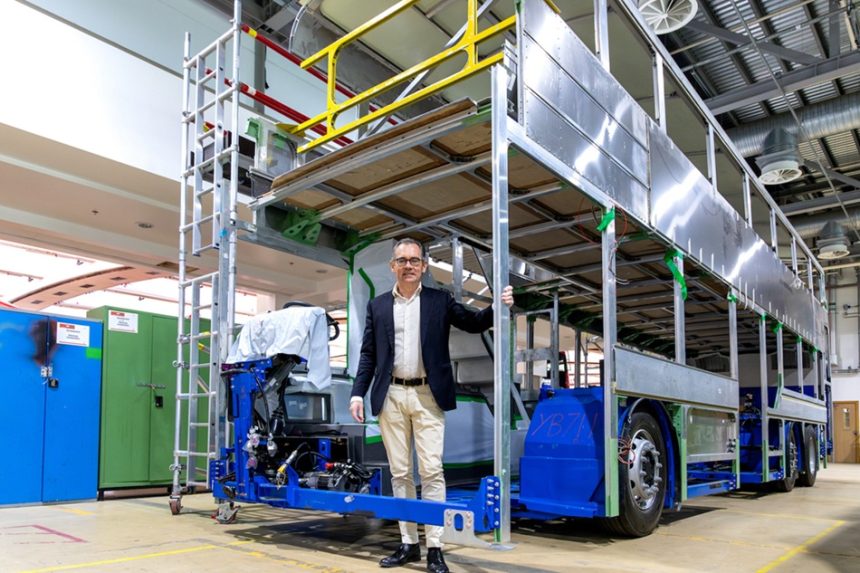
That was noted by CEO Jean-Marc Gales (pictured) when debuting prototype examples of the 6x2 bus that it says are “simultaneously” coming off production lines in Northern Ireland and Malaysia. The manufacturer adds that orders are “already lined up” for the product in Europe and the Far East.
Mr Gales adds that Wrightbus has worked “round the clock for the last two years” to develop the StreetDeck in tri-axle zero-emission format.
It has a driven third axle and a second axle ahead of that which in a notable specification can be fixed or steered. When combined with what Wrightbus claims is battery placement that will not compromise passenger capacity, that “is a real triumph for our engineers,” Mr Gales adds.
Efficiency and durability testing will be completed this summer and a demonstrator will be shipped to an operator in Hong Kong for a 12-month period. Beyond Hong Kong and the UK, the manufacturer sees opportunities for the tri-axle StreetDeck in Australia, New Zealand and Singapore, it says.
“We are building momentum not just in our home territories but overseas as well, as news of our brand reaches all corners of the globe,” continues Mr Gales.
“We are the leading manufacturer in zero-emission technology, and we have more than 100 hydrogen buses heading to Germany, as well as fleets of hydrogen and battery-electrics across the UK.
“Our 6x2 will be another important string to our bow, showing that Wrightbus – 80 years old next year – is at the very forefront of technology.”
Wrightbus has previously bodied 6x2 diesel chassis from other manufacturers for the Far East, but the tri-axle zero-emission StreetDeck is its first entirely in-house product in that size class. It also has a tri-axle hydrogen-powered coach in hand that is due to debut in 2026.

Irizar ie tram electric artic to be trialled in Liverpool City Region
Irizar ie tram electric artic to be trialled in Liverpool City Region
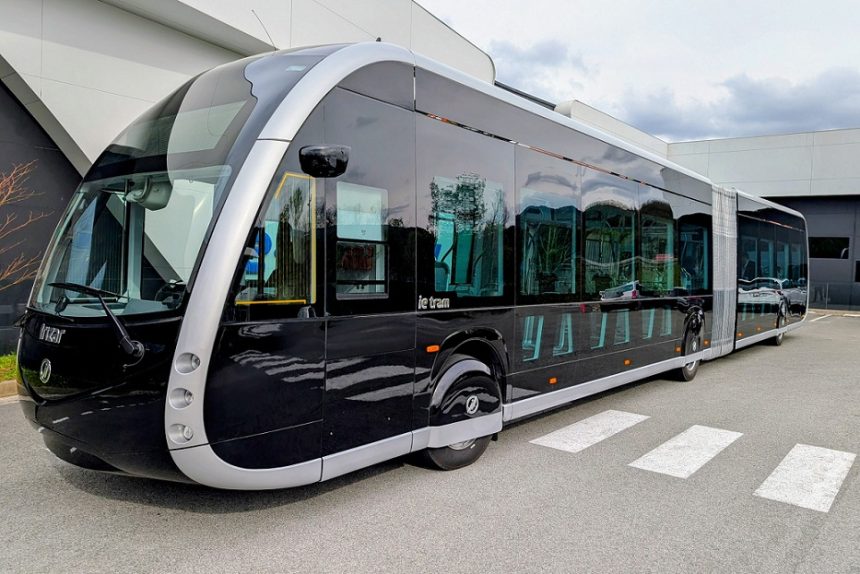
An Irizar ie tram battery-electric articulated bus is to be route trialled in the Liverpool City Region. It is a further evaluation of bus rapid transit vehicles ahead of the rollout of that concept between the city centre, football stadia and Liverpool John Lennon Airport by the end of 2028.
The ie tram is on loan from Irizar and will carry the yellow-based Metro brand for bus services in the Liverpool City Region that will be franchised over coming years. It follows the visit of a Van Hool Exqui.City that was borrowed from Northern Ireland operator Translink in 2024.
Feedback from passengers will be sought during the ie tram’s time in the region although it will not be used to carry the public. The Liverpool City Region Combined Authority (LCRCA) says it will be used “on key commuter routes” to gather feedback and assess performance to help shape the design of the area's own fleet.
Beyond the first BRT route majoring on football stadia and the airport, LCRCA adds that the network could be expended to other areas that are not currently served by rail.
Speaking about the Irizar ie tram trial, Mayor of the Liverpool City Regin Steve Rotheram says: “This is a big moment on our journey to build the modern, reliable transport system that our area has needed for decades.
“When I talk about a London-style network, I mean a system that is joined-up, easy to use, and where you do not have to think twice about how you are getting from A to B. That is the standard people in our region should expect too – not just those in the capital.
“For too long, places like ours have been treated as an afterthought when it comes to transport funding and infrastructure. But we have secured £1.6 billion from government – and we are putting it to work, building a system that actually works for the 1.6 million people who live here.”
LCRCA notes how an articulated bus can carry 30% more passengers than a double-decker and that additional doors reduce stop dwell times. Off-vehicle ticketing also forms part of the BRT blueprint.
Altro and Neomind's Universal Bus concept wins London Design Award
Altro and Neomind's Universal Bus concept wins London Design Award
The Universal Bus collaboration between Altro Global Transport and German design house Neomind has won silver in the London Design Awards in the Conceptual Design in Mobility category.
The win follows the concept's debut at the recent Transport Design Forum.
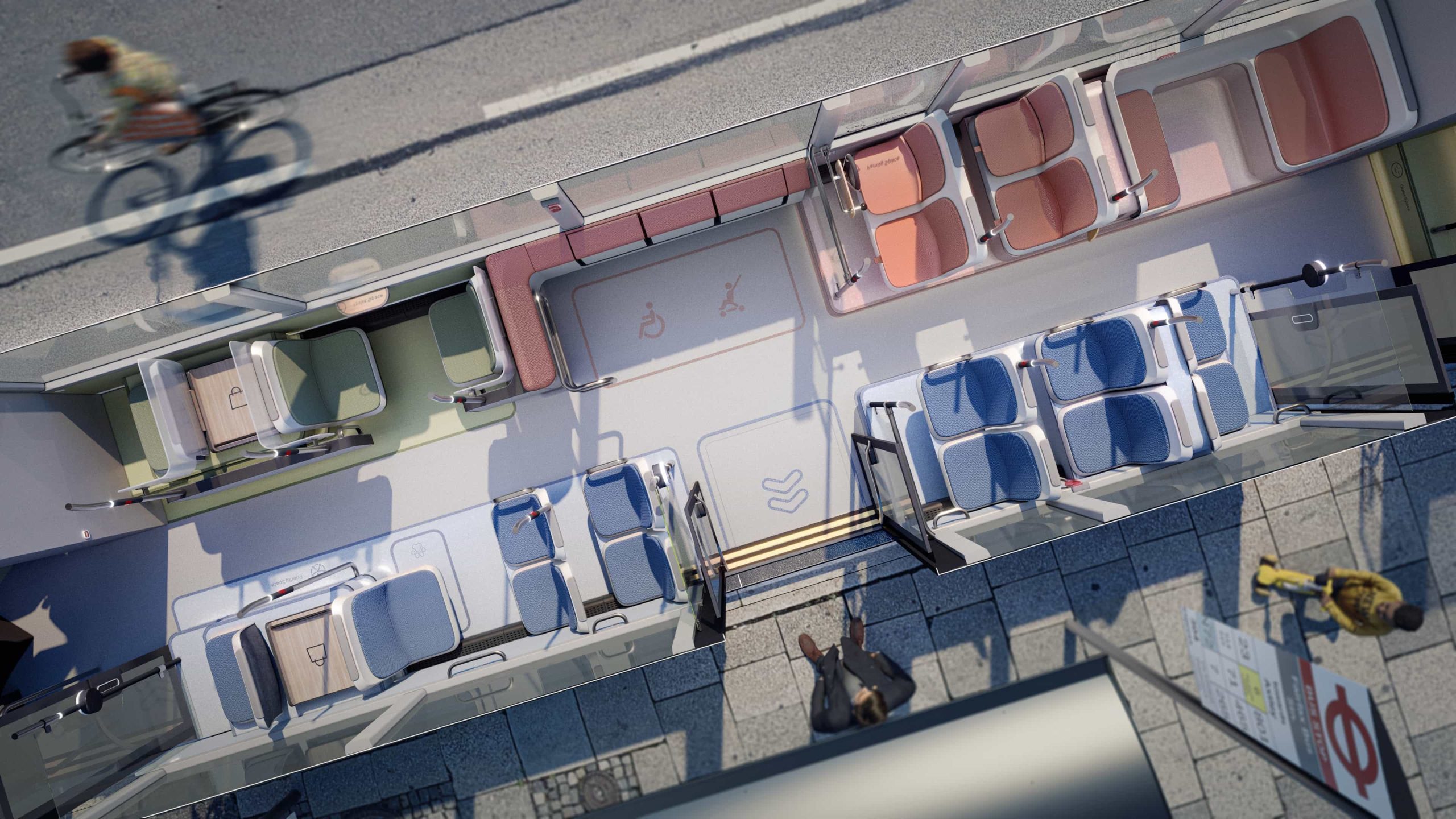
The Universal Bus showcases innovations that support the UK's neurodivergent community, estimated to represent some 9.7 million people or around 15% of the population. Key features include quiet zones, family seating areas, acoustic material choices that minimise sensory overload, and enhanced passenger information screens.
The design is informed by research findings that revealed 91% of neurodivergent individuals are impacted by noise during travel and 83% by the effort required for journeys. The Universal Bus addresses this through clearly zoned layouts, intuitive wayfinding, real-time information displays and carefully calibrated colour palettes and geometry.
"Neuroinclusivity isn't a design feature to add later - it's a design foundation to build upon from the start," says Chris Edwards-Thorne, Global Marketing Manager at Altro. "This award validates our commitment to creating transport solutions that are genuinely accessible and considerate of the diverse needs of all individuals. The Universal Bus concept demonstrates how thoughtful design can transform the travel experience for neurodivergent passengers while benefiting all users."
Adds Kasia Foljanty, Director of Customer Experience at Neomind: "Working with Altro allowed us to create a design that goes beyond traditional accessibility models. We've addressed the 'invisible' sensory and cognitive challenges that represent the vast majority of accessibility needs in public transport. This concept proves that universal design benefits everyone – what we've created for neurodivergent passengers enhances comfort and usability for all travellers."


