
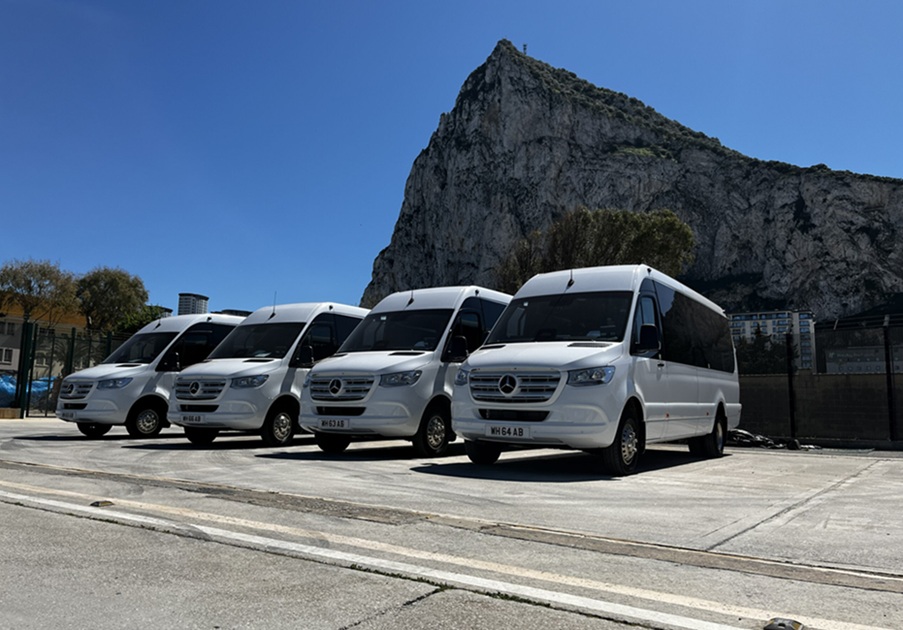
EVM supplies four Avantgarde minicoaches to Ministry of Defence
The Ministry of Defence (MoD) has taken delivery of four Mercedes-Benz Sprinters with Avantgarde minicoach conversions, supplied by EVM UK.
They are for operational use in Gibraltar. EVM and the Ministry worked closely together on the specification of the Avantgarde quartet to meet MoD operational requirements while prioritising comfort and safety. Each seats 19 with three-point belts.
Double-glazed and tinted side windows are fitted along with Webasto air-conditioning for the saloon. USB charging points, full-length luggage racks and a powered plug passenger door are part of the package along with General Safety Regulation 2 equipment.
External finish is in arctic white, complemented by chrome trim. EVM says that success with the Ministry of Defence reinforces the supplier's existing expertise in supplying high-quality, fit-for-purpose solutions to specialist fleets in the UK and Ireland, and beyond.
[adrotate banner="44"]

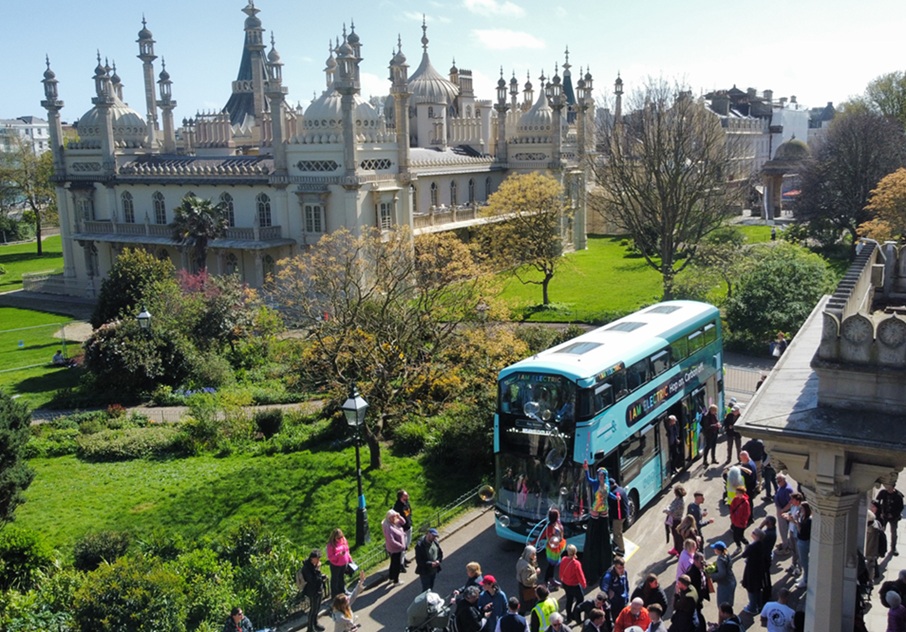
Brighton and Hove Buses debuts first 16 electric double-decks
Brighton and Hove Buses has launched its first battery-electric fleet members in the form of 16 Wrightbus StreetDeck Electroliner double-decks. They have been part-funded by £2.9 million from the second round of the Zero Emission Bus Regional Areas fund that was awarded to Brighton and Hove City Council.
The vehicles are for use on cross-city route 7 and are dual-door examples. As is customary with the operator, the buses major on accessibility, with such features shaped via what it describes as “ongoing collaboration” with interested parties to embed lived experience.
Brighton and Hove says that those design aspects are also informed by continuous passenger feedback. Among items specified are new dementia-friendly seating moquette, which has been developed by the operator in partnership with the Alzheimer’s Society Horsham Rusty Brains Dementia Voice Group.
In an indication of the depth of that partnership, Alzheimer’s Society Service User Involvement Officer Tim Wilkins gave a speech to attendees at a launch event reflecting on the operator’s commitment to co-production and co-design of buses.
“The Horsham Rusty Brains are an incredible group of people living with a diagnosis, who have been front and centre in co-designing dementia friendly bus seating upholstery alongside the Brighton and Hove Buses team,” says Mr Wilkins.
“Seeing their lived experience shape something so visible brings real pride and shows the powerful impact of community voices.”
Also present at the launch event were the Deputy Lieutenant of Brighton and Hove, councillors, and representatives of the Department for Transport. Other local accessibility groups and charities were further guests.
Speaking about the electric buses’ arrival, Brighton and Hove Interim Managing Director Rupert Cox says: “This is an important step on our journey towards greener and more accessible travel for our passengers. The turnout at the launch event is testament to how much people care about their local bus service.”
Adds Wrightbus Managing Director of Sales for the UK and Ireland John McLeister: “Each vehicle represents not only a step forward in decarbonising transport, but also a commitment to accessibility, innovation, and passenger experience.
“These buses have been designed and built by our skilled teams in Ballymena, and the whole process supports thousands of jobs in the supply chain across the United Kingdom.”
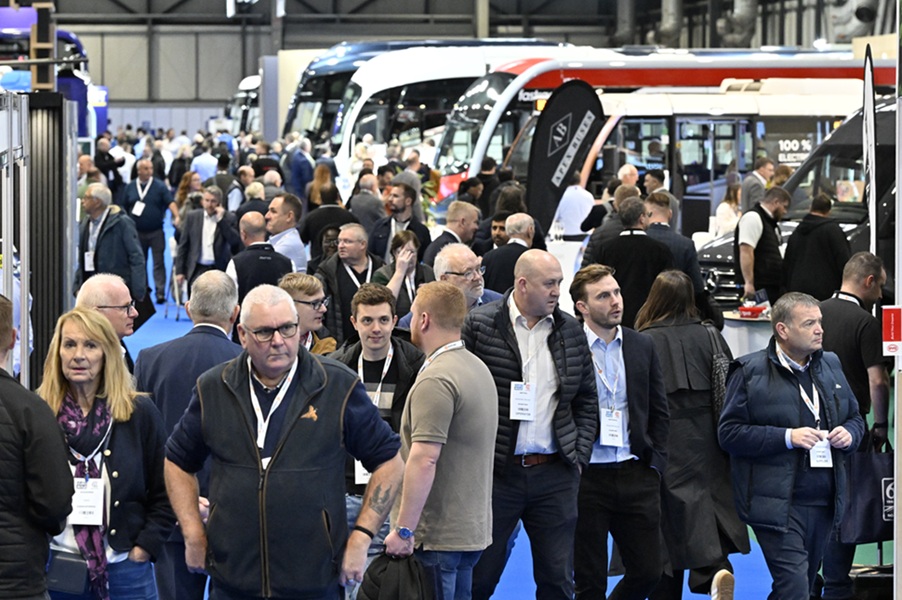
Euro Bus Expo 2026 registration opens as event momentum builds
Registration for Euro Bus Expo 2026 has opened ahead of the UK coach and bus industry’s premier meeting place returning to the NEC Birmingham on 3-5 November.
Maintaining its position as the sector’s leading opportunity to connect, learn, and see the latest vehicle displays, technology showcase and industry insights, the trade show is expected to welcome more than 200 exhibitors.
So far, 22 vehicle exhibitors have confirmed their places across the coach, bus and mini vehicle segments. They will be joined by an ever-growing lineup of technology, infrastructure, product and service suppliers, covering everything from fleet management and charging to passenger systems, driver training, and finance.
For visitors, the show will capture everything the coach and bus industry could need, all under one roof. Organiser Diversified UK and Europe says that will deliver time and travel efficiencies, productive conversations with suppliers, and opportunity to condense months of research into a matter of days.
Whether planning fleet renewal or expansion, exploring zero-emission options or reviewing operational technology, visitors will be able to assess their choices, ask the right questions, and move decisions forward across three focused days that are dedicated entirely to the passenger sector.
This year will see the return of Euro Bus Expo Connect. Launched in 2024, it is the event’s dedicated networking platform. Attendees can search for exhibitors and products ahead of their visit, schedule meetings directly with suppliers, and build a personal itinerary of appointments and theatre sessions.
Euro Bus Expo Connect will open in September, allowing registered attendees to confirm meetings early and maximise their time at the event. A hosted meeting lounge at Euro Bus Expo will provide dedicated space for key business discussions.
Currently under development is the Masterclass Theatre programme. Sessions will address the operational, commercial and regulatory priorities for the sector.
Via a call for speakers, the organiser is inviting industry professionals to apply to share their real-world insight and experience. Submissions can be made via the show website, ahead of a 19 June deadline.
Speaking about progress made already with Euro Bus Expo 2026, Event Director Helen Conway says: “Euro Bus Expo is where the industry comes together to meet suppliers face-to-face, see the latest innovations, and make informed business decisions.
“The 2026 exhibitor line-up is building at pace, with a packed and broad-ranging showcase set for November. We are looking forward to welcoming the industry back to the NEC.”
The 2026 edition of Euro Bus Expo is supported by show partner the Confederation of Passenger Transport.
Registration to attend is free of charge. It is open to industry professionals via the Euro Bus Expo website. Registering early means being among the first to receive event updates, theatre announcements, and access to Euro Bus Expo Connect when it launches.
With new exhibitors joining the event line-up every week and the show now over 80% sold, businesses interested in exhibiting should contact Commercial Manager Martin Laverton by email at [email protected] or on +44 (0)1733 405735, or visit a dedicated page explaining the benefits of exhibiting.