
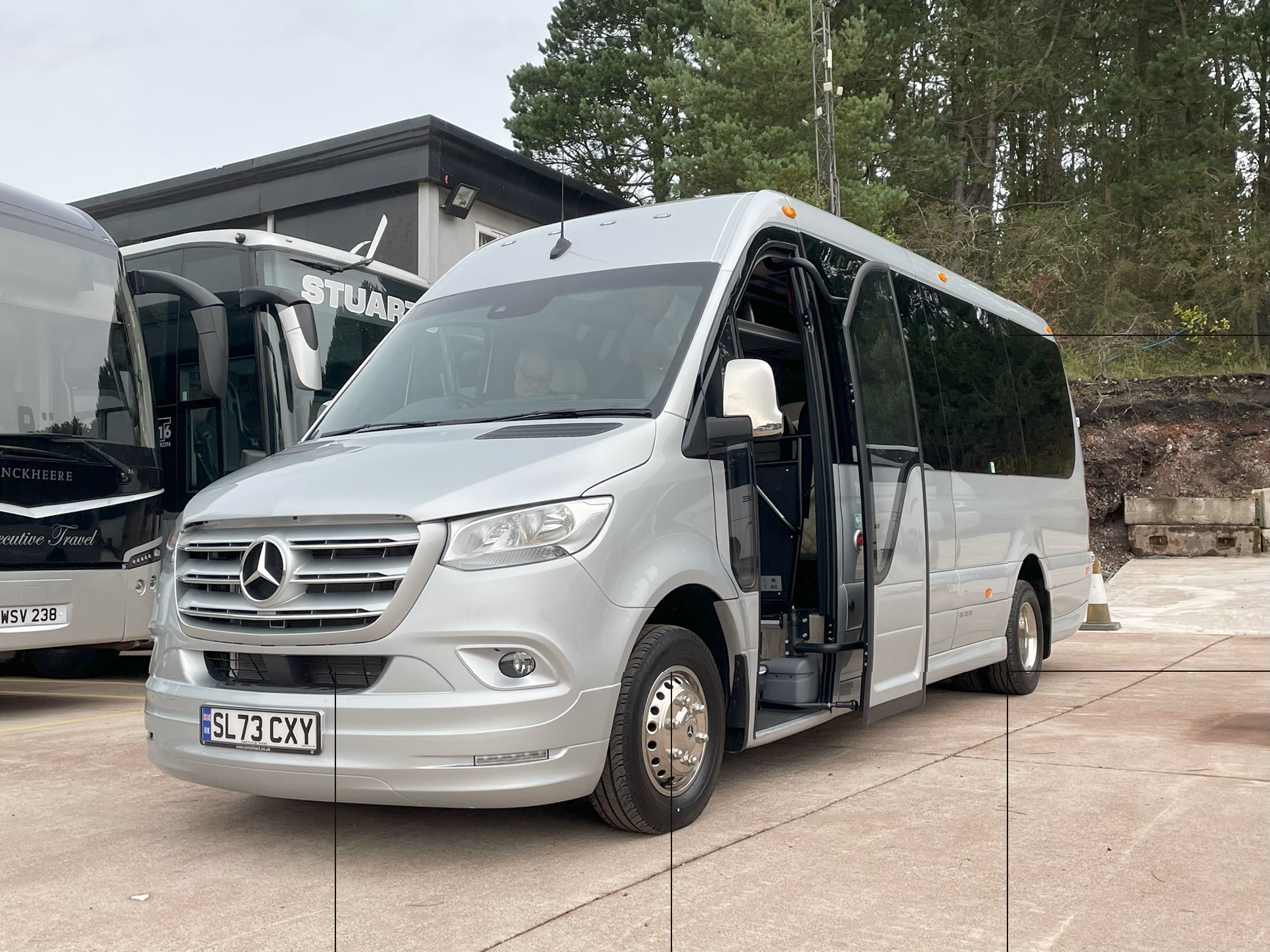
Shiel Buses adds a new EVM Avantgarde minicoach
Shiel Buses of Fort William has taken delivery of an extra-long wheelbase Mercedes-Benz Sprinter with an Avantgarde minicoach conversion, supplied by EVM.
It has 16 passenger seats that are finished in black and white leather and with three-point belts. The Mercedes-Benz logo is part of each, and armrests are fitted to aisle positions.
USB charging points and curtains are also part of the specification, along with what the converter terms a half-sunken gangway and wood effect flooring.
A PA system feeds via speakers in passenger service units (PSUs) on the undersides of two overhead luggage racks, which also have LED lights. The Webasto saloon air-conditioning unit vents via the PSUs, while the driver has a reversing camera to assist in manoeuvring.
Externally, a drop boot is accessed via OEM hinged rear doors. It comes with a fold-out mat and a stainless-steel edge protector, with the rear row of seats raised to maximise luggage space.
EVM has added a front bumper spoiler with daytime running lights along with colour-coded side trim and skirts. The converter’s customary chrome package has also been specified, including wheel trims, mirror backs, the grille, and door handles.
Power in the Shiel Buses vehicle is from an OM 654 engine developing 170bhp coupled to a 9G-Tronic nine-speed automatic gearbox.
[adrotate banner="44"]

Katie Johnson joins First Travel Solutions senior team
Managed transport service provider First Travel Solutions has appointed Katie Johnson to the newly created position of Business Operations Director.
Ms Johnson joins from E.ON Energy, where she spent 14 years in senior operational and strategic roles including change leadership, digital operations and customer services. With First Travel Solutions she will be focused on improving the business’s operations as it continues to grow “to deliver the best experience for staff, clients and customers."
First Travel Solutions was recently awarded rail replacement contracts for the Avanti West Coast train operating company. Ms Johnson will be heavily involved in delivery of that work.
Speaking about the news, First Travel Solutions Managing Director Andy Scholey says: “After a quiet 18 months during the height of COVID-19 with many festivals, conferences and sporting events cancelled or closed to spectators, we took the time to look inward at our business and identify what we needed to take it to the next level.
“The newly appointed role of Business Operations Director means that we can utilise Katie’s award-winning customer service experience skills and change management knowledge to deliver the best solutions to our clients.
“We have several projects being delivered at the end of 2022 and into 2023 that Katie will ensure are created and managed with customer experience at the heart of them.”
Adds Ms Johnson: “I am delighted to be joining First Travel Solutions at such an innovative time for growth in this sector. First Travel Solutions is on a rapid growth trajectory to provide the best managed transport solution in the UK and I am ready to take the team to that next level in the excellence of operational delivery.”
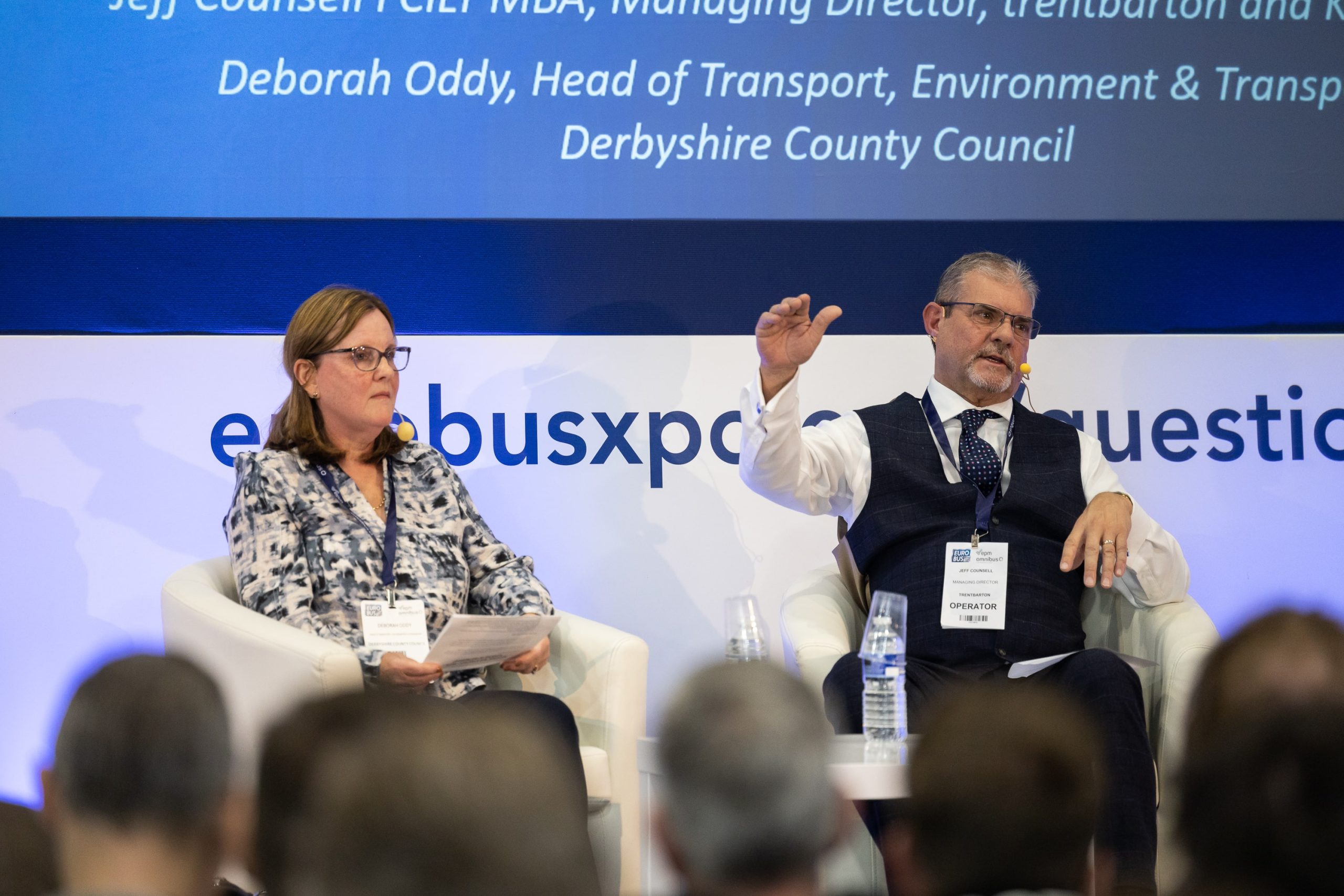
Strong leadership key to securing £47m for bus services in Derbyshire
Strong leadership and BSIP buy-in from operators has helped Derbyshire County Council secure £47m
Managing Director of Trentbarton and Kinchbus Jeff Counsell, and Deborah Oddy, Head of Transport and environment at Derbyshire County Council, came together at the Masterclass Theatre at Euro Bus Expo on 2 November to discuss how they managed to secure £47m of funding through the Derbyshire Bus Service Improvement Plan.
Excellent attendance at meetings, including from Cabinet Member Councillor Kewal Singh Athwal, and buy-in from all operators in the region, has been key to the success of the Partnership, according to Mr Counsell and Ms Oddy. That attendance has allowed operators involved in the discussions to raise issues, such as around road work and traffic management, that have been dealt with by experienced council leaders.
Mr Counsell says that the partnership already had a good basis thanks to good relationships between bus operators in the region and the Derbyshire Public Transport Authority. “For 24 years that I have been with Trentbarton, we have had regular dialogue and meetings with officers and directors of the county, talking about bus services, so we are starting with a foundation that has always been really strong.”
He argues that collaboration has been successful due to commitment, time, and effort between all operators in Derbyshire, with customer focus at its core. “As an independent bus operator, the last thing we wanted was regulatory control,” he admits. “We did not see any need for statutory instruments to help us provide better services. We had a history of voluntary partnership which was very successful. But needs must, and we were as an industry forced down the line of Enhanced Partnerships, so our view turned to one of finding what was best for our customers. At the end of the day, the National Bus Strategy should be about improving the lot for customers.”
Capability and competence from experienced people has meant the Partnership is highly regarded by the Department for Transport. Adds Ms Oddy: “It was clear to me that the BSIP and the Enhanced Partnership had very strong leadership that created partnership, and as we all know, in those partnerships we have to invest a lot of time. It’ s challenging at times. But we’ve taken those difficult conversations and met them head on as a body and, as a board, addressed those issues.”