
Higer range and dealer network expansion underway, says Harris
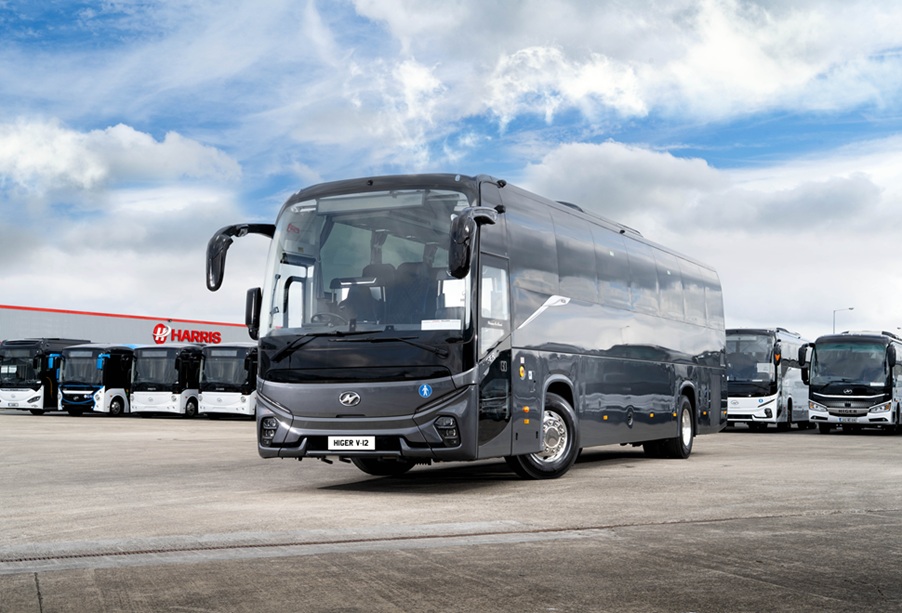
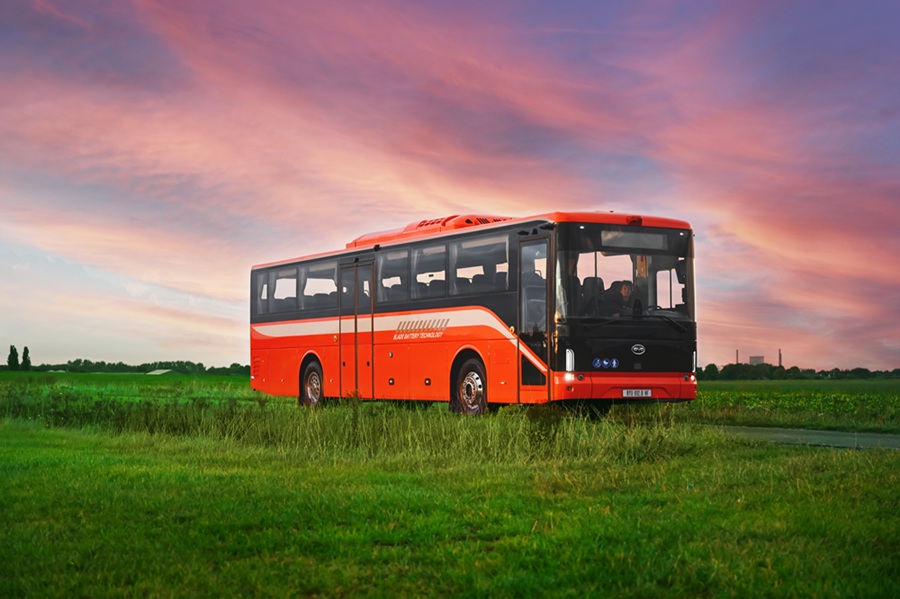
Examples of the Higer V-10, V-12 (pictured, above) and V-14 Cummins-engined coaches have arrived in the UK ahead of deliveries commencing, with work to further grow the product range and support network also progressing, supplier Harris Bus and Coach has said.
Each of those coaches, for which the respective model name represents nominal length in metres, will be available in Standard, Touring, and Touring Plus trim levels. Standard has no toilet and an emergency door, while Touring includes a continental door and a toilet. Touring Plus further introduces a servery.
Most of those combinations will be ordered as stock, although custom builds are available and will be subject to a six-month lead time. For coach orders placed until at least 28 February 2027, a five-year or 500,000km warranty will be provided.
The trio of V-Series coaches sit alongside established Azure battery-electric bus models at 10m and 12m. Beyond that, the dealer has confirmed plans to introduce diesel buses at 8.9m and 12m, while double-decks with diesel or battery-electric power are on the agenda.
Of the 8.9m diesel bus, 30 seats are expected. A Cummins engine will be used coupled to a Voith gearbox, with a width of around 2.45m planned.
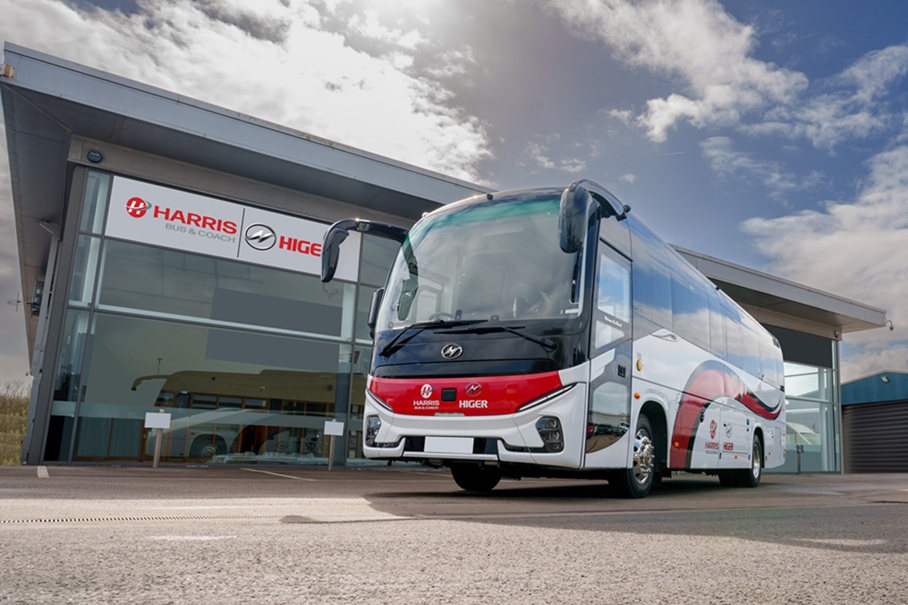
For double-deck, Harris Bus and Coach UK Managing Director Bill Laidlaw says the dealer has already submitted a tender based on battery-electric power. Higer builds double-decks for other markets but those for the UK will be designed specifically to suit requirements here. Diesel will come after battery-electric in that segment.
How vehicles are sold by Harris and its dealer partners has been clarified. The Harris Bus and Coach UK head office in Worksop houses garage facilities, parts stores and a showroom, with the business working closely with site owner Johnson Bros Tours. That leverages further support facilities at Johnsons’ suite of premises.
In addition to that 'mothership', Harris Bus and Coach is in the process of implementing a 50-location Higer dealer network across the UK and Ireland, a task that will be complete within 12 months.
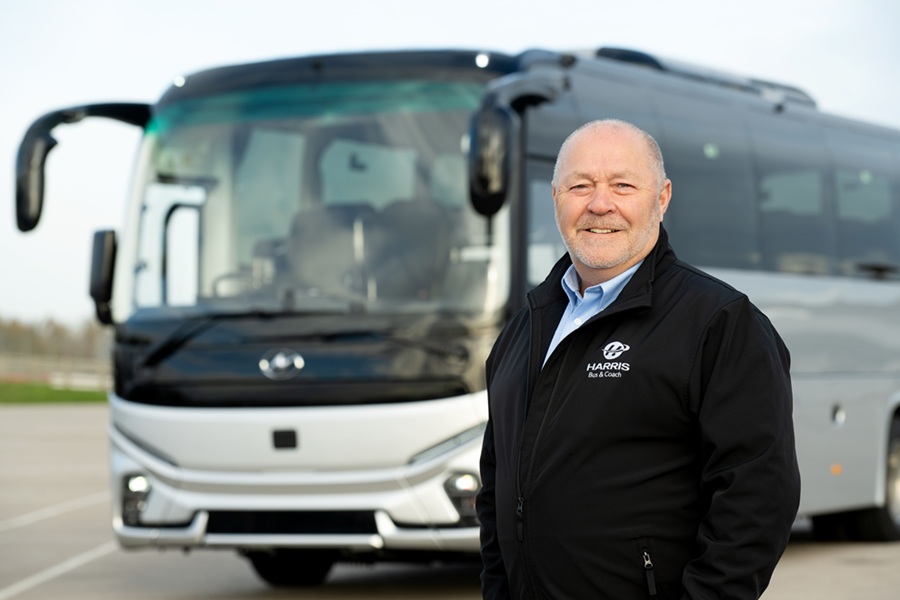
Some of those partnerships are “completely new commitments” and represent what Mr Laidlaw says is a significant exceedance of initial expectations for the support provision.
He adds that sales will broadly be handled via a partnership with members of the dealer network. Some of the latter will employ sales staff and sell direct to customers, but deals can also be undertaken directly between Harris Bus and Coach and the customer.
Pre-delivery inspection work will be undertaken either at Worksop or by the supplying dealer, while a facility to accept part-exchange vehicles has also been confirmed.
Thus far, firm commitments from UK buyers have been received by Harris on six Higer coaches, with further quotes currently being processed and additional enquiries in hand. The 12m, two-axle V-12 currently accounts for the greatest share of interest in the coach field.

BYD battery-electric coach coming to UK in further range expansion
BYD will introduce a battery-electric coach to the UK later this year as part of a continuing diversification of its product offering, Commercial Vehicle UK Managing Director Frank Thorpe has revealed.
Although specification and intended use case will be confirmed later, the manufacturer has hinted that the opening coach product may be followed by others. Mr Thorpe adds that the initial model is not an adaption of an existing coach already present in other markets, and has been designed specifically for the UK.
He says that the vehicle will have a number of novel safety elements within its design. Entry to the battery-electric coach market in the UK represents a leveraging of core BYD skills, Mr Thorpe continues. He points to the builder’s success with integral battery-electric buses in the double- and single-deck field as a reason for its expansion into coach.
BYD now has over 1,000 such buses on order or delivered in the UK. The driveline used in them will power the coach, although battery capacity for the latter is yet to be revealed.
Mr Thorpe underlines that there are two core aspects to the BYD commercial vehicles work in the UK: continued development of that business, and advancement of its product range.
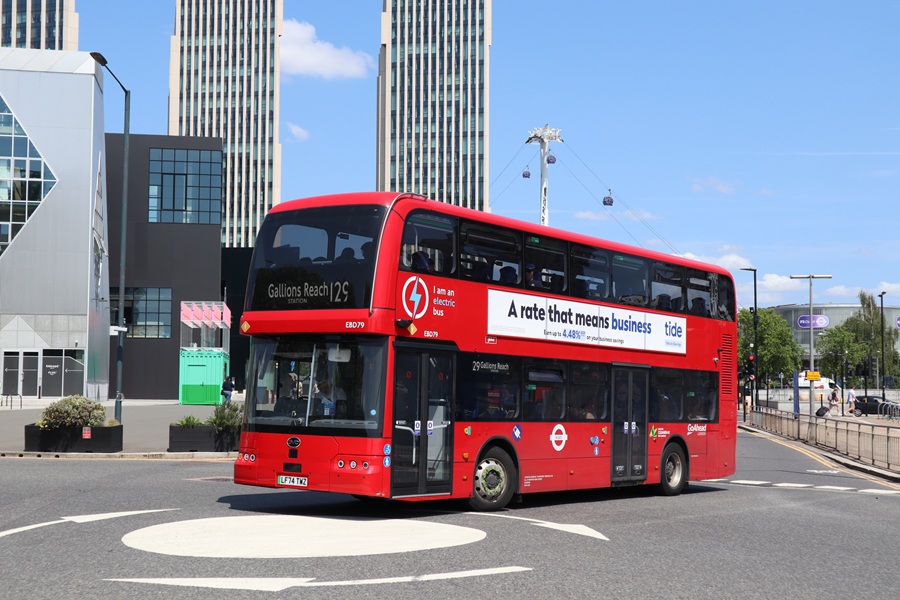
He points to the BD11 battery-electric double-deck bus and the support around it as an example of how quickly both of those elements can move. That vehicle went from concept through design and homologation into production within 18 months.
“You would think that was not possible, but the BD11 has been reliable and is doing very well,” he continues. While most built so far have been for Transport for London contractors, the first provincial specification examples are for Arriva.
Mr Thorpe says that BYD’s wider automotive experience contributes to strong acceptance of the BD11. Some materials user are derived from the car field, which has also influenced cab design, leading to favourable response from drivers. The BD11 comes at 10.6m or 10.9m and with a maximum of 532kWh of energy storage.
Equally, the single-deck bus line is doing well. That is now available at 11.8m, 10.8m, 10.4m and 9.9m, with multiple confirmed customers so far. No batteries are on the roof and Mr Thorpe says that will remain the case for any future single-deck coach or bus products.
Ability to develop so rapidly leverages BYD’s core position as a technology business. “Our ambition is to make use of the full range of BYD technology,” says the former operator, who does not rule out a product in the minibus field in the longer term.
While BYD vehicles for the UK are built in China, Mr Thorpe points out that they are supplied to customers by a business that is investing heavily in the UK. Across commercial vehicles and passenger cars, BYD UK employs over 250 people, “and is spending a lot in the circular economy and supply chain,” he says.
As evidence of that, the organisation points to a new 80,000 square feet PDI and technical centre in Reading for coach and bus activity that was opened recently. All processing of new vehicles is now handled there with no reliance on third parties.
The Reading premises will also serve as a location for development and upgrade work, and potentially refurbishment in the longer-term.
“It is an exciting time for BYD UK; not only because our parent company is investing in the coach and bus industry here, with resources, products and people, but also our ability to receive technical developments from BYD first-hand,” concludes Mr Thorpe.
Final VDL Futura FHD2 for UK market is for Richard Taylor Travel
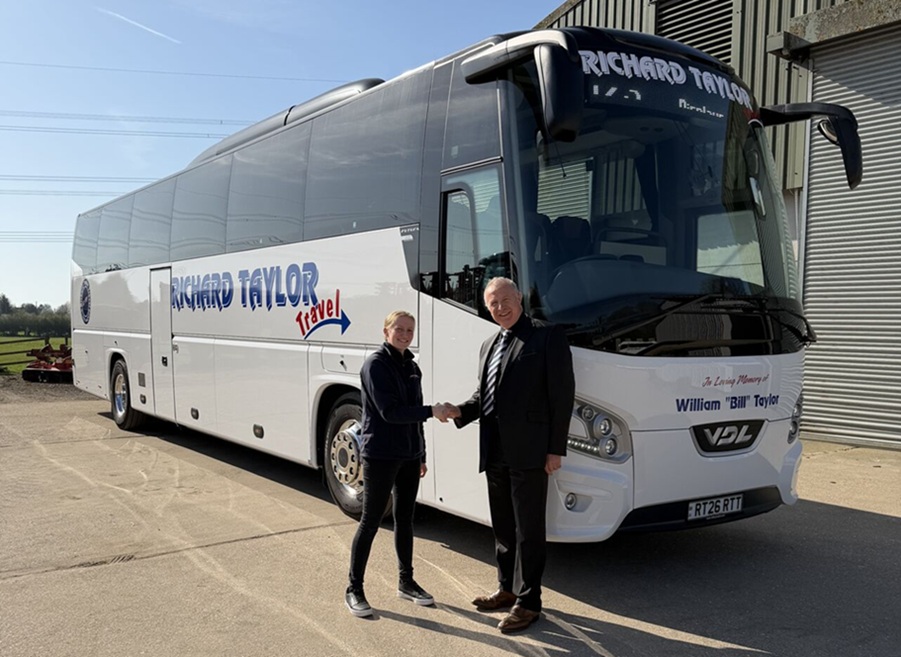
Hitchin operator Richard Taylor Travel has welcomed to its fleet the final VDL Futura FHD2 coach to be delivered to a UK operator. It was supplied by VDL Bus and Coach UK.
And end to the long-lasting model comes ahead of the arrival of its successor the Futura 3, which made its debut in left-hand drive format in October 2025. The Futura FHD2 was handed over to Rachel Taylor (pictured, left) of the operator by VDL Bus and Coach Area Sales Manager Tim Fairless (pictured, right).
It has 57 VDL Class 300 seats with Blackline and Top Luxe trim. Three-point belts and magazine nets are included along with USB charging points in the frames. A centre sunken toilet is also fitted.
The coach is PSVAR compliant. That includes a passenger lift from PLS and Hanover destination displays. Customary Futura FHD2 specification elements include 830-litre fuel tanks over the front axle and polished alloy wheels.
Richard Taylor Travel has added a cherished 26-plate registration mark and named the coach in tribute to the late William ‘Bill’ Taylor.
[adrotate banner="44"]