
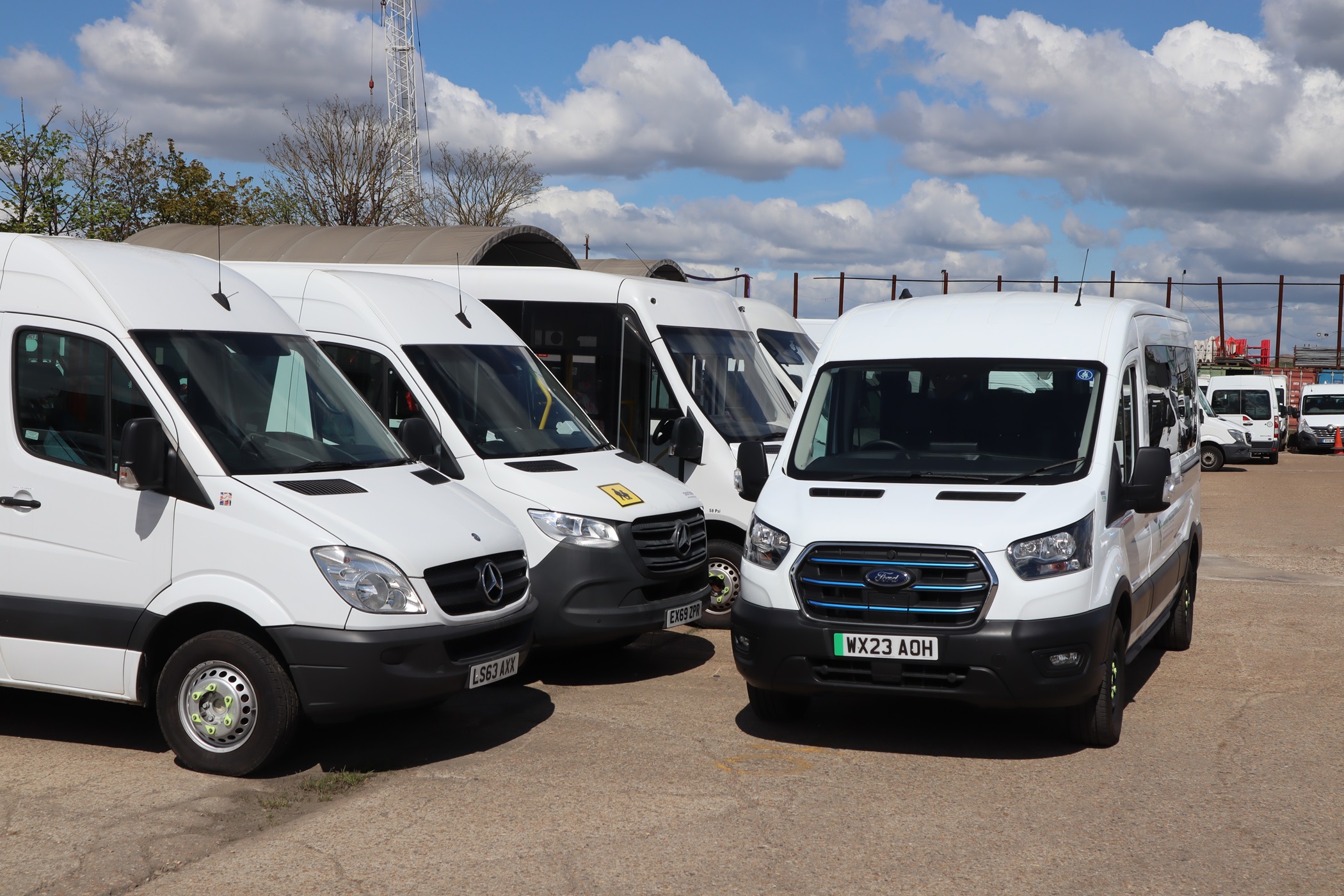
London Hire maintains focus on zero-emission despite headwinds
Local authority (LA) and other social transport minibuses are an ideal vehicle class to make the zero-emission shift if funding is in place: They often cover low mileages and have downtime for charging.
For London Hire, which works in that field via its rental and vehicle-plus-driver operations, battery-electric is also developing into areas including demand responsive transport (DRT), which is increasingly seen as a source of future zero-emission business. That comes against a core market for diesel minibuses, which the supplier says is as busy as it has seen for a long time.
Procurement and supply of zero-emission minibuses is nothing new for London Hire. Sales Director Peter Moxom told routeone in 2021 that the company’s reach there was growing and was expected to pick up further steam in the years after.
Engagement with commercial bus operators on zero-emission vehicles is still in hand, while Peter says that the supplier is always interested in working with coach operators where suitable mutually beneficial opportunities on vehicles may present themselves. “Long-term is key in those areas, but we will purchase to suit customers’ needs,” he explains.
Zero-emission momentum currently with smaller vehicles
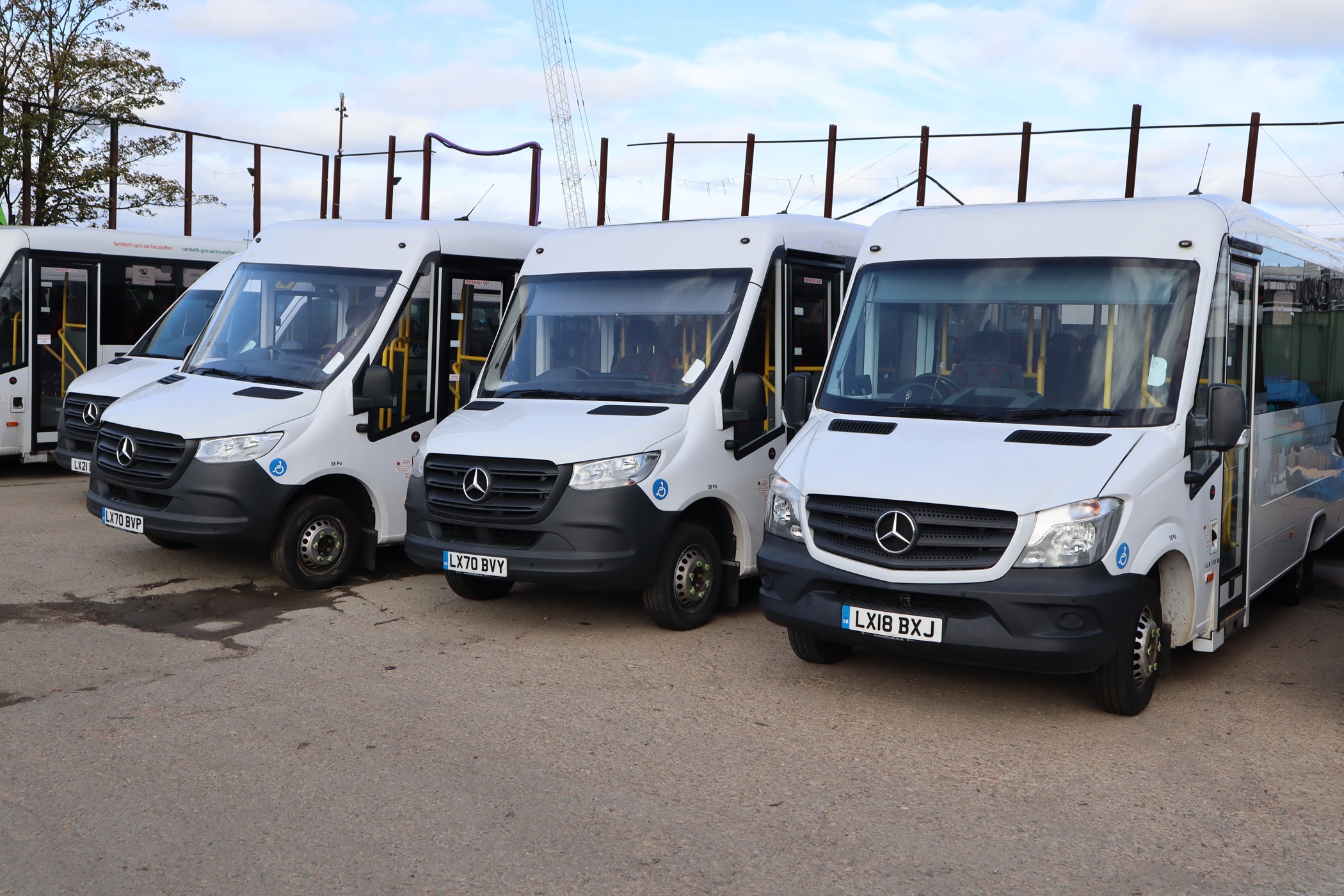
For now, zero-emission momentum for London Hire is with smaller vehicles, including the Ford E-Transit and examples of the Mellor Sigma. The Sigma 7 high-floor is seen as comparable to a coachbuilt Mercedes-Benz Sprinter diesel accessible minibus.
London Hire currently has three Sigmas placed with customers. It is working with Mellor on a small number of changes to the high-floor models in that range, including around the entrance.
Provision of vehicles for DRT is a growing market for London Hire. The EVM Cityline low-entry diesel minibus satisfies that need, and a number were recently supplied to an LA customer as part of a wider procurement. But Peter notes that a Sigma 7 low-floor has gone to Shropshire County Council for Connect on Demand work, giving rise to hope of further business for the Sigma in DRT applications.
LA customers must understand the economics of zero-emission, however. “Battery-electric is a lot of cost upfront, but with an expected longer life we can spread the investment over a greater period,” he says. “We first saw interest in zero-emission generated by smaller vehicles such as LDV products and the E-Transit, but that is now expanding to larger models.”
Unhelpful to the wider move away from diesel among LA customers is the government’s deferral to 2035 of a mandatory shift to zero-emission for new cars and vans.
Those optics have removed an element of the impetus for LAs, leading some of them – but by no means all – to adopt a more cautious approach to the transition. However, other councils are keen to get zero-emission small buses into their fleets, with demand for the E-Transit minibus remaining strong.
London Hire develops zero-emission understanding
That bump aside, London Hire continues to advance its understanding of zero-emission. Peter observes that many years ago, the supplier quickly adopted Euro IV in minibuses.
“People laughed, but we were right to do it. We also purchased some LPG-powered vans for a customer when that fuel was of interest. We have never been shy about looking at zero-emission or low-emission alternatives, as we recognise that we have a responsibility in those areas.”
Whole life costs and battery management are key to the supplier’s knowledge of zero-emission, he believes. While London Hire is already a master at drawing the maximum life out of diesel vehicles, it expects battery-electrics to last longer, at 15 years. Zenobe is on hand to look after batteries and infrastructure where required, including second life applications for the energy storage assets.
Peter highlights a significant benefit that is specific to zero-emission in the accessible field. Those vehicles often carry people with special educational needs and disabilities, who may be sensitive to noise and vibration. An electric driveline removes much of that influence on the travelling environment and renders the trip easier. “That should gain much more focus,” he believes.
Added value a key driver for wider business
While government flip-flopping has cooled some interest in zero-emission minibuses, the wider London Hire business is as busy as ever. Diesel vehicles are in strong demand, and during mid-April its premises were full of stock.
Account Manager John Shier notes how that is because of the exchange with customers of existing vehicles for new arrivals, although he adds that many off-hire minibuses are immediately rehomed.
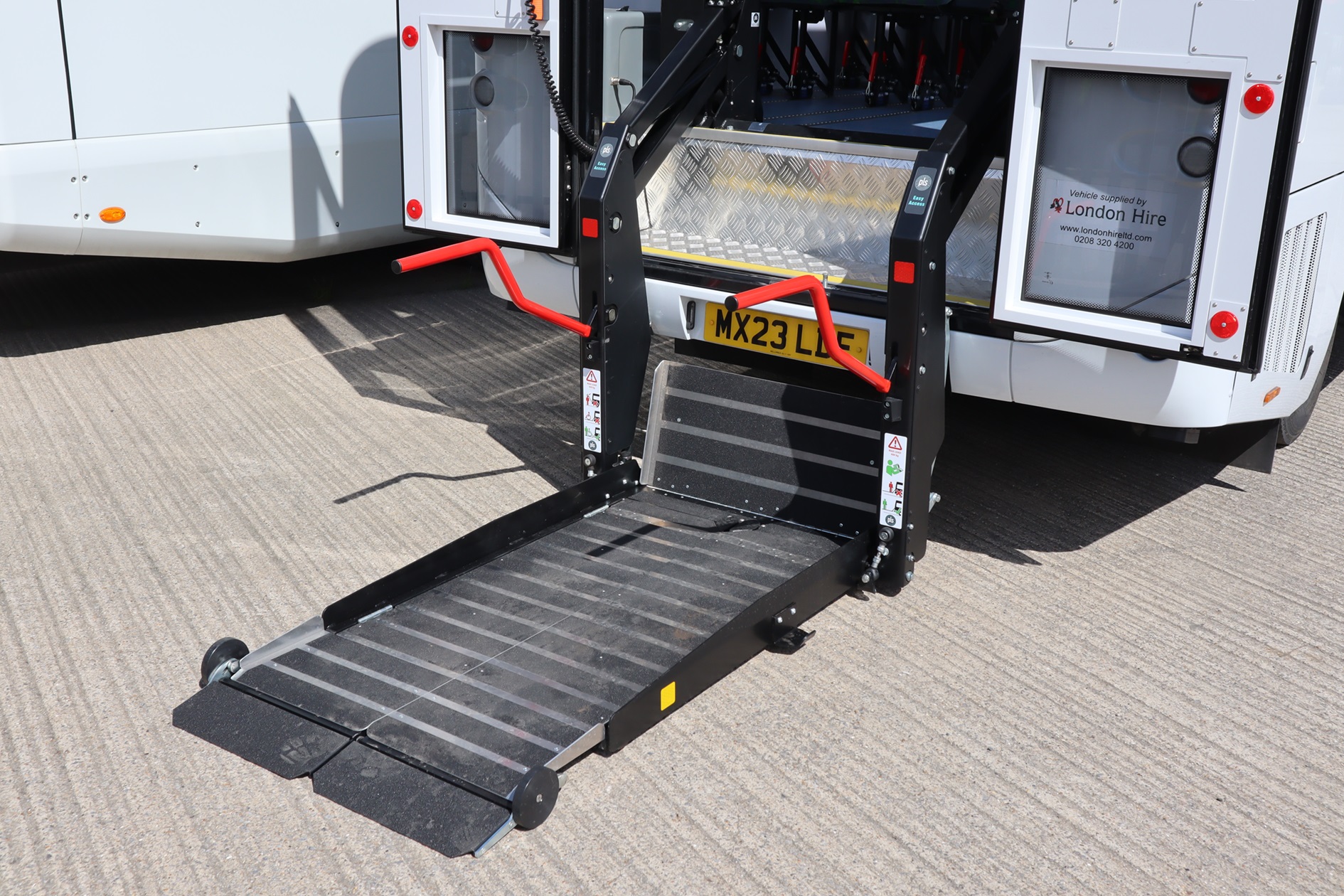
The business is also working on expanding its warranty agent capabilities. It collaborates in that manner with lift supplier PLS, but efforts are in hand to do the same for Mellor and Treka Bus.
Such added value is part of what Peter describes as “a one-stop shop approach” for London Hire. That strategy is gaining traction via its driver-and-vehicle offering, and resulting expansion of operating sites sits well with provision of warranty support. It will be a further string to the bow of an ever-growing business.

Sweyne Coaches starts Goole and Howden Hopper with Mellor pair
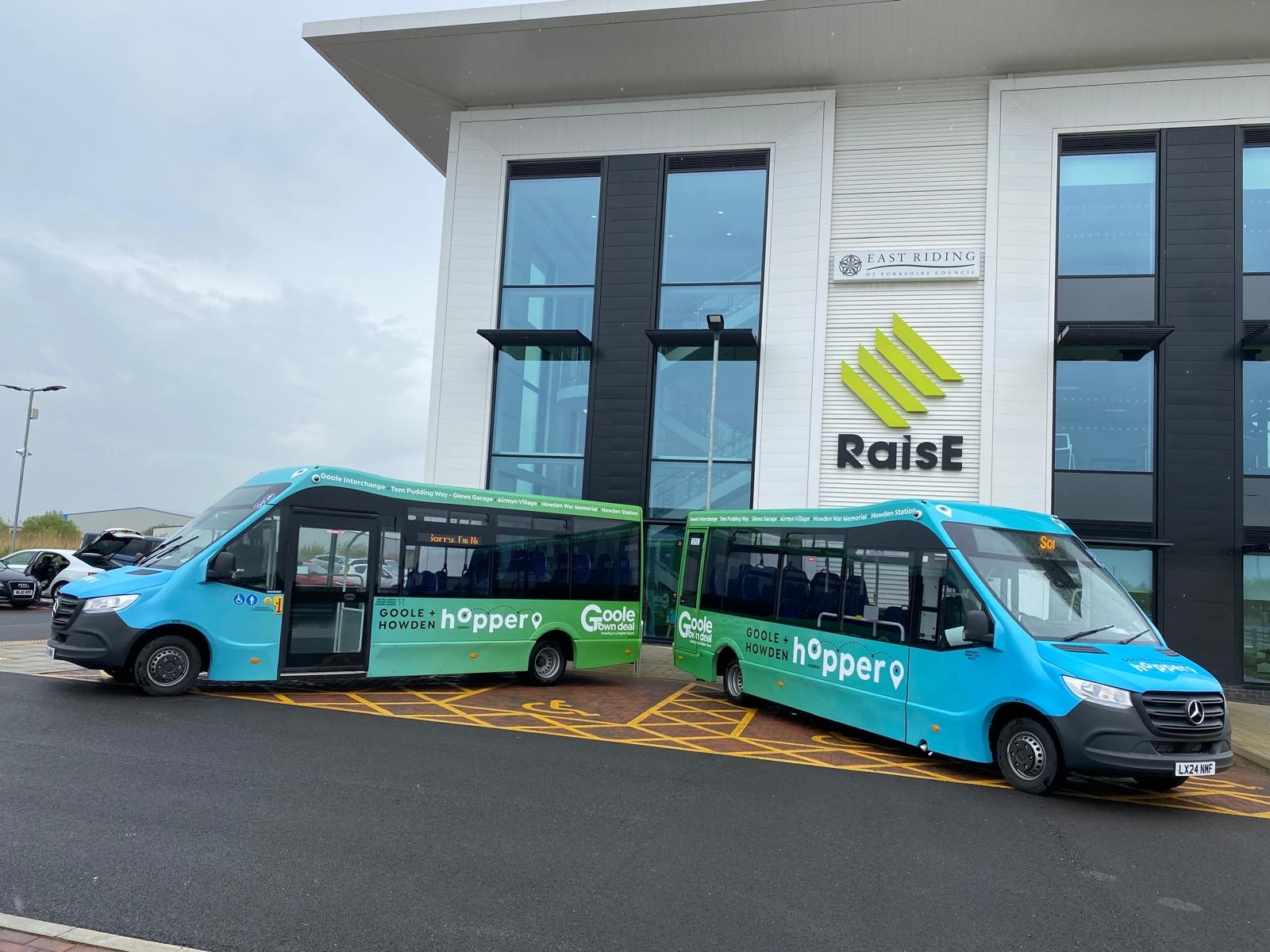
Sweyne Coaches has taken delivery of two Mercedes-Benz Sprinters with coachbuilt Mellor Strata bodywork for use on the Goole and Howden Hopper pilot.
They have been supplied by Mellor with facilitation via leasing and rental provider Asset Alliance through its rental fleet. The minibuses will improve connectivity in the area by delivering transport between Goole and Howden railway stations and connecting with employment sites in Goole.
Funding for the Goole and Howden Hopper has come from the Goole Town Deal programme and is supported by East Riding of Yorkshire Council. The initiative is part of the £2.4 million Station Hub Project, which aims to boost the town’s growth and anticipates an increase in visitors to Goole.
The service launched on 7 May and runs from 0600-2300hrs six days per week. A £1 flat fare is offered along with a £5 weekly ticket. Its pilot period is two years, during which time demand will be gauged. If it is sufficient, a determination will be made on whether additional provision is needed in the future.
The two Stratas each seat 22 and will deliver what Mellor says is “class leading fuel economy.” It adds that the model suits rural and urban routes.
[adrotate banner="44"]
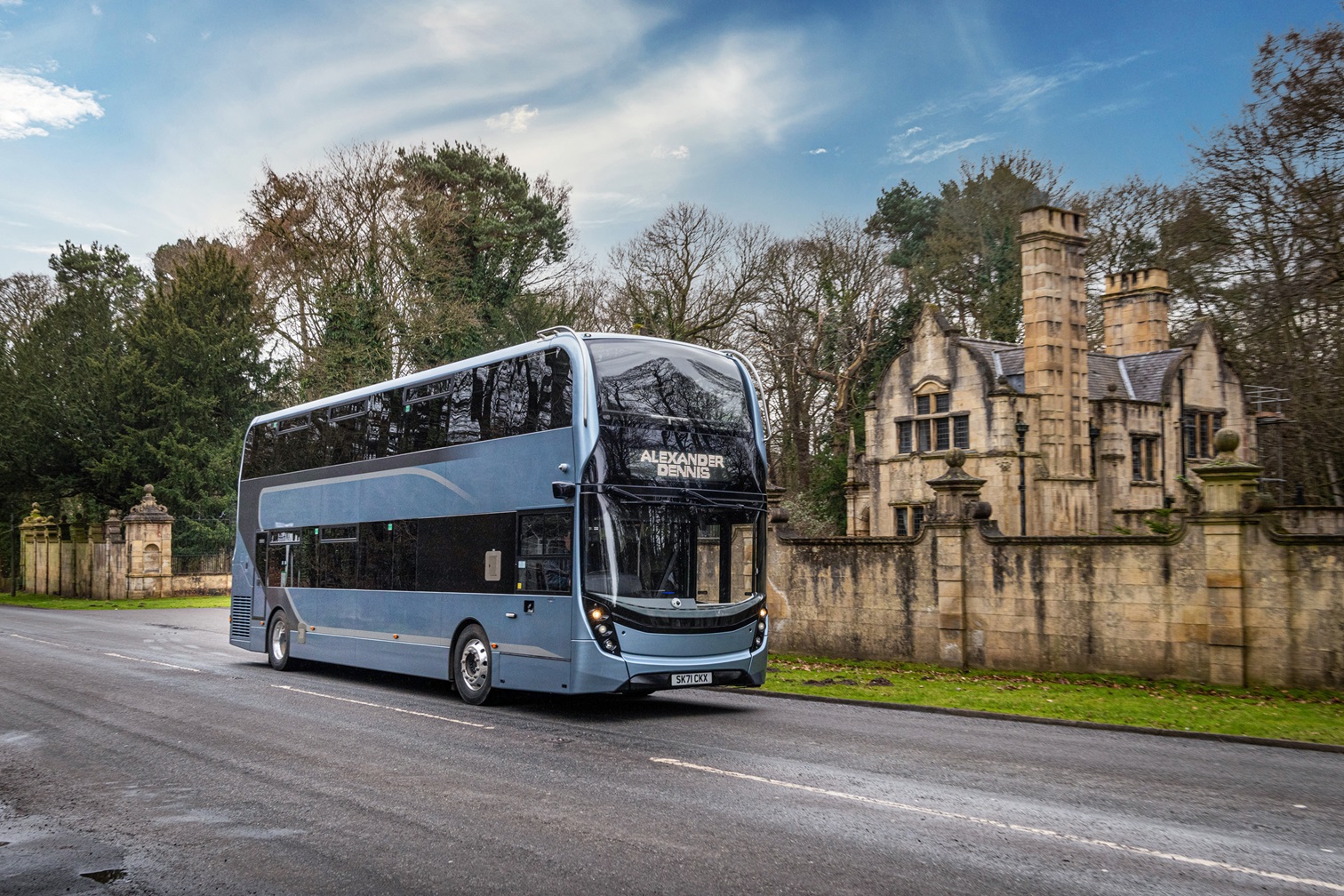
Stephensons of Essex orders five Alexander Dennis Enviro400s
Stephensons of Essex has ordered five Alexander Dennis Enviro400 double-deckers. They represent the first of the type on the manufacturer’s own underframe for the operator and will join other examples of the Enviro400 on Scania chassis in its fleet.
Each of the buses will have 86 seats and be fitted with USB charging points. Alexander Dennis says they are scheduled for delivery later in 2024.
Speaking about the deal, Stephensons Managing Director and ALBUM Chair Bill Hiron says: “This order for five new double-deck buses from Alexander Dennis is great news for customers across our service network, who will benefit from the further upgrade to their journey experience.
“The Enviro400 offers a great combination of seating capacity and operational efficiency, which will help us to keep our costs down.” The buses will sit alongside a large number of Enviro200 single-deckers in the Essex fleet.
Adds Alexander Dennis Retail Sales Director Charlie Miller: “We are delighted to again have been chosen by Stephensons of Essex for investment in its immaculate fleet, and we look forward to supporting theses buses throughout their working lives with our AD24 aftermarket support.”