
Alexander Dennis wins BC Transit order for 29 Enviro500 tri-axles
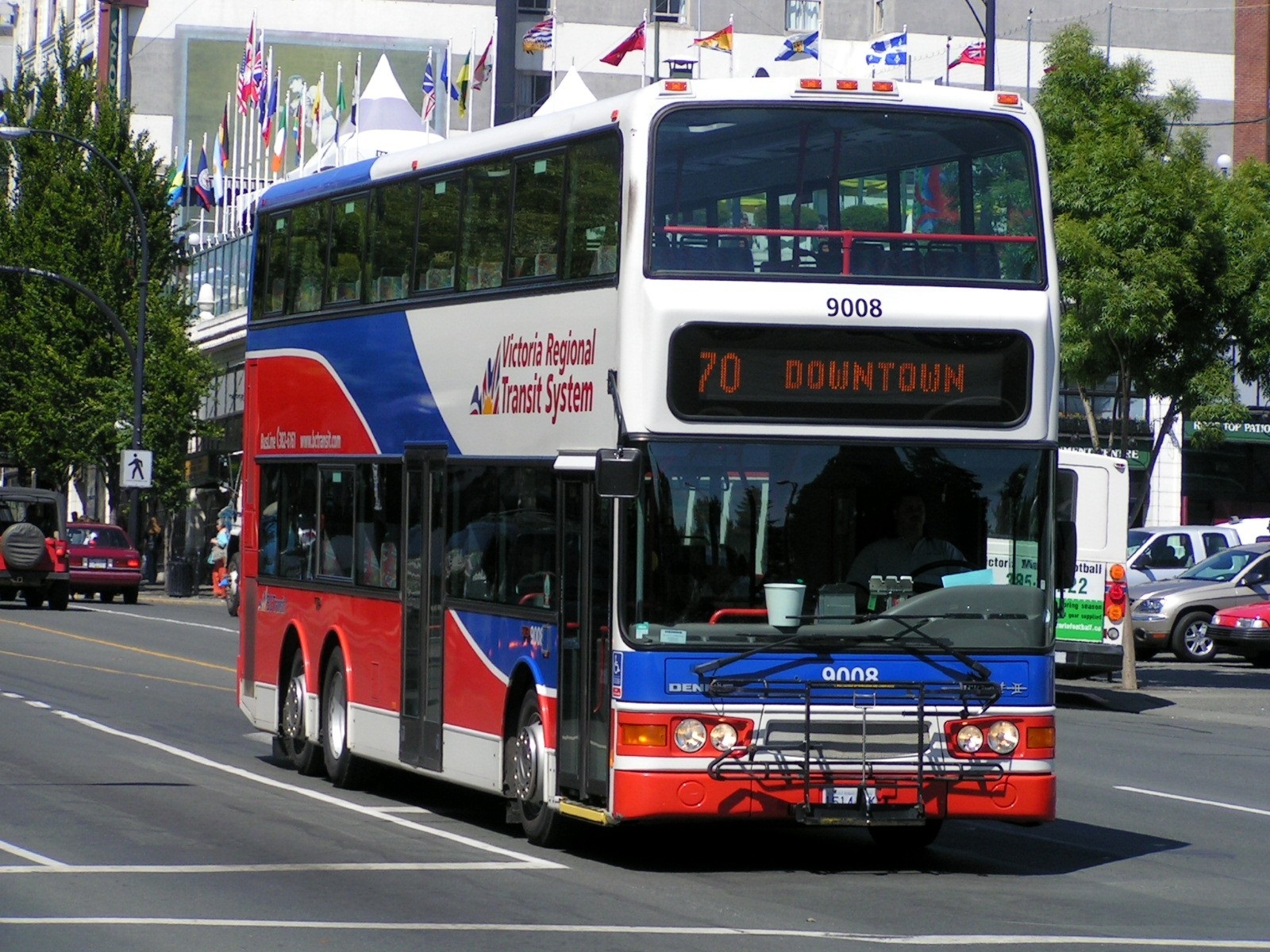
Canadian public transport agency BC Transit has ordered a further 29 Enviro500 tri-axle double-deckers from Alexander Dennis.
The deal represents a continuation of longstanding collaboration between BC Transit and Alexander Dennis and its predecessors, with the corporation having purchased its first double-deckers in 2000.
The new Enviro500s will continue a replacement programme for older double-deckers with BC Transit, a process that began in 2021. The first of those life-expired buses has already been returned to the UK to join the manufacturer’s heritage fleet.
Delivery of the latest batch is expected in 2025. The buses will be produced by the partnership between Alexander Dennis and Big Rig Manufacturing in North America and they will be supported by the bus manufacturer’s own staff, as well as through the wider NFI Parts organisation.
BC Transit provides planning, marketing, fleet and funding support for all transit services in British Columbia outside the Vancouver region. It works with 59 local governments and operates 57 transit systems, and has bought over 110 double-decker buses since 2000.
Including the latest 29 for BC Transit, Alexander Dennis has now taken confirmed orders in Canada and the United States for more than 110 examples of its Enviro500 and battery-electric Enviro500EV range since a restart of production for the model in North American format was announced.
Speaking about the most recent deal, BC Transit President and CEO Erinn Pinkerton says: “BC Transit is proud of our continued partnership with Alexander Dennis. This new order for 29 Enviro500 buses will help to ensure we are able to keep our essential transit services running efficiently for our customers.
“Transit ridership continues to grow in British Columbia, and we look forward to these buses going into service next year.”

Falcon Buses takes six more Alexander Dennis Enviro200s
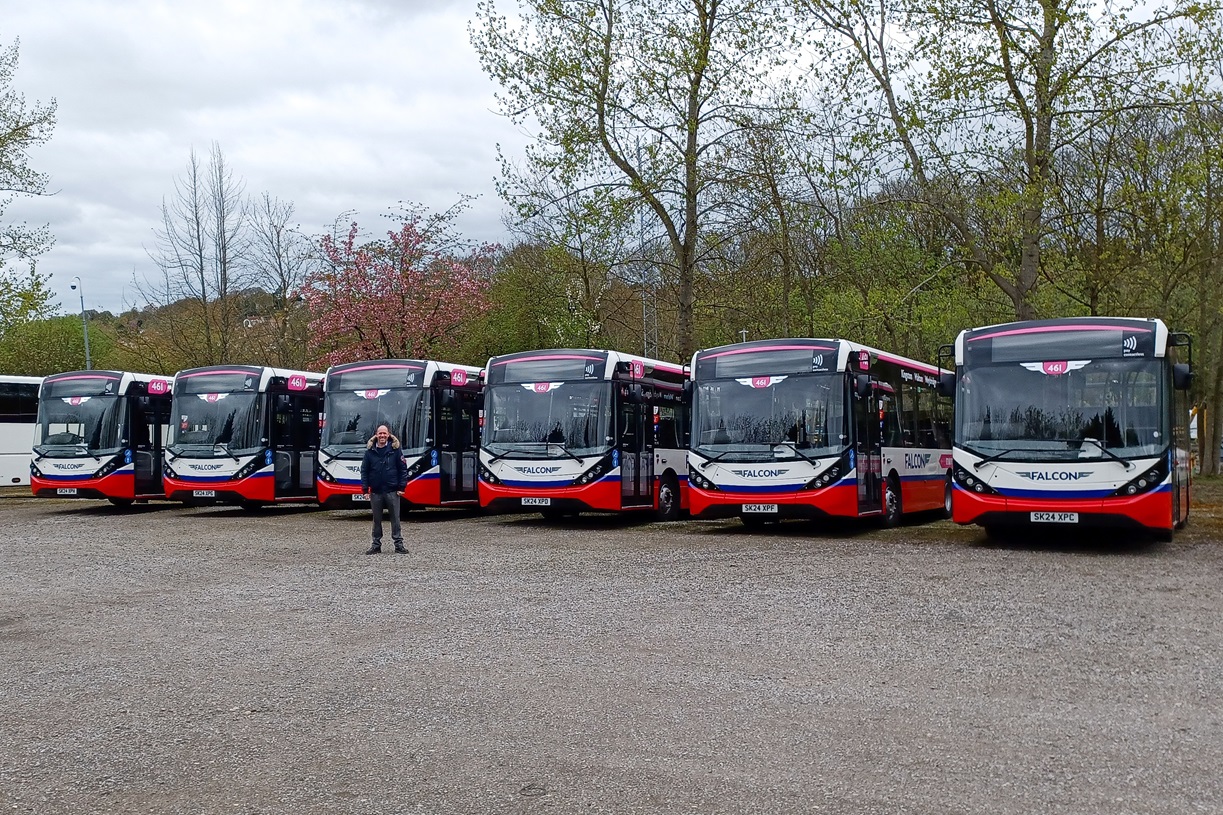
Falcon Buses of Byfleet has taken delivery of a further six Alexander Dennis Enviro200s. They have been supplied by the vehicle manufacturer in partnership with finance solutions provider Dawsongroup Bus and Coach.
All are branded for route 461 between Kingston-upon-Thames and St Peter’s Hospital in Chertsey. It was relaunched with an improved timetable during April and runs up to every 20 minutes.
The new buses are built to the Enviro200’s shortest 8.9m length and they join a fleet dominated by the type, with 47 in use. Their arrival reduces Falcon’s average fleet age to a mere three years.
Speaking about the latest delivery, Managing Director Richard Telling says: “When looking to upgrade the fleet of our improved Falcon 461 service, the Enviro200 was the natural choice for us.
“Its efficiency is well established in our fleet, and our passengers love the comfortable interiors with plenty of easily accessible seats.
“I am delighted with our newly revised livery, route and internal branding on these six buses, which will now be rolled out on all new vehicles and across our fleet as they are refurbished. This really does set Falcon aside and ahead of the game in Surrey.”
Alexander Dennis Regional Sales Manager Mark Taylor notes that the buses will be supported via the AD24 aftermarket package that the operator already utilises, while Dawsongroup Bus and Coach MD Paul Sainthouse observes that the supplier’s partnership with Falcon Buses began when the operator was founded in 2012.
“We are extremely pleased to be part of the latest chapter in the Falcon success story,” adds Mr Sainthouse.
[adrotate banner="44"]
Supporting the industry’s transition to net zero fleets: Zeelo’s vision and operator partnerships
Committed to achieving this ambitious goal by 2030, Zeelo has already witnessed significant progress, with 10% of its UK clients making the switch to electric fleets. This milestone underscores the critical role of operator partnerships in driving the industry towards a greener future.
The Power of Collaboration
Zeelo’s strategy revolves around fostering strong partnerships with transportation operators. These collaborations are instrumental in navigating the complexities associated with transitioning to electric fleets.
During 2023, Zeelo conducted trials with eight operators across the UK, including Landflight, Hearns, Wilfreda Beehive, Marret’s Chariots, Roy McCarthy, BM Coaches, Swans, and Ratho Coaches. These trials provided operators with first-hand experience of electric vehicles, allowing them to evaluate performance, range, and overall feasibility in real-world conditions.
The trials yielded promising results, with Ratho Coaches and LandFlight deciding to invest in electric coaches for their own fleets. This transition not only highlights the effectiveness of Zeelo’s trial program but also sets a precedent for other operators considering the switch. By offering a tangible demonstration of the benefits and capabilities of electric coaches, Zeelo has helped alleviate some of the common concerns associated with electrification.
Addressing Key Concerns
Transitioning to electric fleets involves addressing several critical concerns, including range anxiety, battery duration, cost, and charging infrastructure. Zeelo’s comprehensive approach ensures that these issues are tackled head-on, paving the way for a smoother transition.
Range Anxiety
Range anxiety is a significant concern for operators contemplating the shift to electric vehicles. The fear of running out of power mid-journey can be a deterrent. Zeelo’s trials provided operators with the confidence that electric coaches could meet their operational requirements. The Yutong TCe12, equipped with a robust battery system, demonstrated reliable performance over typical routes, easing fears about range limitations.
Battery Duration and Performance
Battery duration and performance are crucial factors in the viability of electric coaches. The trials allowed operators to test the longevity and efficiency of the battery systems under various conditions. The positive feedback from participants indicated that modern electric coaches are capable of delivering consistent performance, further bolstering confidence in their adoption.
Cost Considerations
While the initial investment in electric vehicles can be substantial, Zeelo emphasises the long-term cost benefits. Reduced fuel expenses, lower maintenance costs, and potential government incentives make electric fleets economically viable over time. Zeelo’s commitment to supporting operators through this transition includes providing detailed cost-benefit analyses to help them make informed decisions and leveraging relationships with suppliers to secure competitive pricing.
Charging Infrastructure
The availability and accessibility of charging infrastructure are critical for the successful deployment of electric fleets. Zeelo’s partnership with Zenobē ensured that operators had access to portable charging solutions during the trials. This collaboration not only showcased the feasibility of current infrastructure but also highlighted areas for further development. Zeelo continues to advocate for expanded charging networks to support the growing number of electric vehicles on the road.
Looking Ahead
Zeelo’s unwavering commitment to transitioning to net-zero-emission fleets by 2030 is a testament to its dedication to sustainability. By fostering strong partnerships with operators and addressing key concerns, Zeelo is paving the way for a greener future in transportation. As more operators join the movement towards electrification, the collective effort will drive the industry closer to its sustainability goals. With Zeelo at the forefront, the transition to net-zero fleets is not just a possibility—it’s an imminent reality.