
Nottingham City Transport electric bus shift: Time the critical factor
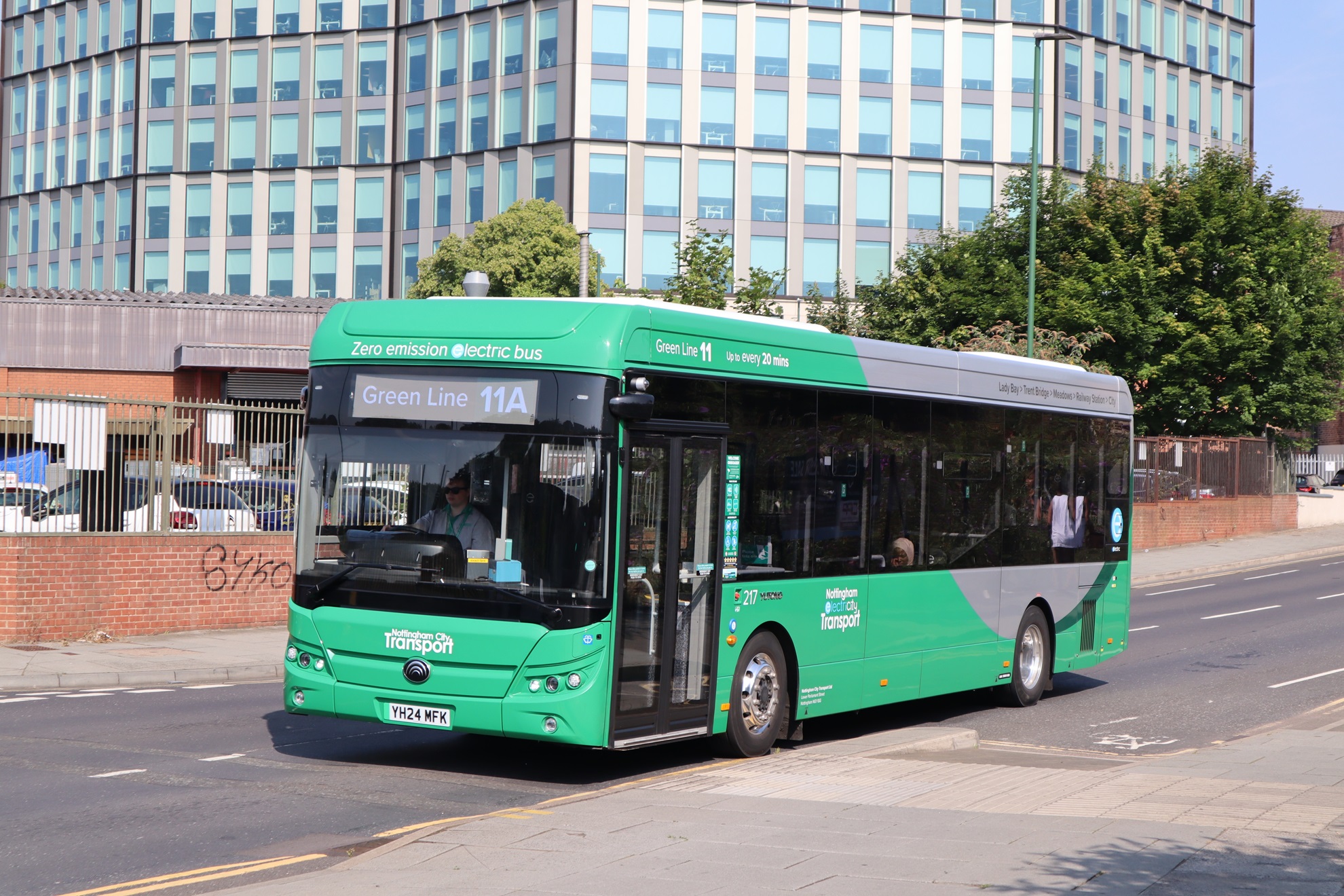
A need for comprehensive planning by coach and bus fleets embarking on the battery-electric shift has been illustrated by Nottingham City Transport (NCT), which is rolling out 62 such Yutong E10s and E12s at its Trent Bridge depot.
Trent Bridge is one of two operating centres for the municipal operator. It is walkable from the city centre, largely surrounded by housing, and will house all the Yutongs. Currently 24 are in service and performing well. The buses and their infrastructure are part-funded by the first round of the Zero Emission Bus Regional Areas (ZEBRA) scheme.
NCT’s larger depot at Parliament Street on the outskirts of the city centre will go electric eventually, but no concrete plans are yet in place.
The operator expects similar challenges there to Trent Bridge. Parliament Street is double-deck dominated, and NCT is yet to identify a battery-electric product in that sphere that suits its needs. For now, the focus is on single-deck rollout, with learnings taken into later stages.
Electric bus fleet at Trent Bridge represents full circle
Trent Bridge is a former tram and trolleybus depot. NCT Managing Director David Astill thus notes that work underway now represents completion of a circle back to electric power. The big change from trams and trolleybuses is the new fleet’s charging requirement.
“We did not initially expect a problem with bringing power in, but it turned out that there was insufficient grid capacity,” David explains. “That meant we needed a new connection from 1.5 miles away at a cost of £4 million. ZEBRA covered 75% of that, but we still had to find £1 million. The biggest issue for us has been unforeseen costs.”
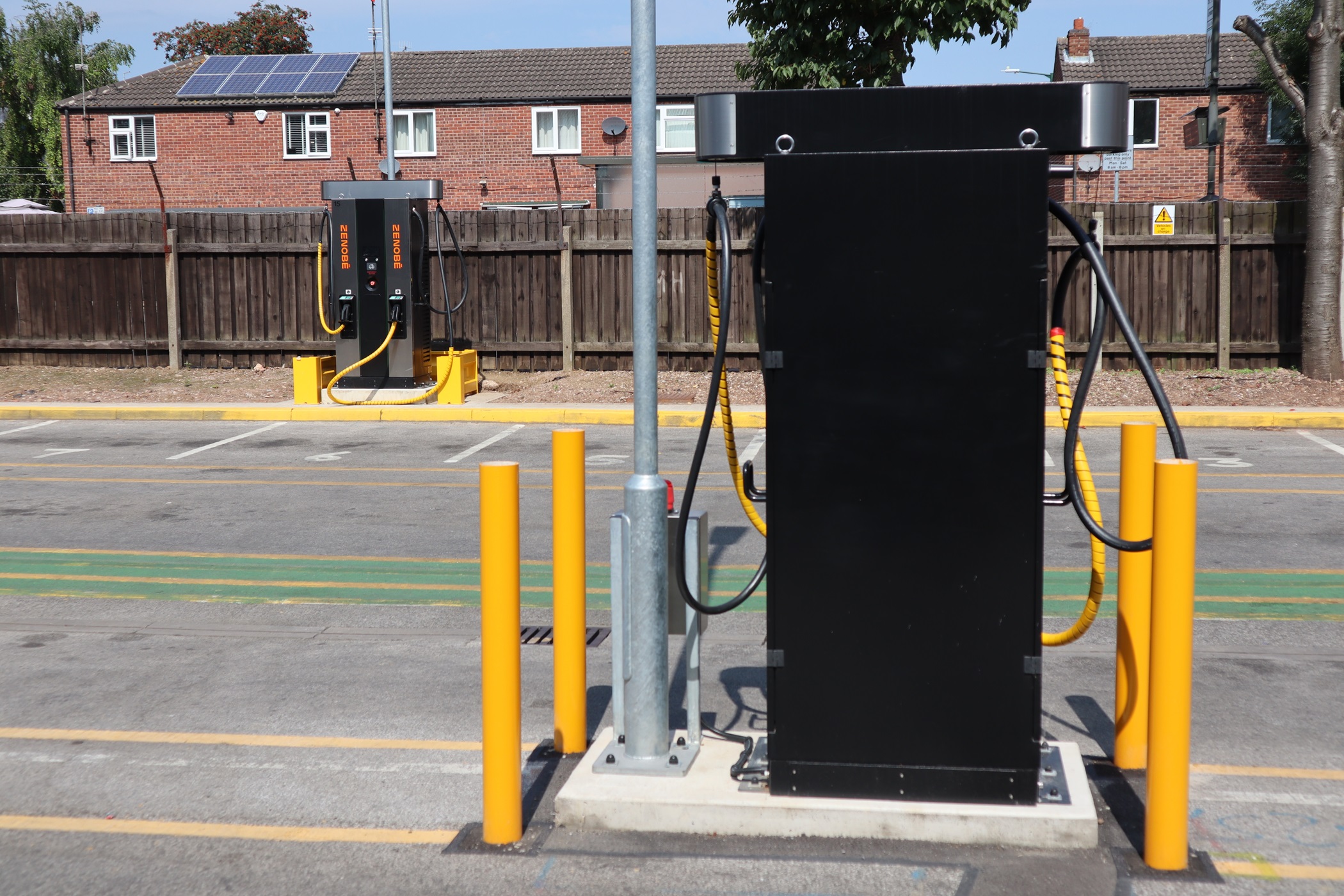
A substation is on site at Trent Bridge, and the power supply is futureproofed for subsequent buses. Zenobē handed infrastructure installation, starting in July 2023 and concluding early this year. Its responsibilities included dealing with the network operator.
Charging is undertaken at a maximum of 120kW per bus, with a ‘smart’ approach to flatten peak grid draw. All is done at night when electricity is at its cheapest, with NCT having negotiated with power suppliers to get the best rate. Although much of Trent Bridge is roofed, solar panels are absent because of the site’s Grade 2 listed status.
Such stresses lead to the question of why NCT did not seek to move to a location custom-built for battery-electric buses. David answers by explaining how finding suitable alternatives is impossible. “Now the infrastructure is in place, we are staying at Trent Bridge,” he adds.
Learning on electric continues for bus engineers in Nottingham
Deployment of the first vehicles has been successful. On day one, the only problem was a driver switching off regeneration, which had a noticeable influence on power consumption. It was identified via the monitoring platform and put right quickly.
Driving staff appreciate the battery-electrics’ smoothness and the Yutong cab ergonomics. NCT produced a handbook as part of vehicle familiarisation. David notes that it is important for staff – drivers and engineers – to receive the right training to adjust to a new technology, while launch of the buses in Old Market Square saw a driver on each vehicle to engage with the public.
From a behind-the-scenes perspective, battery-electric is also working well. Assistant Engineering Manager Kerry Cousins says that while training has been delivered by vehicle supplier Pelican Bus and Coach, learning among garage staff continues.
In July NCT carried out the first full traction battery discharge. That sees energy storage drained to its minimum before being recharged to 100%. It balances cells and maximises longevity. The operator will install a ‘pen’ at Trent Bridge to allow a bus to be segregated while work on electrical systems takes place.
NCT specified the Yutongs highly. They each have separate wheelchair user and buggy bays; in the former, no tip-up seats are fitted in a bid to keep the area clear of other passengers. Meanwhile, traction batteries on the first 24 buses are owned by Zenobē and leased by NCT, which owns the remainder of the vehicles. Battery-related risk thus sits with the supplier.
“We did that because we have no experience with battery-electric,” says David. “We may do things differently in future, but on these buses, we wanted the security of knowing that we don’t hold financial responsibility for the batteries.” That could potentially be seen as over-cautious, he adds, but it suits the operator at this stage on its electrification journey.
Electric double-decker approach uncertain for NCT
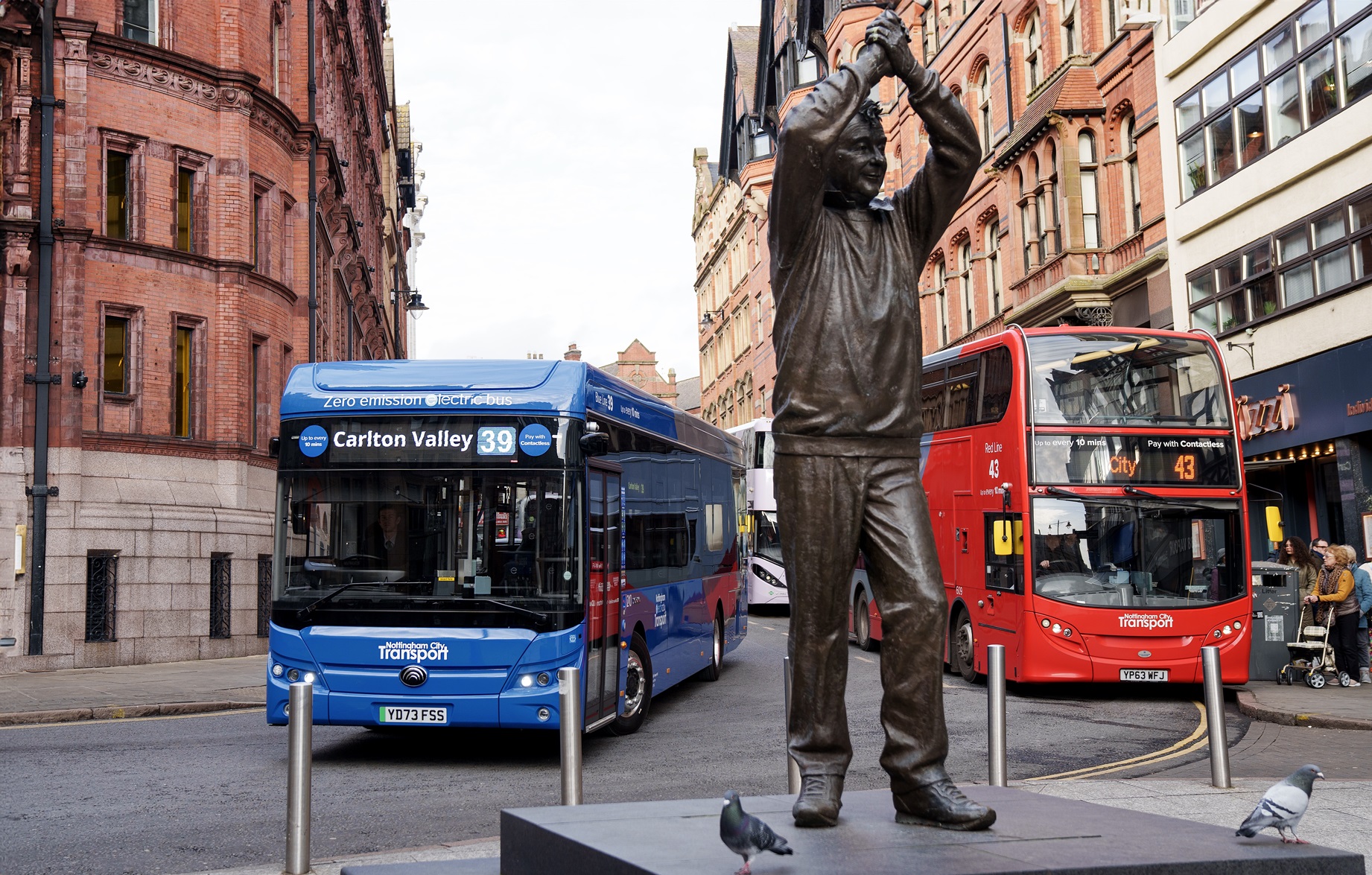
Once all 62 Yutongs are delivered, NCT’s single-deck fleet will be entirely zero-emission. Attention will then turn to double-deckers. That work is currently at the nascent stage and the operator has evaluated some demonstrators.
“We want lithium iron phosphate chemistry on double-deckers, as on our single-deckers, and a suitable seating capacity,” says Head of Marketing and Projects Anthony Carver-Smith. Feedback on the Yutong U11DD has been given to Pelican and NCT acknowledges the positive way in which it was received.
While the operator wants to maximise seating capacity on eventual battery-electric double-deckers, David accepts that somewhere in the low-70s is likely to be what results. That contrasts with previous generations of NCT diesel double-deckers, to the point where around 90 seats were accommodated on some Scania-based two-axle examples.
Ongoing funding support needed for more electrics
The new UK government is yet to reveal whether it will maintain financial support for purchase of zero-emission buses. Under-Secretary of State for Transport Simon Lightwood’s first visit in that capacity was to NCT, where David was able to stress the need for that backing if decarbonisation is to continue at its current pace.
One large group believes that battery-electric in some cases is now within touching point of diesel in terms of affordability if ‘pump priming’ support is for infrastructure is forthcoming. But NCT’s chief thinks that government underpinning will be required “for the foreseeable future because there are so many unpredictable costs.”
A local consideration for the future is how long zero-emission buses serve with NCT for. The operator sells diesels with life left in them. It expects that battery-electrics will serve cradle-to-grave in Nottingham, but that is not guaranteed.
“Our diesel buses have typically gone to other operators at around 12 years of age, but there is yet no clarity on any second-hand market for electrics,” David notes. “Will those businesses have charging on site in 2036? We don’t know.”
An elephant in the room is NCT’s customer makeup. 40% of its users have access to a car, and on some routes that figure is 60%. Those passengers are thus easy to lose, and NCT has doubts whether they would all continue to use buses that are at a latter stage of their lives.
“That could leave us with a 12-year life even for battery-electrics,” says David. The operator’s large biogas fleet poses a similar conundrum. A decision will be needed whether those buses are retained for a full term, or if they are sold for further use as diesels, either after conversion in-house or at a suitable price point to allow the subsequent owner to carry out that work.
Taking time as a virtue in electric coach or bus deployment
Approach to second life will be among the later learnings of battery-electric operation. The biggest lesson so far from NCT’s early days of the transition is simple, David explains: Don’t go too fast. “Time is key to a project like this. You cannot rush it. Leave sufficient space, and don’t think it will be a quick shift. It is not.”
That is now well understood by NCT and will come into play in later stages of electrification. The 24 buses already in use perform well; battery-electric suits the operator’s needs, and hydrogen is not being considered. Like others, the municipal expects that when it comes to moving more testing double-deck applications, battery technology will have advanced to suit.
For now, the Yutongs cover relatively low mileages. NCT’s city routes average around 12mph. That has allowed replacement of diesels on a like-for-like basis with no changes to duties. While the ongoing funding argument must be answered by the government, NCT is another operator demonstrating that battery-electric is an entirely viable option for urban landscapes.

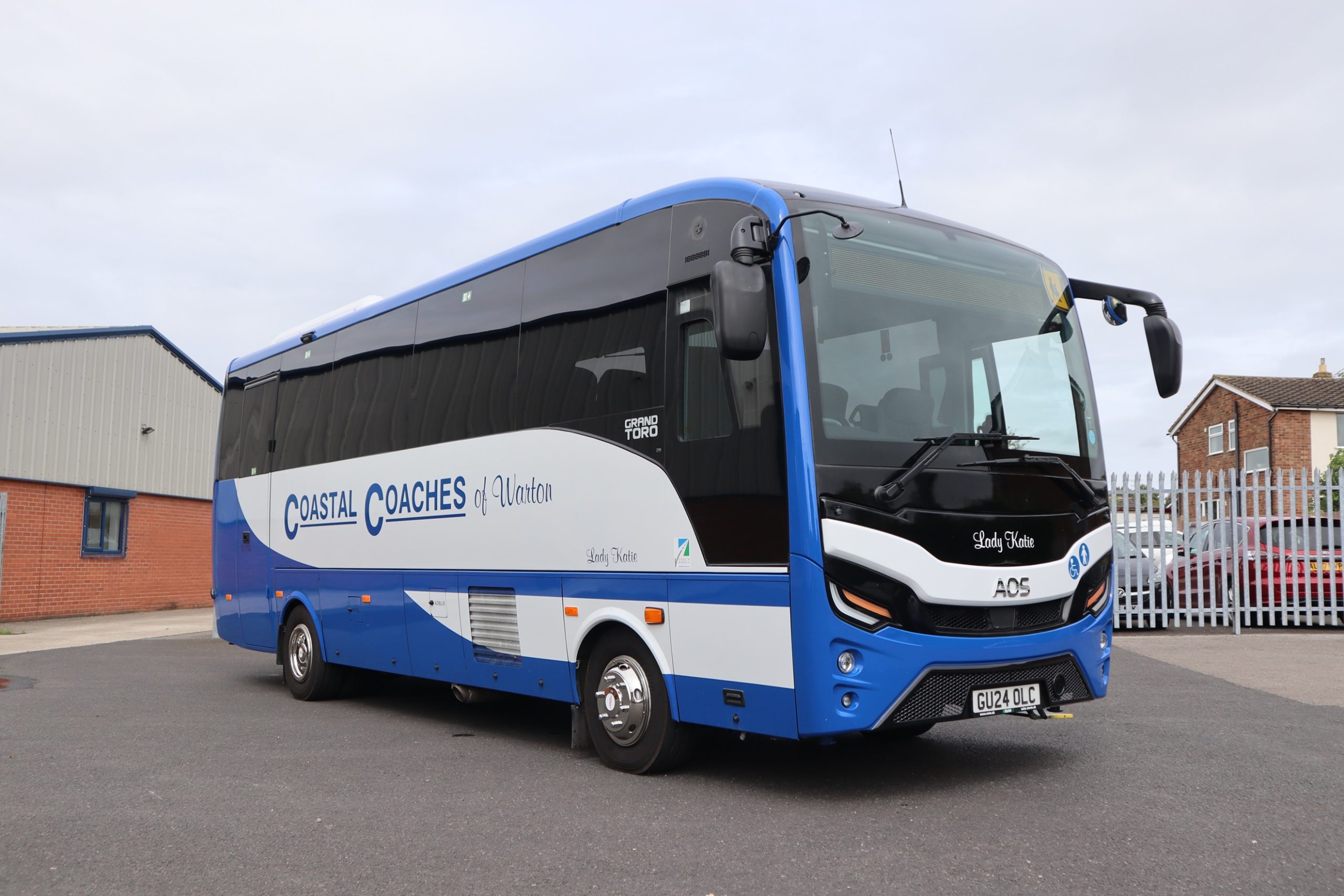
AOS Grand Toro ticks PSVAR midicoach box for Coastal Coaches
Evolution of the midicoach market over the past decade has led to growing prominence of rear-engined models. But driveline at the front remains the layout for several popular products in that field, including the AOS Grand Toro, which is supplied by EVM and built in Turkey by Anadolu Isuzu.
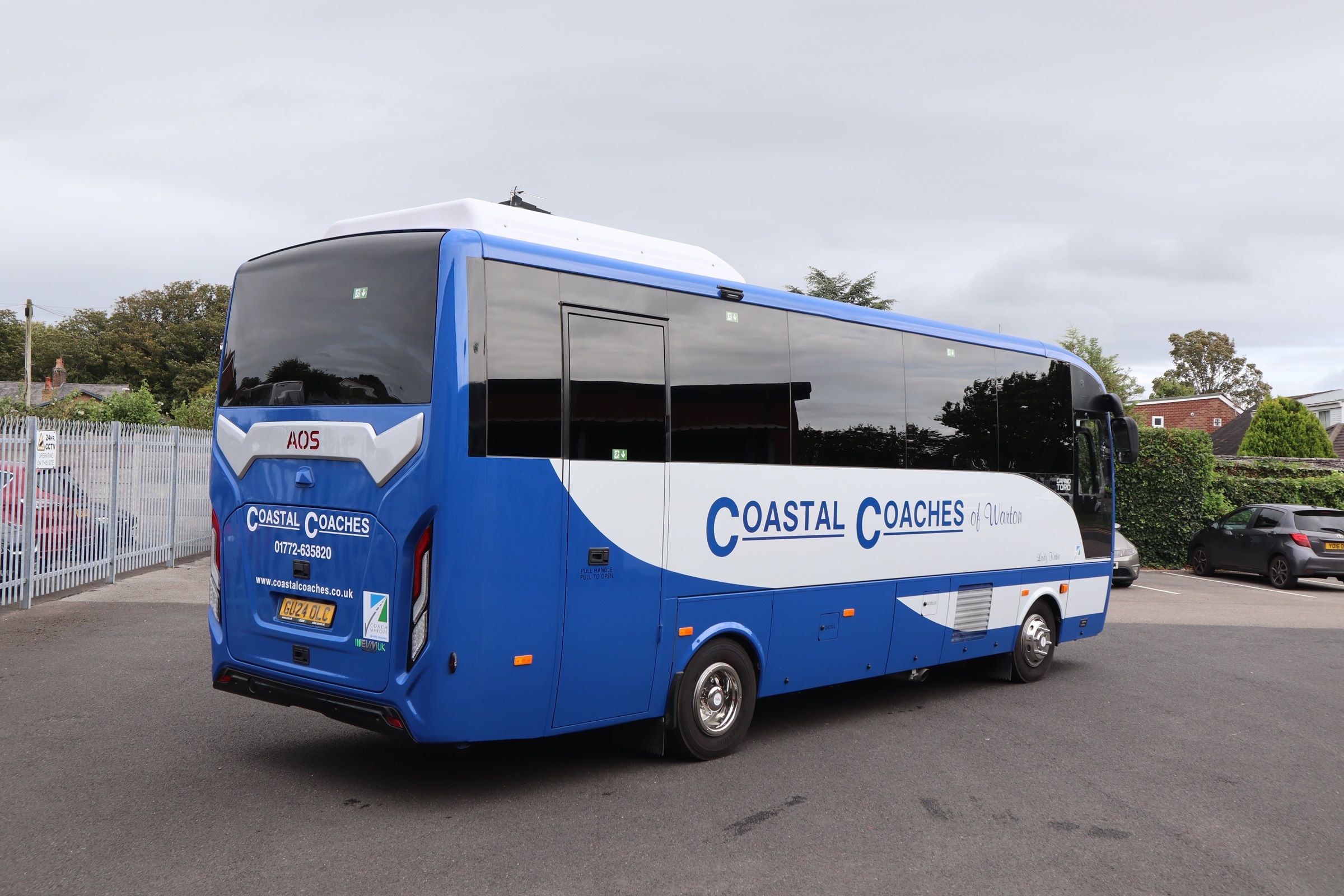
Among buyers is Coastal Coaches of Warton in Lancashire. It has two, both of which are PSVAR compliant; the initial example was the first Grand Toro completed in accessible format. Alongside the AOS midis, Coastal recently received a coachbuilt Grand Tourer minicoach from EVM, mounted on a Mercedes-Benz Sprinter underframe.
That is significant investment for a fleet of 16, which is now entirely coach-based after local bus service contracts ended. The EVM-sourced products sit alongside a core of Mercedes-Benz Tourismos as the large coach of choice, and vehicles from UNVI that include several Compa T-bodied Iveco Dailys and Sprinter-based products.
Coastal Coaches has long worked closely with UNVI. The operator’s Managing Director Bill Holder notes that purchase of other mid-sized products does not mean that collaboration has ended; Coastal recently bought an UNVI minicoach and another is on order. Meanwhile, the adjacent CoachTec authorised agent still holds £300,000 of UNVI parts, although vehicle sales are now led by Whitburn-based Coachtraders.
AOS midicoach 'gamble' already paying off for operator
The Grand Toros have succeeded two UNVI Voyager-bodied Mercedes-Benz Ategos. “We could see the need to move more towards PSVAR compliance in midis, so had a good look around,” says Bill. “For the price, the AOS was a good product and a good fit for our fleet.”
As factory-finished PSVAR examples, the Coastal Coaches twins each have a D’Hollandia lift. It is mounted ahead of the drive axle. To conserve space when stowed, the main part of that unit is in two nested pieces. Upon extending the lift, one section slides out to give a full-size platform. Maximum loading is 350kg.
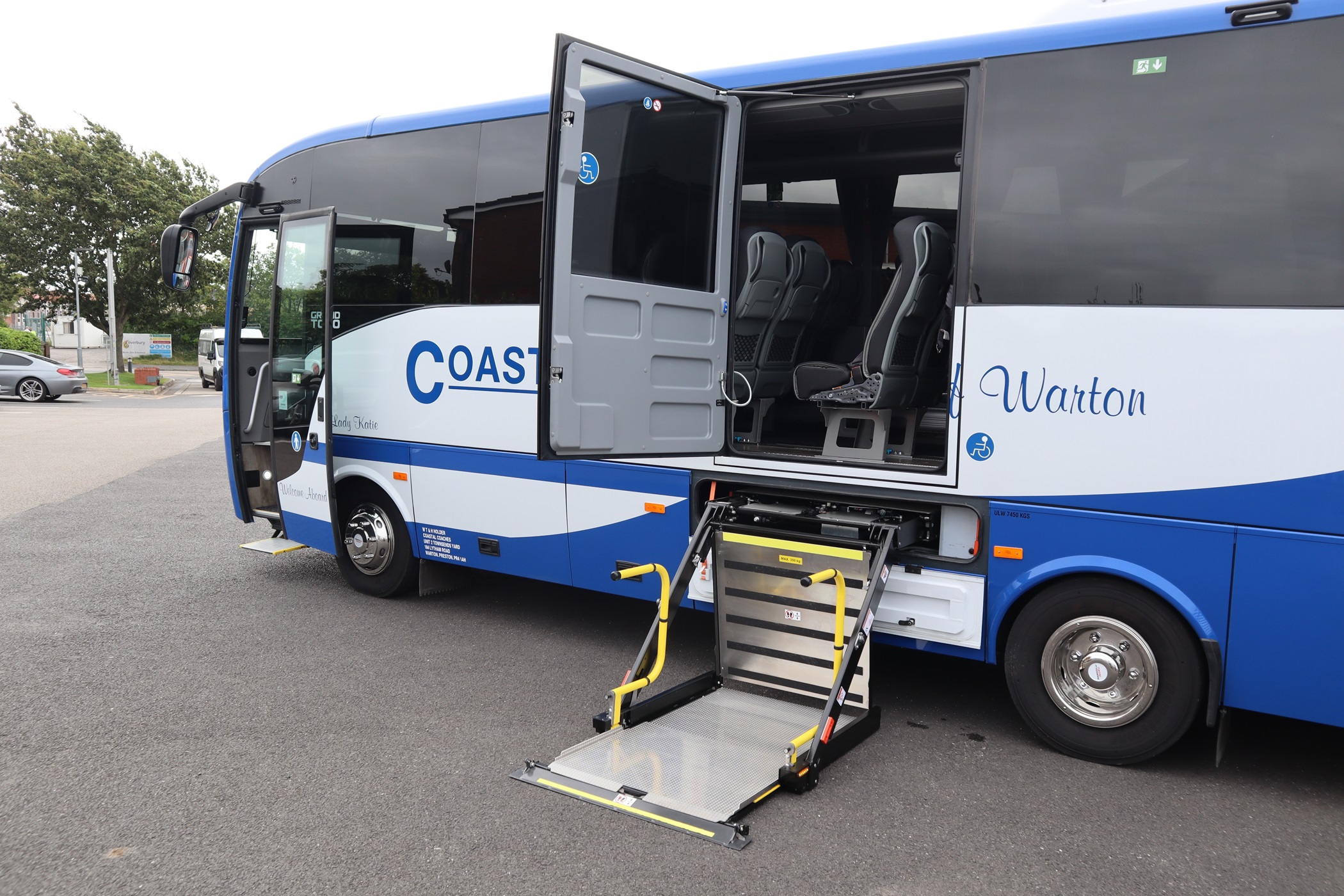
Within the saloon is an area with four tracking rails and seats on quick-release legs. Securement devices for wheelchair users are from Q’Straint.
Each of the Grand Toros is finished in Coastal’s blue and white livery, which suits them. While Bill acknowledges that going with a manufacturer relatively new to the UK could be a risk, he counters that by pointing to EVM’s established support infrastructure.
“The Grand Toros are a shift from the norm for us and we have taken something of a gamble. We were pleasantly surprised upon test driving one and are confident in Turkish-built vehicles after good experience with our Tourismos. The Cummins and Allison driveline gives us confidence. Based on what I wanted, what I paid, and what I got, I believe these vehicles are a safe bet.”
AOS Grand Toro meets Coastal's multipurpose requirement
While the Grand Toro has sometimes been seen as more of a local contract and private hire vehicle, Coastal Coaches’ policy is that fleet members are multipurpose.
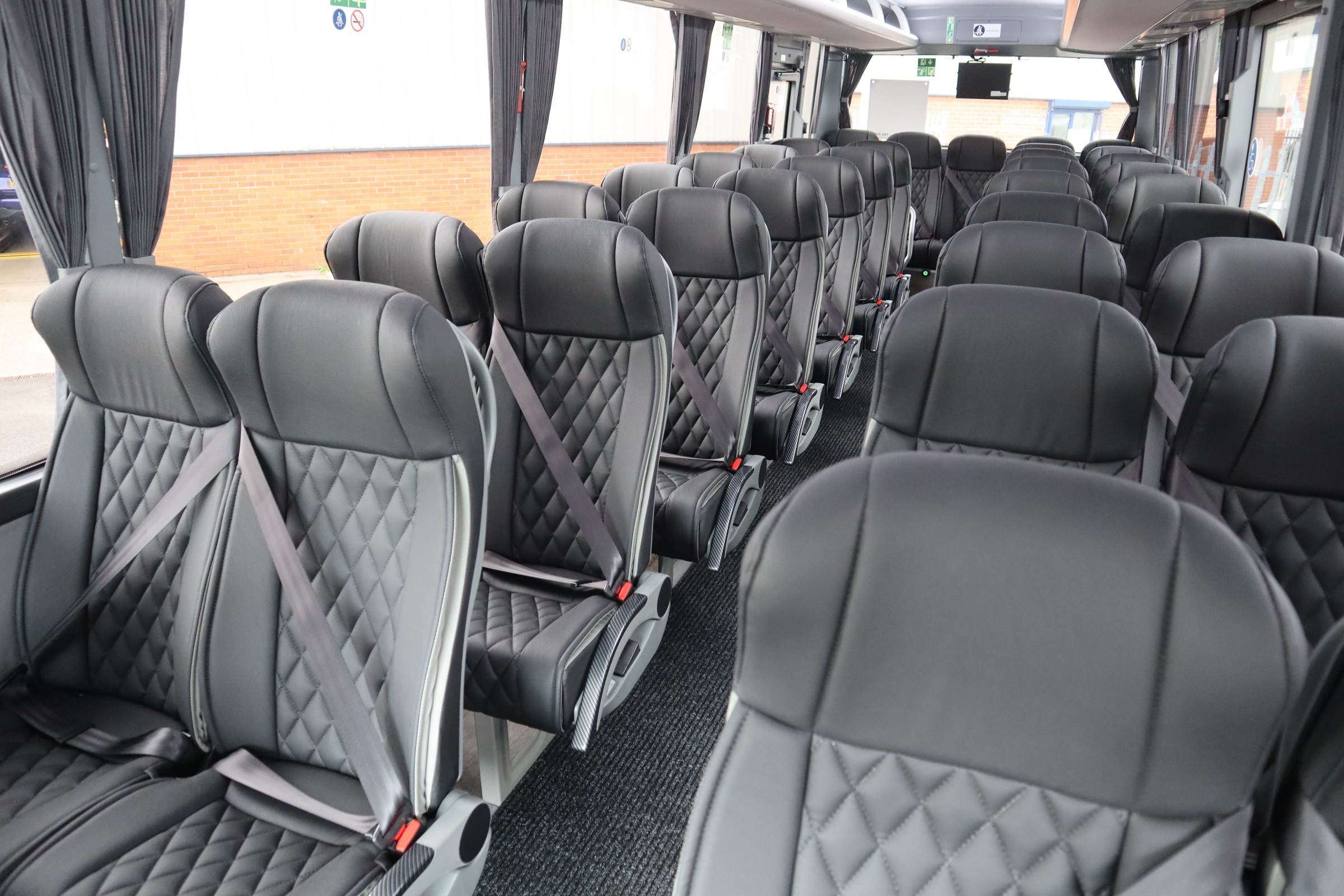
Because of that, and the attractively finished interior, the operator would not hesitate to send one on tour when appropriate. They also suit rail replacement; Bill observes that some rural stations are difficult to reach with large coaches. “We like the model’s compact nature,” he adds, which is helped by the engine and gearbox being above the set-back front axle.
Coastal Coaches’ approach is built around offering a quality service, Bill continues. Do that and customers will book despite cheaper competitors, he believes, but in addition to a focus on service, vehicles are part of the strategy. Appearance of both fleet and drivers is key, along with personality for the latter. Cleanliness and comfort are another priority. Coastal has a dedicated cleaner who works four days per week to reduce that burden on drivers.
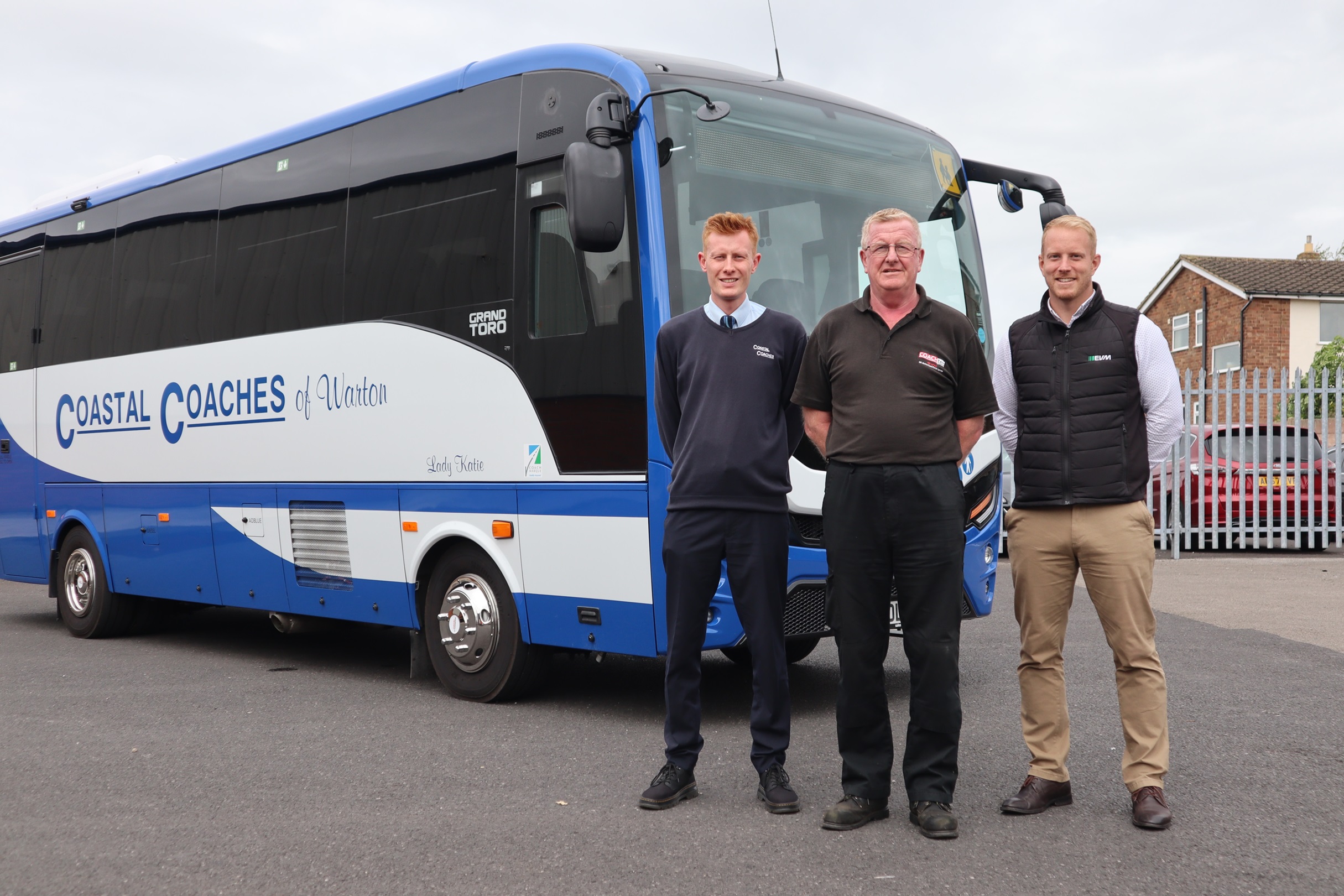
Modern fleet brings operational advantages
Bill adds that modern vehicles bring various benefits. “A fleet that is clean and new is noticed,” he explains. The operator also believes that an up-to-date fleet is beneficial in attracting drivers, although there is a lot more to staff retention than what they drive. Making an employer somewhere that people want to work is the overriding factor.
Parts availability and warranty coverage are a further part of Coastal’s fleet policy, while the government’s approach to annual investment allowance and full expensing are also seen as increasingly favourable to capital expenditure.
“Key is a vehicle’s residual value after five years, not just what I paid for it in the first place,” Bill continues, noting that a strong second-hand market – as now – helps new purchases.
“It is the difference between the two figures that is most important. My approach has never been to look solely at the headline price, but at the cost of owning the coach over a certain period, although in the post-2020 world, it is still imperative to keep a close eye on every outgoing.”
The Grand Toro pair fit into a strategy of buying what is needed. The model’s 35 seats can be had in larger midicoach models, but in addition to private hire, rail replacement and tours as needed, each fleet member is required to do home-to-school work when called upon. The AOS model also suits corporate duties, the operator finds.
The approach to PSVAR: ‘Compliance, not complaint’
PSVAR compliance specified on the Grand Toro pair by Coastal Coaches recognises the coach industry’s accessibility shift, Bill continues. While work on the review of PSVAR continues, he believes that the sector opposing existing or changed requirements is futile. Compliance, not complaint, is his mantra.
The same is true for accessible information regulations and their impact on rail replacement. The operator’s knowledge in that field is led by Bill’s son Thomas, whose history with train operating companies and rail replacement providers can be traced to when he was at university in Manchester and would work controller shifts during planned blockades.
“We will not change legislation, and it is easy to waste time complaining and finding reasons not to comply,” Bill continues. Nevertheless, use of lifts fitted to Coastal Coaches vehicles is rare.
But in a fleet where residual values are an important part of purchasing, where vehicles often have a subsequent owner’s name on them well before release, and where a tour one day may be followed by home-to-school or rail replacement the next, versatility is key – and in PSVAR compliant form, the Grand Toro has that box ticked.
Grand Toro continues to deliver for EVM
EVM has delivered three PSVAR compliant Grand Toros so far. The two supplied to Coastal Coaches are complemented by one with a buyer in Scotland.
The dealership has a regular flow of Grand Toro arrivals, and manufacturer of the AOS-branded vehicles Anadolu Isuzu is largely unaffected by the lead time difficulties seen by some other builders, says EVM Area Sales Manager Matt Thompson.
Most Grand Toros arriving here are as a minimum prepared for PSVAR to allow for easy full conversion later. If required, EVM can arrange for them to be completed and fully compliant before delivery. In that position, a PLS lift and Hanover destination displays would be fitted in the UK.
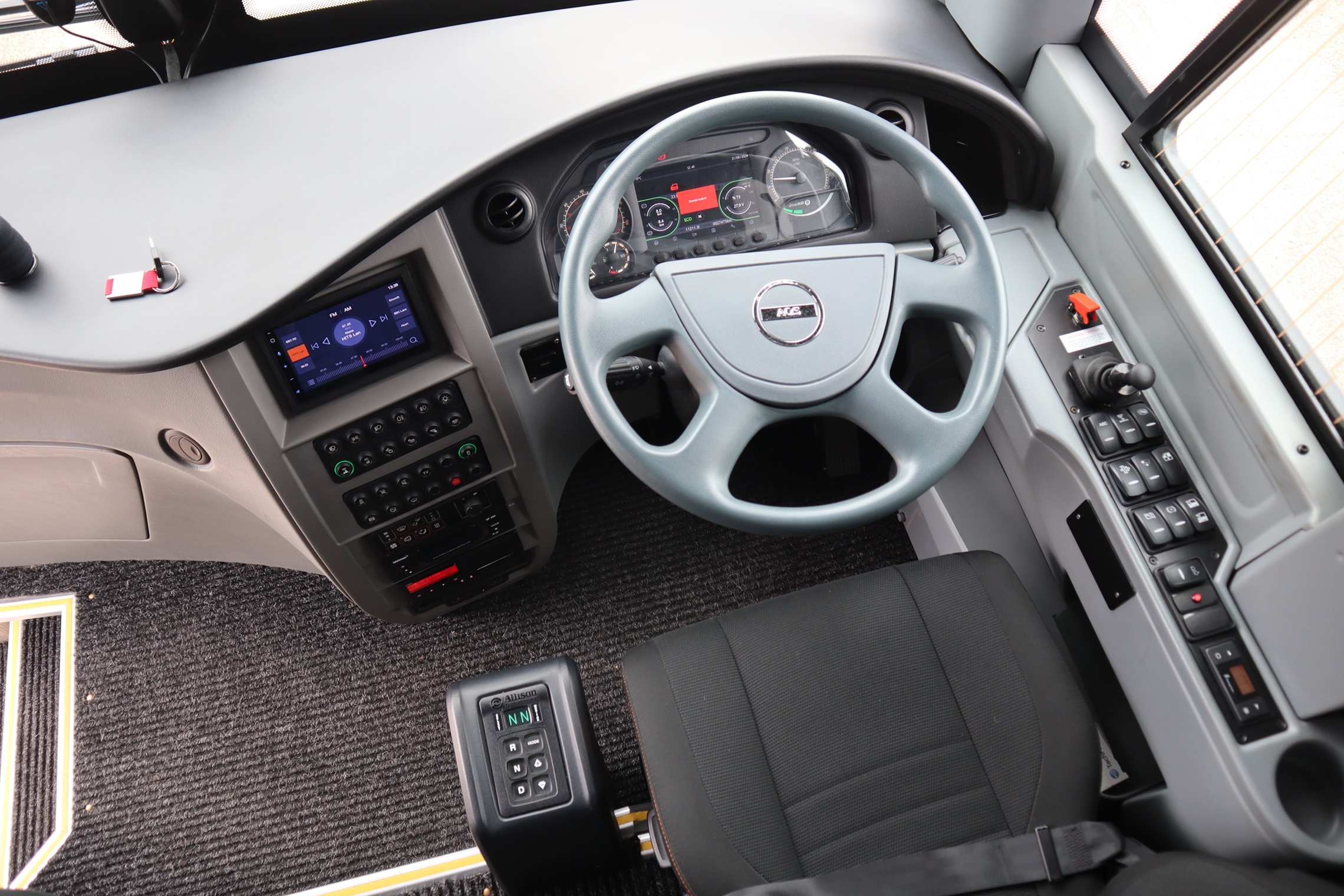
The Grand Toro continues to account for the bulk of AOS midicoach products sold by EVM, but the larger Visigo is also present. It has a Cummins B6.7 six-cylinder engine and ZF EcoLife gearbox compared to the Grand Toro’s four-cylinder B4.5 and Allison unit, and thus sits in part of the market with very similar competing products.
Nevertheless, the Grand Toro has filled a niche and is viewed by customer Coastal Coaches as a versatile and refined vehicle. Bill does not rule out taking a third, should the need and work be there.
Aquarius IT adds welfare and safety check capability to its app
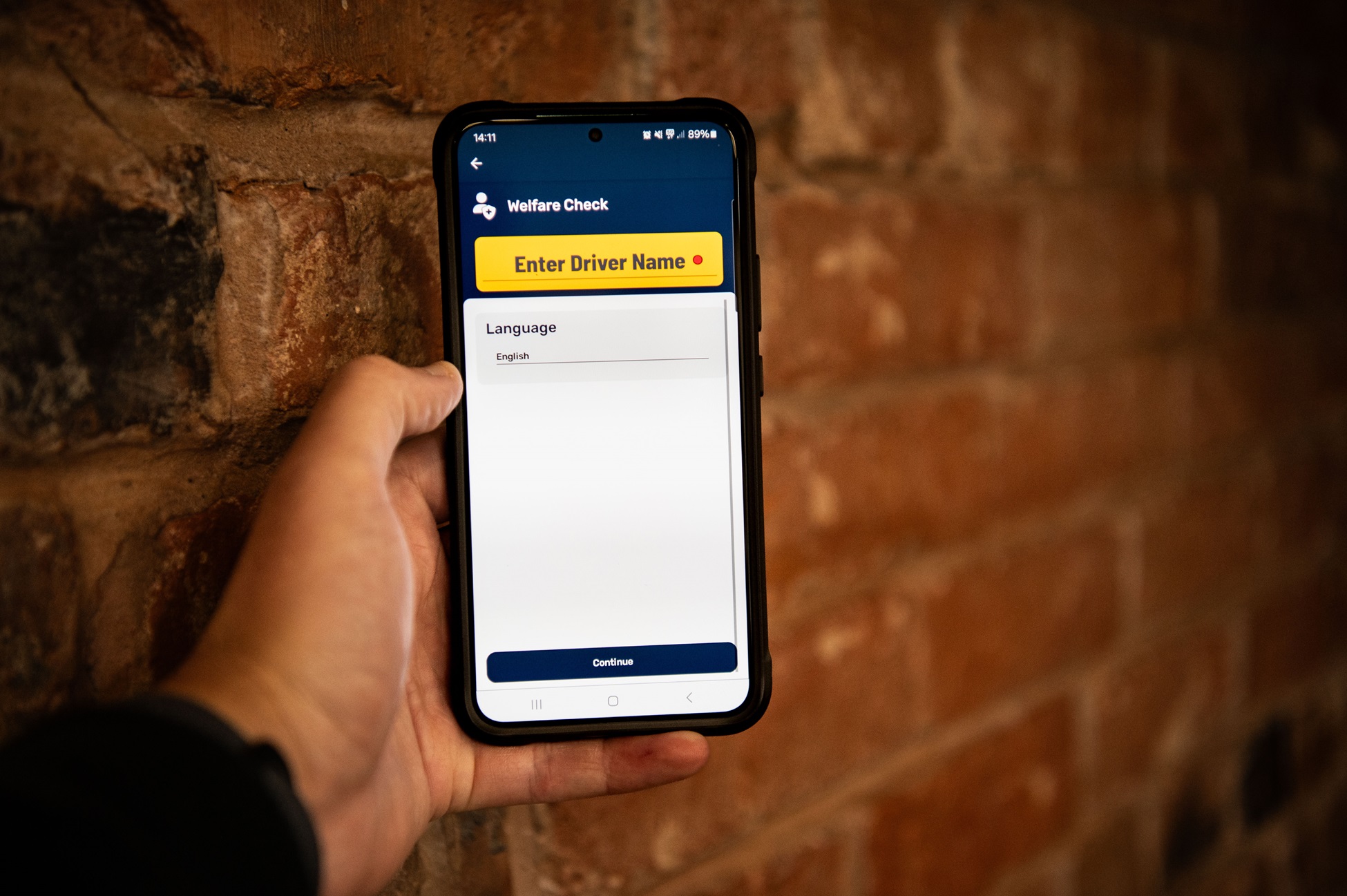
Aquarius IT has added a customisable driver welfare and safety check into its Aquarius app. It says that provides a simple tool for line managers to assess and record driver information during safety spot checks to make sure that staff are fit, healthy, and safe to drive and work.
In a similar manner to all other ‘check’ modules in the Aquarius app, the welfare and safety check has a pre-set list that can be customised or added to based on the customer’s needs.
Those can range from recording the results of routine breathalyser and drug tests, to spot checking the cab area so as to ensure that there are no obvious wellbeing issues and that everything is safe and comfortable for the driver.
Written and photographic checks could also include making sure that mobile phone policies are being adhered to and that the right PPE has been issued and is being worn.
Taking such items seriously not only considers drivers’ health, safety and welfare but also factors in protection of an operator and its reputation, Aquarius says.
Speaking about the new module, Aquarius IT Managing Director Mark Johnston says that the supplier has been in conversation with several customers on the welfare and safety check subject for some time.
“We know that there are many companies that already carry out these spot checks on paper as part of their enhanced duty of care policies and are looking for an easier way to capture the information digitally for analysis, traceability, and due diligence,” he continues.
“By prioritising the welfare of drivers, they have found that this not only benefits the individual personally, but also enhances safety and overall productivity.
“The Aquarius app has been purposely designed to aid this process. Line managers responsible for these in-person spot checks will have a company-approved checklist on their phone or tablet, which will make the whole process easier to manage.”
Mr Johnston adds that creation of a digital audit trail allows information to be analysed and investigated further “for even greater back-office insight.” Reminders can be scheduled if any driver follow-ups are needed.
“This will all enable employers to be better informed about their workforces, so that the most effective health, safety and welfare measures can be put in place proactively for the benefit of everyone involved," he concludes.