
UrbanThings: Putting technology into the hands of operators
The advance of technology is greatly being felt in the coach and bus industry by both the customer and service provider. Nowadays, even the smallest of operators have branded apps, with live bus data readily available elsewhere too.
UrbanThings has been at the forefront of this revolution, capitalising on the success of the popular, public-facing Bus Checker app and moving its focus towards working directly with operators and local authorities to provide customisable apps and websites, on both the customer and back-end sides, offering real-time transport information and ticketing solutions.
Founder Carl Partridge last year handed over the reins as Chief Executive Officer of the Paragon ID subsidiary, with former Arriva Digital Director Adam Toone announced to take over in November 2023.
Adam, who led all of UK bus digital, commercial, and IT systems at Arriva, as well as launched several digital demand responsive transport services (DRT), is clear the mission he received is one of growth. He says: “The big focus is to continue to collaborate with our customers to give them improvement and innovations, and ultimately, help them grow patronage and adoption of their customer apps and websites."
Adam will concentrate on rolling out the UrbanHub platform, which brings together passenger apps and websites, back-office portal, ticketing and payment systems and Mobility-as-a-Service application programming interface, to more operators. For Adam, strengthening UrbanThings’ collaboration with other transport technology experts will foster UrbanHub's growth and enhance passenger access to transport information.
“We’re excited to be working with our partners to support operators with a better product, whether that be working with scheduling companies like Optibus and how we can collaborate with them, or whether it's through a much richer set of advanced journey-planning capabilities that are preference-based.” Among the innovations, UrbanThings has worked with Littlepay to recently launch a feature that allows the passenger greater sight of transactional data when using tap-on tap-off.
Adam sees another avenue for growth in boosting the success of its customers — the operators and local authorities. He says that might involve helping to create marketing assets or arranging on-site training days for drivers or engaging better with the drivers’ trade unions.
LibertyBus in Jersey is among the operators with which UrbanThings works. That is with great success — in January, it announced the LibertyBus app had passed 20,000 downloads, a figure representing 20% of the island’s population. South Yorkshire TravelMaster, Newport Transport, TrawsCymru and Ipswich Buses are other transport providers for whom UrbanThings has provided customised passenger and operator apps.

The issue of fraud in digital ticketing, including the exploitation of contactless technology, has been closely watched by UrbanThings. For example, it has introduced anti-fraud animation, which sends “bubbles” across mobile screens to show the driver it is a genuine ticket rather than a copy. The bubbles respond to hand movements, using the phone’s accelerometer, to further combat fraud.
“There are obviously multiple parties in the process of digital ticketing and mobile ticketing,” says Adam. “But we work with the likes of Ticketer, Vix Technology, the electronic ticket-machine providers, Littlepay and Visa. I think we've made some big steps forward in the industry around fraud prevention.”
That includes, for example, using artificial intelligence to help combat age-verification fraud. He adds: “There are other ways that you can identify where fraud may be taking place quite quickly so that you can react and deal with it.”
Adam has been deeply involved during his career with DRT. While he stresses that DRT was never the “silver bullet” some once presented it as, he says: “What DRT can do is allow you to effectively operate your network at less cost, whether that be through using different vehicles, using different types of driver licenses, whether it's connecting journeys into fixed lines to make them more efficient, which therefore drives more patronage.”
He adds: “I think it will always require an element of funding to support DRT, in most scenarios. But that funding can be utilised from different areas, such as Section 106 funding, social funding, dial-a-ride replacements or school transport.” Offering what he admits is an “extreme” example, he even suggests that home package delivery could potentially be combined with DRT.
Given data plays such a big role for UrbanThings, Adam recognises the challenges of complying with Bus Open Data Service (BODS) and of adequately meeting the requirements of businesses such as his.
“Bus data is no easy task,” he says. “The Department for Transport (DfT) probably underestimated the complexity of bus open data and how it was going to get that off the ground.” He says this may have contributed to some “frustration” on behalf of operators and that DfT needs to work to gain more co-operation. “I think it needs to probably define the end goal a little bit clearer in terms of what BODS will give operators,” he says.
The increase in passenger data availability created by digital has led to many advantages for the operator, stresses Adam. “From an operator point of view, you're using it for personalisation to craft a better passenger experience,” he says. “Whether that's being able to display the right ticket to repurchase, buy now, buy again, quickening up that purchase flow, you're trying to personalise the app for them. It might be recommending favourite stops or providing alerts around kind of cancellations or late journeys.”
He adds that data also facilitates longer-term decisions for operators, such as the move away from weekly tickets towards carnet pricing during and since COVID-19, or a changing of routes and services.
UrbanThings has been at the head of innovation and operators are increasingly willing to follow its lead, feels Adam. He says: “In the last four years, the industry has had to go on a very quick journey. And since the pandemic, they are a little bit more forward-thinking.”
However, he adds: “There's still, at the moment, though, a perceived salvo that it's expensive to do digital or to do new ticketing methods. One thing we’re trying to show operators is that it actually doesn't have to be expensive; it just needs to be right.
“What we're trying to demonstrate at UrbanThings is that we can do things affordably and we can drive patronage and put passenger data back into the hands of the customer, which we believe will make them travel more.”

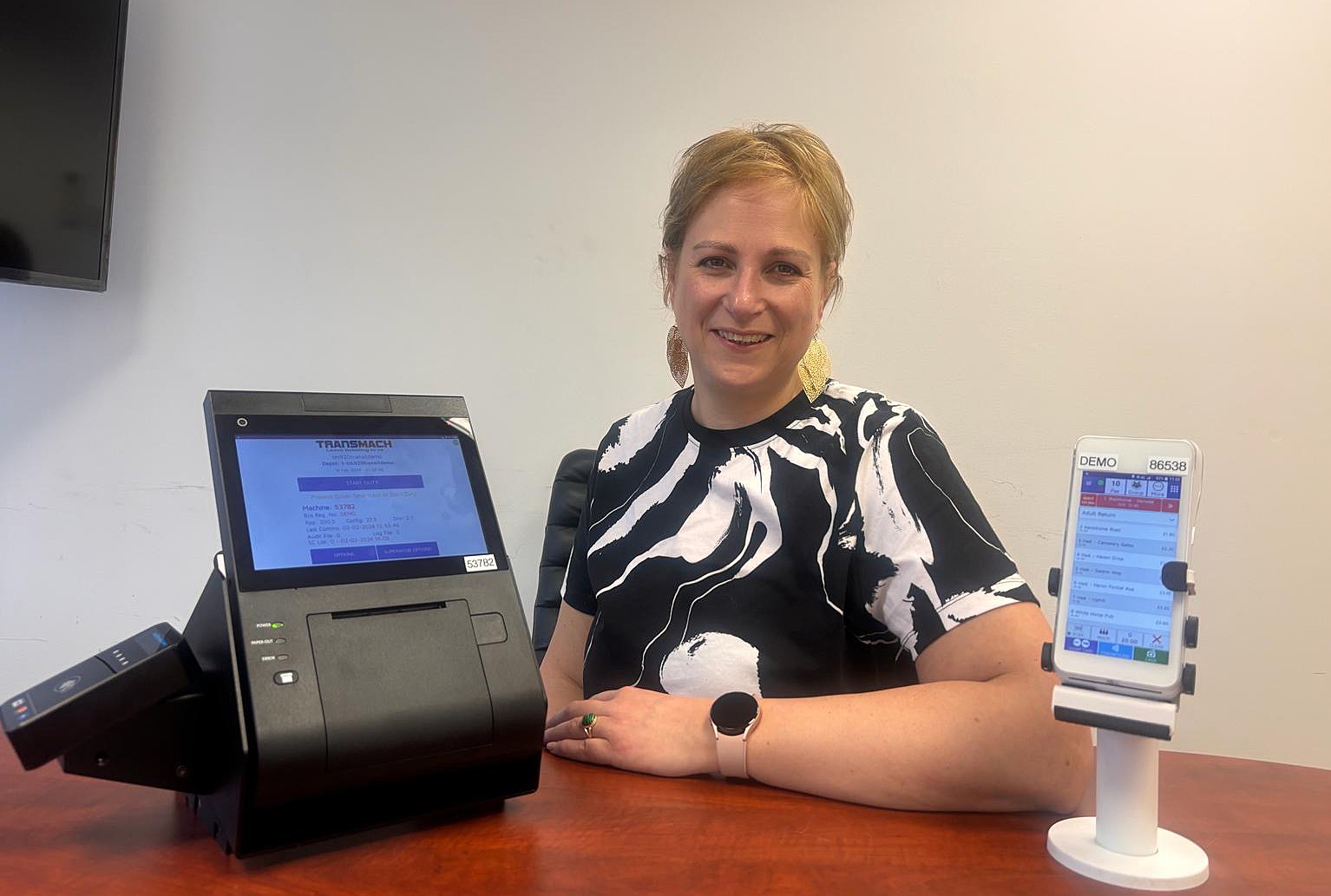
TransMach grows team and looks to ticketing anti-fraud tool rollout
TransMach has named Kirsty Darby (pictured) as Sales Account Manager. Her appointment comes as the smart ticketing and contactless solutions provider targets growth and looks to the deployment of a what it says is a "revolutionary" anti-fraud tool.
Ms Darby joins from Ticketer and brings over 15 years’ experience in transport customer support and data management to TransMach. She will lead initiatives to grow existing client relationships and engage with operators that seek to upgrade their ticketing and Bus Open Date Service compliance systems.
A primary objective for TransMach in Q1 2024 is the rollout of a software anti-fraud tool that it claims “will redefine and fortify contactless security.”
That work is being delivered in partnership with payment processing company Littlepay and other ticketing device vendors. TransMach has developed a cross-sector Payment Account Reference (PAR)-based deny list protocol that it says has been designed to protect against emerging security threats such as mobile wallet 'flipping'.
That action occurs when passengers avoid paying by re-registering cards to deliver a new primary account number, which bypasses existing card deny list mechanisms. By using the PAR token, the new protocol includes an additional blocking feature based on the PAR to block cardholders at account level, preventing fraudulent transactions.
TransMach adds that PAR “links all the cards in an account and does not change when a mobile wallet is ‘flipped’, which prevents any re-registrations.”
Speaking about both the additional security tool and Ms Darby’s arrival with the business, TransMach Director Minesh Vandra says: “TransMach is proudly at the forefront of ticketing innovation within the public transport sector, consistently developing solutions that anticipate and address evolving industry demands.
“We are therefore delighted to welcome Kirsty onboard in the key role of Sales Account Manager, which underscores the company’s dedication to exceeding client expectations.
“Being part of a cross-industry group in the development of the PAR deny list project sets a new standard in safeguarding critical data and systems, and this important work will continue during 2024.”
Ms Darby describes the latest anti-fraud project as “a significant leap in enhancing security measures and ensuring our clients’ operational resilience and peace of mind.” She adds an expectation that operators will wish to understand more as they look at options for ticketing systems upgrades.
[adrotate banner="37"]
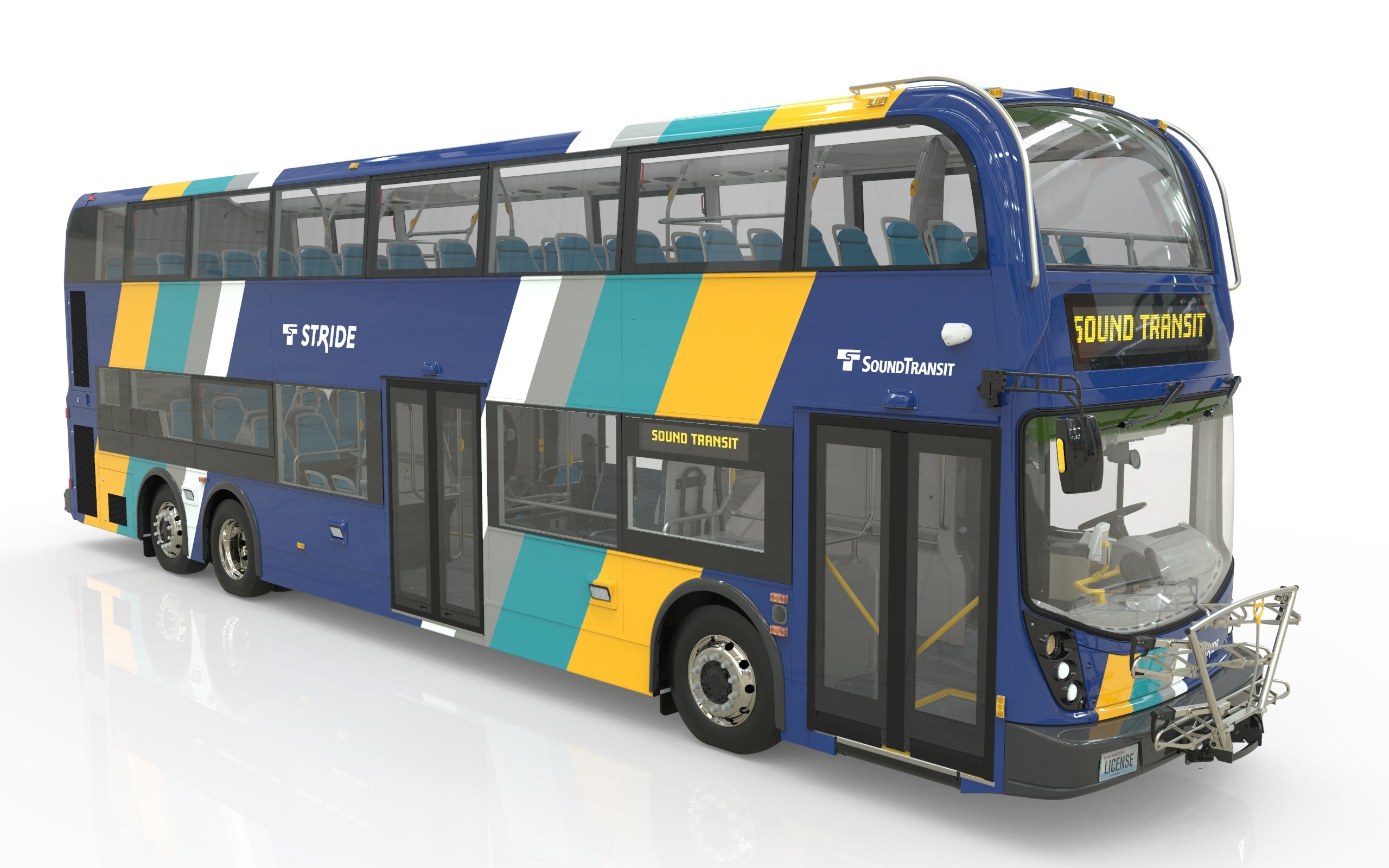
Sound Transit in US orders 33 Alexander Dennis Enviro500EV
Alexander Dennis has taken an order from Washington state agency Sound Transit for 33 examples of its latest-generation Enviro500EV battery-electric double-decker.
The agreement represents a first order for that vehicle type in the United States, although a handful of previous-generation Enviro500EV models were sold there.
The Sound Transit examples will be delivered in 2026. They will be used on two new Stride bus rapid transit routes that are being developed along the Interstate 405 corridor to the east of Seattle to connect communities and light rail stations.
Assembly will be in Nevada by Big Rig Manufacturing, which is Alexander Dennis’s partner for production of the Enviro500 range in North America.
Notably, the buses will be equipped with wireless, inductive on-route charging thanks to Pennsylvania supplier InductEV. That will enhance range and operational performance and be a first for double-decker buses in North America.
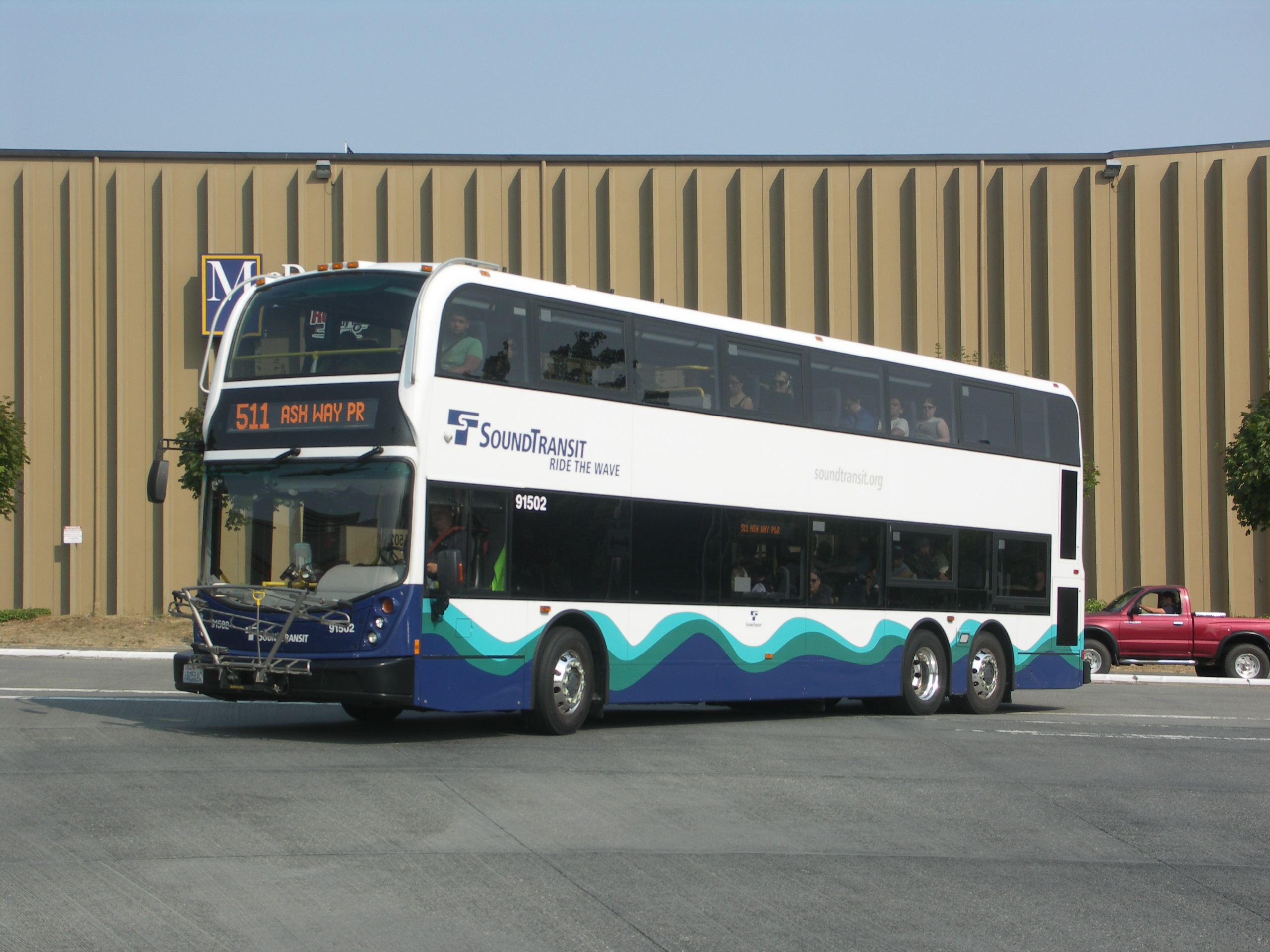
Sound Transit was an early adopter of double-decker buses in the United States. It currently operates 50 diesel-powered Enviro500s on express routes in the Seattle metropolitan area.
Speaking about the deal, Alexander Dennis North America Vice-President Stephen Walsh says: “We are excited to once again be working with our longstanding customer Sound Transit in the Puget Sound region, which has selected our Enviro500EV with next-generation technology for its new Stride bus rapid transit service.
“This award highlights the resurging demand for our double-deck buses in North America following the relaunch of Buy America-compliant production with Big Rig Manufacturing.
“The order was placed after we completed extensive route mapping exercises in conjunction with Sound Transit, using automotive-grade modelling to fully understand the operational requirements. This ensures that the Enviro500EV will take Stride in its stride and give riders a smooth journey experience.”
Alexander Dennis has already sold the latest-generation Enviro500EV to operators in Hong Kong. President and Managing Director Paul Davies confirmed in 2023 that the model could be built for the UK, should demand warrant.