
NXTS growing diversity with recruitment of operator partners
Interest in National Express Transport Solutions high as operator aims to scale network
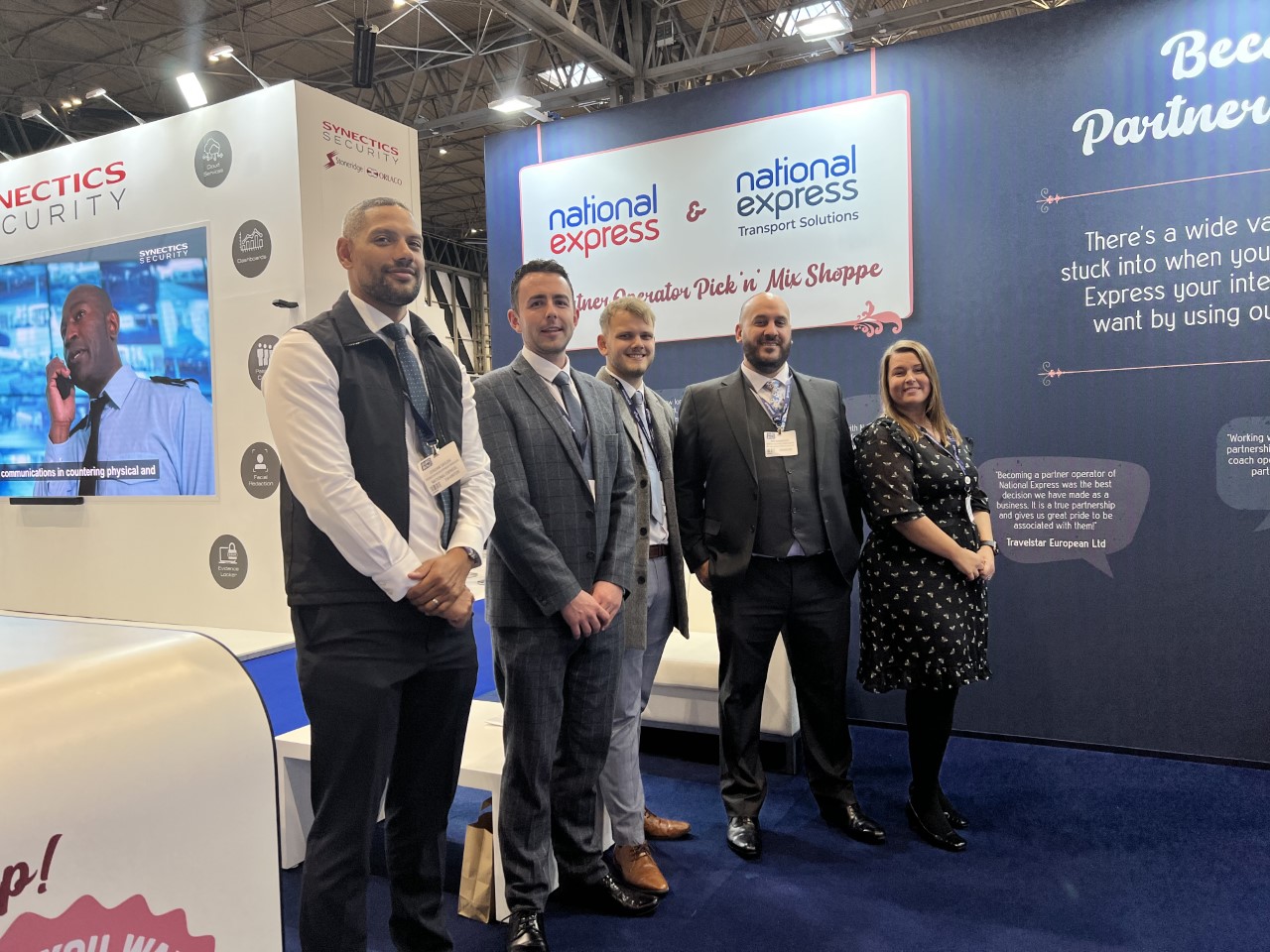
National Express Transport Solutions (NXTS) was at Euro Bus Expo recruiting for a wide variety of coaching work that it is seeking to sub-contract out to partner operators. Its ambition is to scale its own businesses while enriching its coach operator partners.
NXTS hopes to build its operator database to ensure more diversity in its operator force, owing to specific requirements of customers, while addressing the national driver shortage issue. Service Delivery Manager Jodi Eede explains that the group is offering a route to build operators up from entry-level private hire work to scheduled network services. NXTS has also been building stronger partnerships with its existing operators, talking through how it can help build their businesses and integrate new technology.
“Some of our customers have really specific requirements and operators have lots of different niches, so it’s great to have that wide variety and to be able to just make those partnerships stronger and bring the coach industry back to its former glory after COVID-19, working more collaboratively as an industry,” she says. “Demand is high for all types of coaching– both scheduled services and private hire. But drivers are still low. That’s why we are trying to structure our operator network – it means we have to workharder to cover demand.
”Safety is the main focus for new operator members. “We’re looking for operators that have similar safety values to National Express, because safety is at the heart of and at the forefront of everythingthat we do,” says Ms Eede, who says the aim is to work “with partner operators that have that same thought process that safety comes first, and operators that want to provide a quality service at a great price – and that want to be busy.”
Interest at Euro Bus Expo has been high, with NXTS taking details for some 30 new operators.

CPT asks: How best to use big data?
Big data can make a difference in passenger lives, but must be ‘structured and useable’
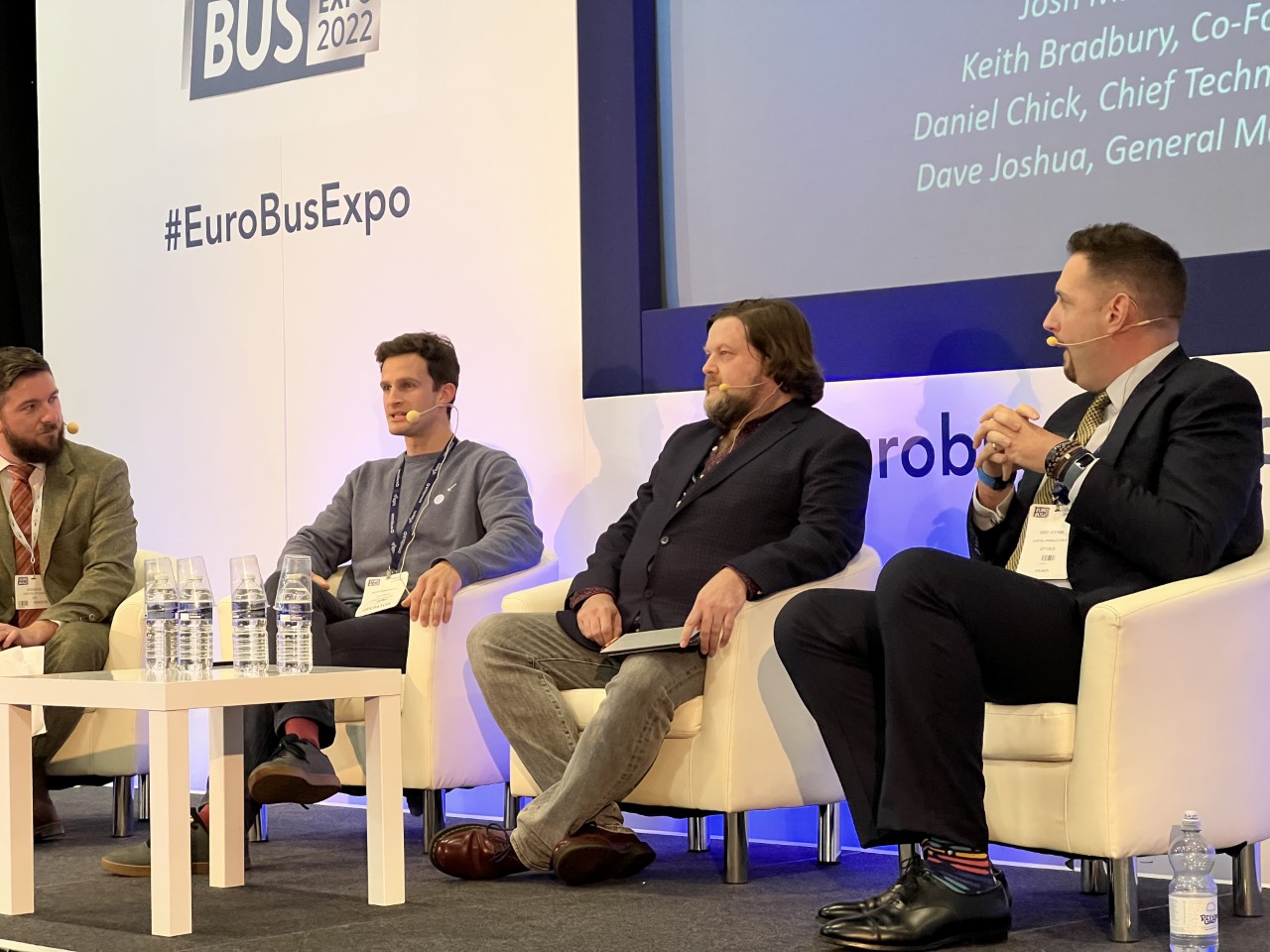
Ember Core Founder Keith Bradbury, Zipabout Chief Technology Officer Daniel Chick, and General Manager, EMEA at Optibus Dave Joshua were hosted by Confederation of Passenger Transport Cymru Director Josh Miles to discuss how big data can deliver better services for passengers.
Key to the discussion was that data kept by operators should be structured in a useful way. For Mr Joshua, who works primarily with the service bus world, data is about “understanding people and their behaviour” and adapting services and products to assist.
Mr Joshua observes that most operators do not have a data strategy, and that much data within the industry is going unused. But how data is stored and what it is used for should form part of every operator’s strategy. One example is how travel patterns have changed during the COVID-19 pandemic, where data can show where peaks and troughs in ridership have changed. Data allows operators to respond to that. “Boiling it down, it’s about providing the best service we can,” he adds. “It also means, when it doesn’t go to plan, apologising. Apps and websites can deliver an interesting message. People want to take data and display it in different ways to make the passenger experience better.” He adds that being behind the curve is no bad thing, allowing the coach and bus sector to learn from the mistakes of other data pioneers.
Ember Core is meanwhile “completely data-driven,” according to Mr Bradbury. He and co-founder Pierce Glennie operate scheduled electric coach service Ember. He emphasises the need for joined-up thinking and an end-to-end approach to solve problems. The founders’ background in the financial technology world led them to “bake in” data from the start. “The data is structured to be accessible,” he says. “And we have a clear process for interpreting it.”
The architecture for that data came from hiring a software engineer early in the company’s life. Data is used to minimise traffic disruption and has been used to build demand-responsive stops, meaning routes are optimised to only pick up where passengers have booked. Telematics data is taken from vehicles and chargers and fed back to drivers, accounting for things such as headwinds, to optimise charge stops. If any service runs late, data can explain why. “It’s about instilling data in that way that it becomes useable, and not just random text in the system,” adds Mr Bradbury.
Strong leadership key to securing £47m for bus services in Derbyshire
Strong leadership and BSIP buy-in from operators has helped Derbyshire County Council secure £47m
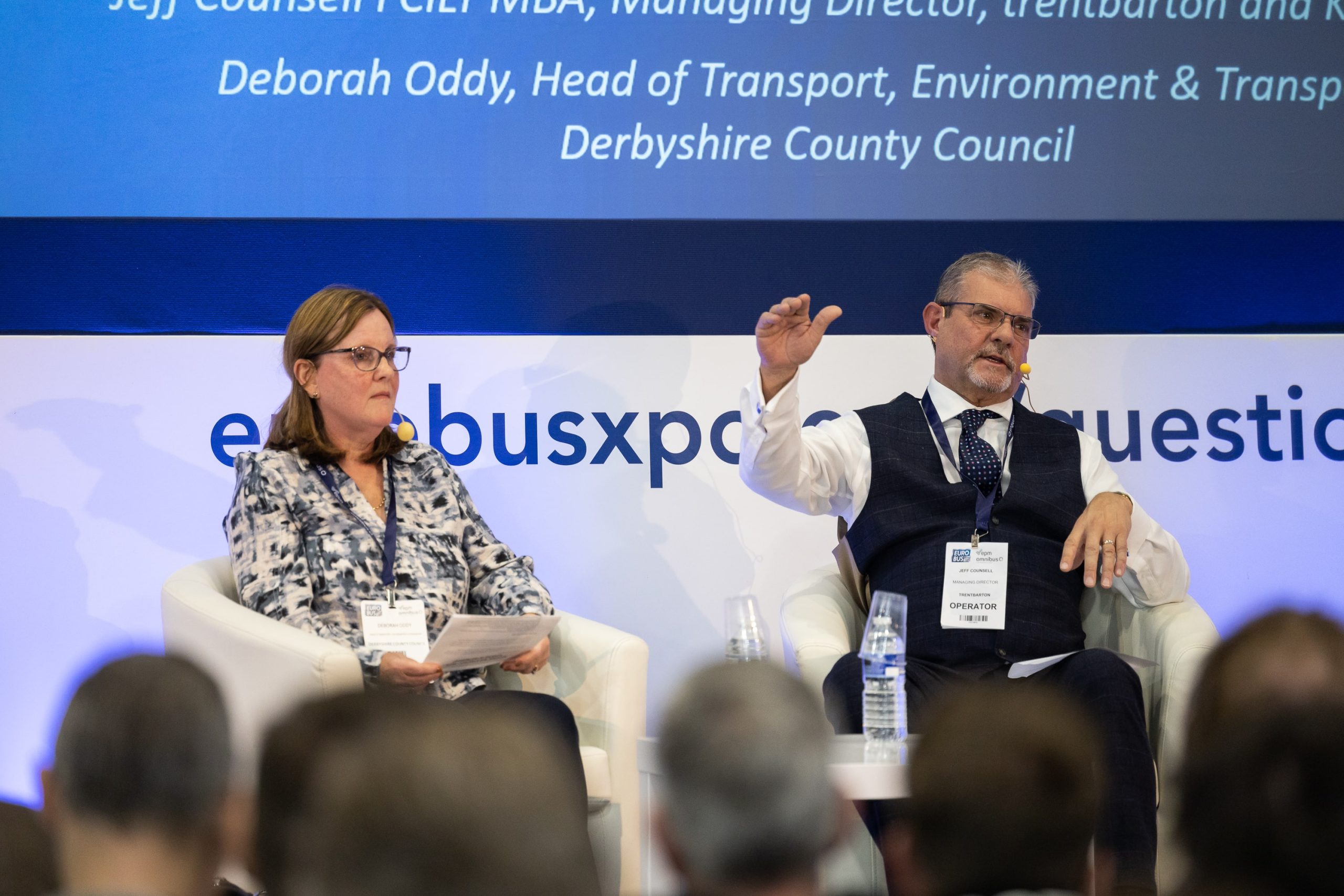
Managing Director of Trentbarton and Kinchbus Jeff Counsell, and Deborah Oddy, Head of Transport and environment at Derbyshire County Council, came together at the Masterclass Theatre at Euro Bus Expo on 2 November to discuss how they managed to secure £47m of funding through the Derbyshire Bus Service Improvement Plan.
Excellent attendance at meetings, including from Cabinet Member Councillor Kewal Singh Athwal, and buy-in from all operators in the region, has been key to the success of the Partnership, according to Mr Counsell and Ms Oddy. That attendance has allowed operators involved in the discussions to raise issues, such as around road work and traffic management, that have been dealt with by experienced council leaders.
Mr Counsell says that the partnership already had a good basis thanks to good relationships between bus operators in the region and the Derbyshire Public Transport Authority. “For 24 years that I have been with Trentbarton, we have had regular dialogue and meetings with officers and directors of the county, talking about bus services, so we are starting with a foundation that has always been really strong.”
He argues that collaboration has been successful due to commitment, time, and effort between all operators in Derbyshire, with customer focus at its core. “As an independent bus operator, the last thing we wanted was regulatory control,” he admits. “We did not see any need for statutory instruments to help us provide better services. We had a history of voluntary partnership which was very successful. But needs must, and we were as an industry forced down the line of Enhanced Partnerships, so our view turned to one of finding what was best for our customers. At the end of the day, the National Bus Strategy should be about improving the lot for customers.”
Capability and competence from experienced people has meant the Partnership is highly regarded by the Department for Transport. Adds Ms Oddy: “It was clear to me that the BSIP and the Enhanced Partnership had very strong leadership that created partnership, and as we all know, in those partnerships we have to invest a lot of time. It’ s challenging at times. But we’ve taken those difficult conversations and met them head on as a body and, as a board, addressed those issues.”