
Mistral team reorganised after promotions across business
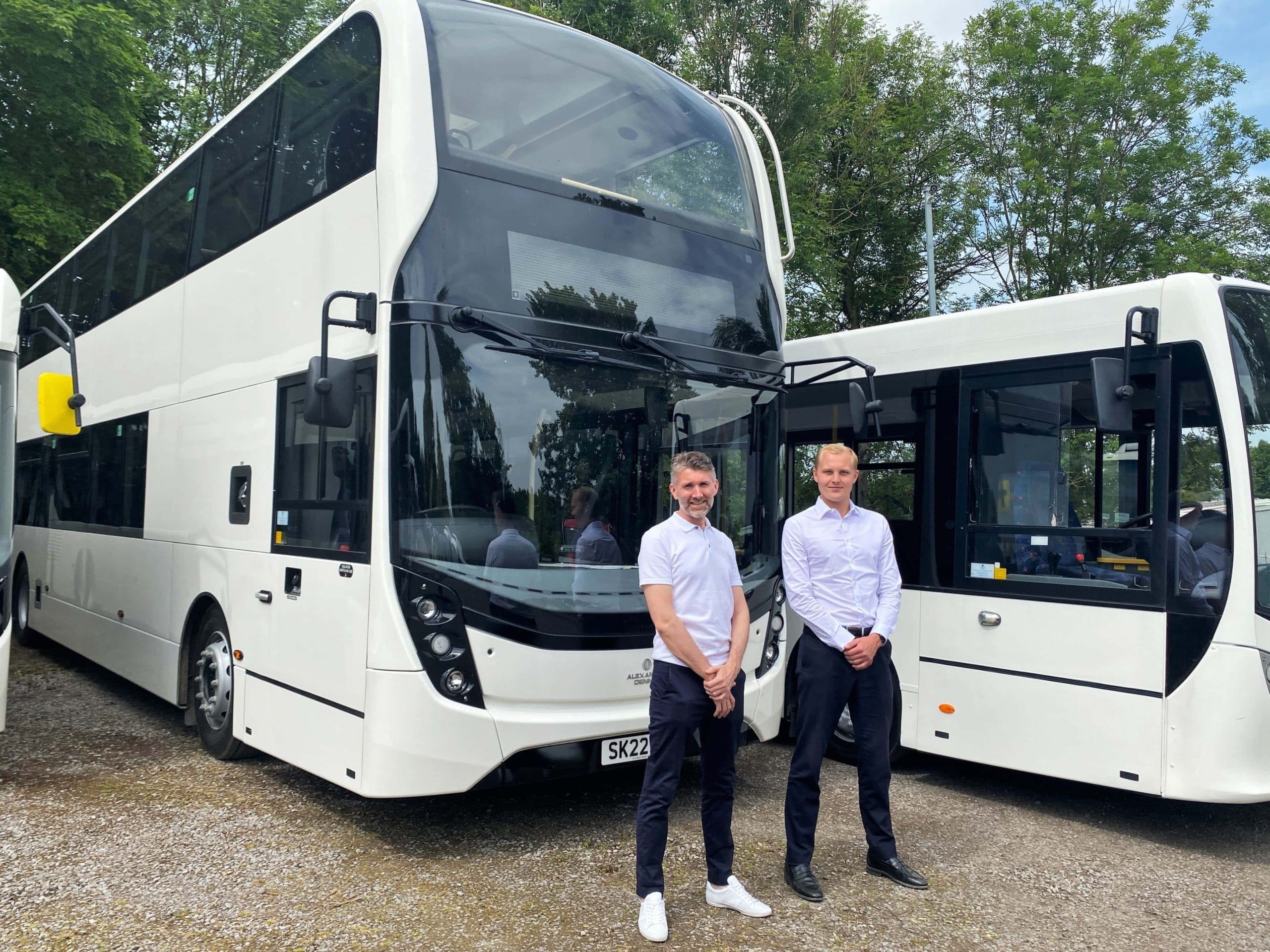
Mistral Group's sales team has been reorganised after the business announced a number of promotions among its staff.
Freddie Fuller has been appointed National Retail Sales Manager, while Andrew Biggs has become National Sales Manager of the recently announced The Bus Shop, of which he led development. Amy Duckworth has meanwhile been named Regional Sales Manager Eastern Counties.
Freddie has been with Mistral Group for over seven years, covering the London and Home Counties market. As new National Retail Sales Manager he will look after the day-to-day management of the retail team.
Andrew meanwhile takes charge of The Bus Shop having been key to the development of Mistral's used vehicle sales activity. He led on the launch of brand and the promotion recognises the "energy and innovative thinking" he brought to the role.
Amy takes the first step in managing her own area having joined Mistral as part of its sales support team.
"We're delighted to be able to promote from within as we continue to serve our clients in what is our 30th year in business," comments Managing Director of Mistral Group Steve Low.

CoachMarque: Time to regroup for accreditation scheme
CoachMarque has long been accepted as one of the coach industry’s premier accreditation schemes. Overseen by the Confederation of Passenger Transport (CPT), it is currently undergoing work to ensure that it continues to act as a useful business development tool and resource for its members.
Roland Eglinton, Managing Director of Kent operator Chalkwell, chairs CoachMarque. Also involved is CPT Coaching Manager Phil Smith, while administration is handled separately from other Confederation matters by John Taylor. Now playing a key role is Claire Rawlinson, MD of marketing and commercial consultancy We Are Buzz. She advises CoachMarque and its members and works with the brand’s own website.
Roland is keen that CoachMarque remains removed from the day-to-day aspects of coach operation and the challenges that go with it. Instead, the activities and benefits for scheme members are focused more strategically, including via CoachMarque’s ‘thought leadership’ position and extensive engagement with appropriate third parties.
CoachMarque relevance post-COVID-19 to be championed
But regardless of the influence of Roland, Claire and Phil, CoachMarque’s direction is steered by members of its committee, Phil says. Ensuring that CoachMarque is beneficial and relevant to its participants’ businesses and that they receive value in return for their membership fees is a live and ongoing process.
“We are working to help the scheme to become more prominent than currently, to reinvent it in some respects and to ensure that it is relevant to the post-COVID-19 market,” Phil continues. Re-engaging with members is the centrepiece of those efforts, but multiple strands of work come under that umbrella.

Roland accepts that CoachMarque may have been on a back burner over the past couple of years while CPT spent time addressing more pressing industry matters and undergoing its own reorganisation.
“That is not a criticism of CPT, because there have been many fires in the industry since March 2020 that have needed to be put out,” he adds.
With Claire’s contribution a significant factor in CoachMarque’s development, it now has a greater degree of autonomy within CPT, although membership of the Confederation remains a prerequisite to be part of CoachMarque. That will allow the scheme to plough its own furrow and, Roland believes, cement its place as an important tool in the industry’s business development armoury.
GPN membership brings learnings to CoachMarque
CoachMarque’s position as the Global Passenger Network (GPN) UK representative has already generated learnings, he continues. Although CoachMarque is removed from operational matters, ancillary discussion at a recent GPN gathering revealed that Morocco currently enjoys a surfeit of coach and bus drivers, in stark contrast to the UK.
Closer to home, representatives from other European nations are highly active within GPN. That delivers useful business insight. GPN also generates incoming work for CoachMarque members.
CoachMarque additionally enjoys strong relationships with domestic tourism trade bodies. Work with UKinbound is particularly valuable, Roland adds. Its CEO Joss Croft spoke at the 2022 CoachMarque conference, a contribution that was appreciated by those present. Roland is keen to see collaboration between the two bodies grow.
“In CoachMarque we are not about operations or lobbying. Instead, it is a place where members can give thought to developing their businesses – such as improving efficiencies, increasing brand awareness, exploring new markets and developing their own marketing.”
‘Nugget’ approach to member engagement
Key to engagement between CoachMarque and its members is the generation of ‘nuggets’ that they can take away and put into their business, Claire continues. Those could lead to efficiencies or new workstreams, or go straight to the bottom line.

She observes that during the pandemic, some coach operators largely withdrew from engaging with peers as focus naturally shifted to business survival.
There are signs both from within CoachMarque and through other industry bodies and events that an appetite to come together in person is returning, and one of the scheme’s priorities for 2022 will be re-engaging with members.
That will include Claire and Phil speaking individually with each participant to ensure that they are getting the best from their membership.
“We also want CoachMarque to bring bookings to them,” Claire continues. The scheme’s website already does that. CoachMarque is also closely involved with the ongoing Get Back on Board industry awareness campaign. Alignment with GPN helps here; GPN is active around the world, and it attends travel trade shows globally.
Digital marketing assistance in store for members
Helping members to bring in work directly but cost-effectively is one of the keys to Claire’s involvement. Digital marketing is still largely in its infancy, and she is keen to see those businesses tutored in getting the best from it. Merely paying for adverts on Facebook or posting on Twitter is not the be-all and end-all.
“Even those operators that carry out what would be considered a lot of digital activity – what is it delivering? Does it bring additional engagement?’ she questions. “Businesses need to do something, but they sometimes start out in the digital world and do not monitor whether it has any effect.”
In particular, paid Facebook content must be seen as part of a holistic approach where online marketing sits alongside more traditional methods, Claire continues. Social media activity “is not the only digital approach,” she notes.

“Operators need to have a mix, and they need to monitor what it delivers.
"We do not want to see CoachMarque members wasting money because the solution that has been offered to them is simply ‘spend money on advertising’.”
She points out that many coach operators already have an “emotional connection” to their customers. That can be leveraged. “It is why CoachMarque got involved with Get Back on Board. But while there is often still a lot to be done digitally, the coach industry is usually willing to get stuck in and try things. It is creative.”
Part of CoachMarque’s work this year and into next will involve ‘white label’ marketing support, where off-the-shelf packages will be offered to members. That will represent an improvement on the current position, which Claire acknowledges “is quite basic.” Email advice and webinar content will also form part of marketing-related initiatives.
‘Set aside time for business development'
While operational challenges are legion for coach operators presently, Roland is adamant that there is a benefit to be had from setting them aside for a period and concentrating on business development. Doing so is not always easy, he acknowledges. But it is important.
“An operator may be very busy now, which is great. But how busy will you be in three or six months? None of us know the answer, so what are we doing to build that pipeline, and to ensure we retain the customers we have now?”
Engagement with external experts has delivered useful insight into customer expectations post-COVID. “Many operators would say that people will want things to be as cheap as possible going forward. But we have found through work with a third party that while price is part of buyers’ consideration, it is not everything”
Mixed operations made welcome by CoachMarque
Membership of CoachMarque requires an audit. That process considers basic compliance markers and other factors, such as procedures for vehicle cleaning and dealing with complaints. “It is not particularly onerous,” Roland observes. “Many operators are probably already doing what the audit requires without realising it.”

He is keen to quell a possible misconception about the requirement for vehicles within CoachMarque-accredited businesses to be less than 10 years old.
That does not apply to every member of the operator’s fleet. Rather, it captures those that are placed within its CoachMarque membership, and thus only they may carry the scheme’s kitemark.
“An operator can have a highly mixed operation and fleet, as we do at Chalkwell, and be a CoachMarque member,” Roland continues. Fees are based on applicable fleet size. Each vehicle captured by CoachMarque costs £57, although the minimum membership charge is £276 and the upper limit is capped at £2,000.
Regular meetings are held to ensure that CoachMarque continues to follow the desired path. Much in the industry has changed since early 2020, and Roland, Claire and Phil are confident that CoachMarque will do the same to stay relevant to its members’ interests.
New state of the art ADL training facility to provide perfect environment for engineers learning their trade
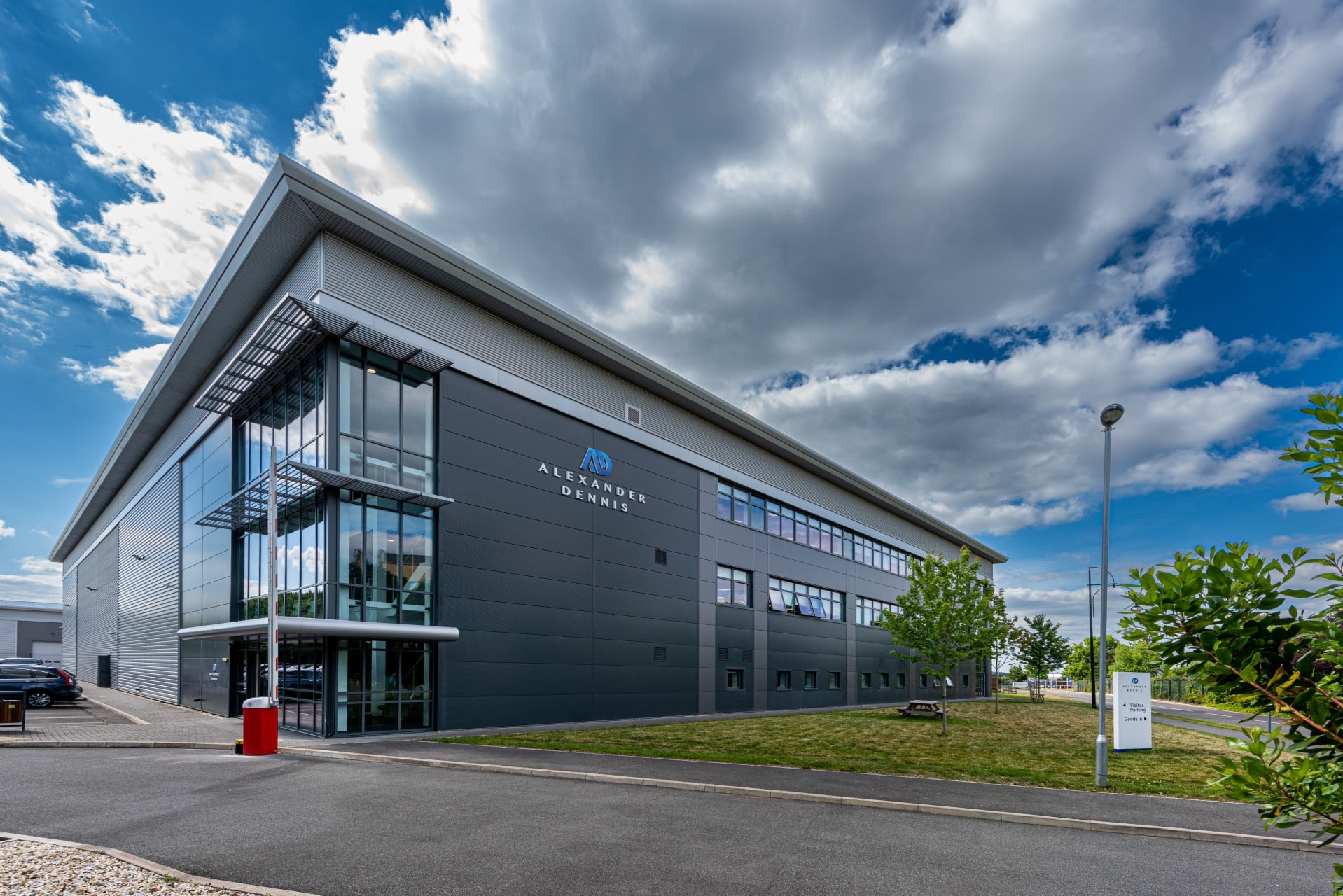
One of the world’s leading independent global bus manufacturers, Alexander Dennis (ADL), will offer its engineering training members unsurpassed workshop facilities from its new site at Trident House in Farnborough.
Following shortly after the ADL-sponsored IRTE Skills Challenge testing week in Bristol, where coach and bus apprentices and technicians compete on practical and theoretical tasks to determine the best engineers in the industry, was the official opening of the centre.
Training Manager Paul Hopwood is confident that the facility, which will be the new home for ADL team members in the South of England, can provide an ideal setting to train bus engineers of the future.
He says: “The industry faces an ongoing struggle to get the right skillset and often the correct training is not available. It’s incumbent on the industry to ensure that training is in place at the right time, not just on buses but across the industry – and as an industry, we can do better.”
Public transport has embraced technological change with the UK’s first full-sized, self-driving bus in Scotland (a joint ADL project) and the introduction of battery-electric and hydrogen fuel cell-electric vehicles, yet the skills shortage remains high. As the industry recovers from the pandemic, the need for collaboration (and investment) is clear.
“This technology can help to drive that change; coach and bus should not be viewed as a mucky, dirty environment,” adds Paul. “With technology at the forefront, we can attract clever people to the industry who can understand the diagnostics and work through the system.
“One set of skills no longer works in the garage given the complexity of the vehicles; you need to have a compliment of skillsets - that’s what we try to promote and deliver.”