
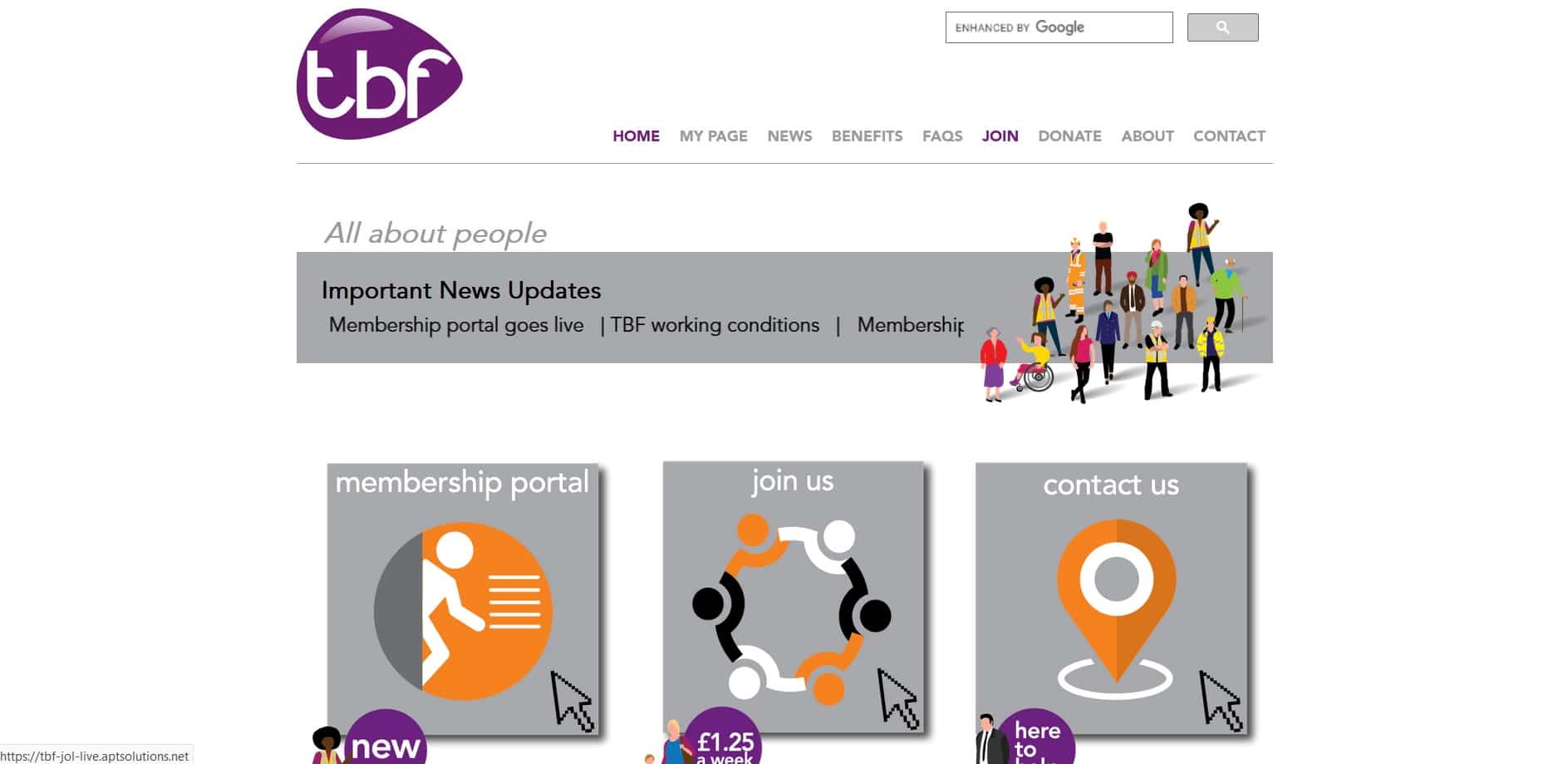
TBF debuts online membership application process
TBF has introduced an online membership application process, which the transport sector charity says makes joining “even easier.”
The development means that it takes “just a few minutes” to submit the necessary information, TBF says. Once approved, the new member will be issued with a membership number and invited to set up their own unique password for use on the MyPage membership portal. There, they will be able to access and keep up to date all their personal information and records of benefits awarded.
TBF CEO John Sheehy adds: “The charity is delighted to be able to offer this latest innovation. It really is quick and easy; the online application process is accessed via the website homepage and by clicking on the ‘Join Us’ icon.
“We saw a wave of new members joining online during the first few days of it going live, and those new members are now able to take advantage of the wide range of benefits on offer from TBF – there’s no waiting period.
“We will, of course, continue to accept our standard printed application forms. Our team of eight regional organisers will continue to visit work sites and training schools in order to promote the benefits of being a TBF member and to assist those who find themselves in need of help and support. So, if you work in the public transport industry in Great Britain, come and join us. Membership is just a click away!”
TBF is a membership charity offering help and support to those who find themselves in need, hardship, or distress. Membership costs £1.25 a week, covering the prime member, their live-in partner and dependent children.

Over 250-mile zero-emission coach range needed by majority
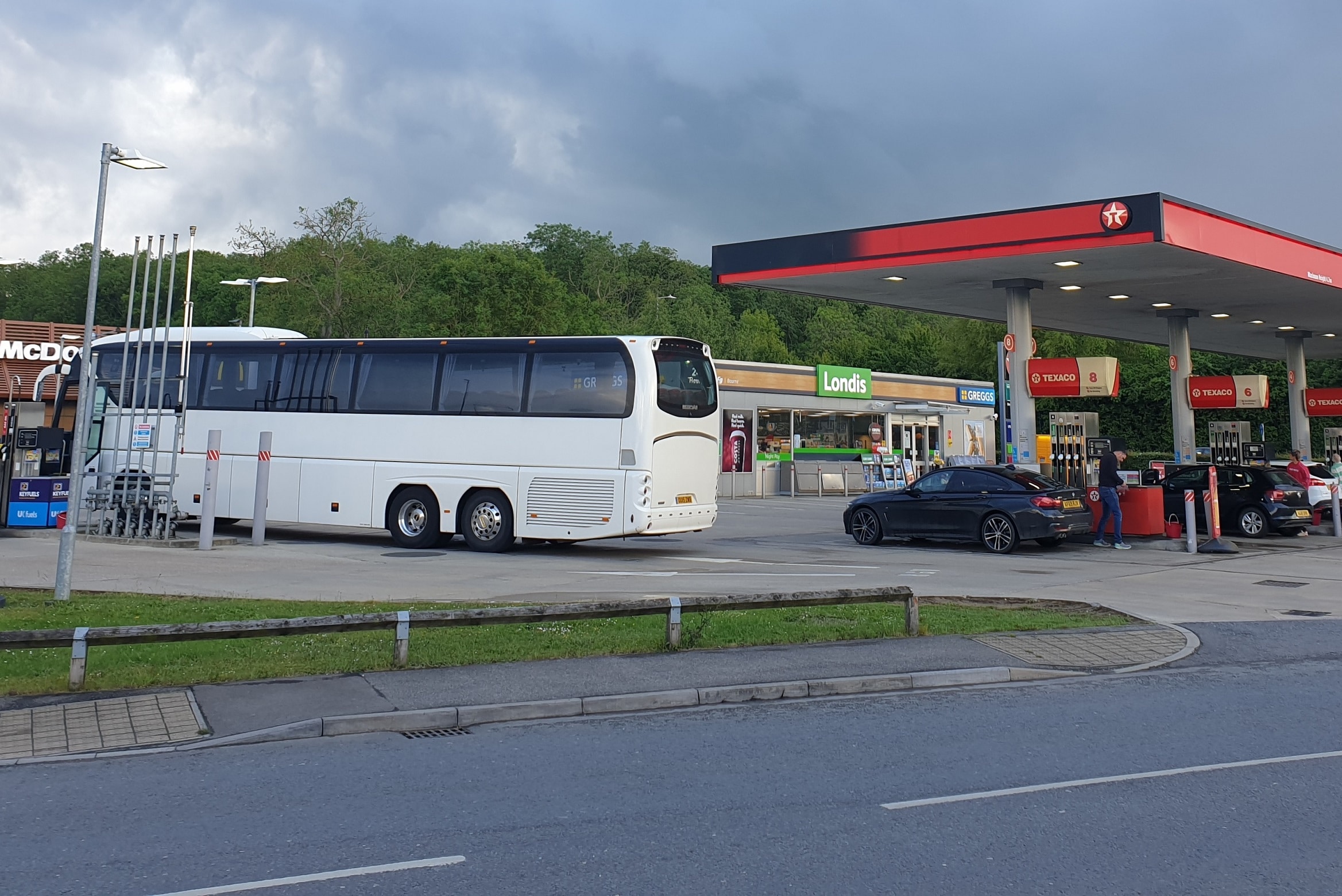
54% of coach operators believe that a zero-emission coach would need a range of over 250 miles for them to have confidence to invest in such technology. That is according to a response from the Confederation of Passenger Transport (CPT) to the government’s call for evidence on setting an end date for the sale of new non-zero-emission coaches.
While zero-emission coach technology is already available in the UK, it has not yet achieved a range of 250 miles. CPT says that for coaches to make the transition away from diesel, vehicles must be able to deliver such a figure, or there should be a reliable zero-emission recharging or refuelling network in place.
The average range of services provided by coaches in several sectors is 250 miles, a survey by CPT showed. While home-to-school services are much shorter distance, averaging 50 miles in range requirement, they account for only 28% of operators’ revenue on average.
CPT’s submission shows that in addition to the 54% of operators requiring a minimum range of 250 miles, a further 29% would need between 200-250 miles to be confident of making an investment in zero-emission.
In an echo of thoughts previously articulated by Ian Luckett, who chairs CPT’s Zero Emission Coach Taskforce (ZECT), the Confederation has also highlighted the need for versatility to remain as coaches move away from diesel.
Because of the extent of uncertainty that remains around zero-emission coaches, CPT thus wants to see a phase-out date for the sale of new non-zero-emission examples “that is no sooner than 2040.”
In a further echo of Mr Luckett’s position, the submission highlights that coaches share more with HGVs than buses in their application. But while the date set for the end of the sale of new non-zero-emission HGVs in the same weight bracket to coaches is 2035 - subject to a current consultation on exemptions - CPT believes that coaches should be subject to the end date for heavier HGVs, which is 2040.
Anything earlier would be “incredibly challenging” given the lack of support provided thus far to the coach sector for making the move away from diesel, the Confederation adds.