
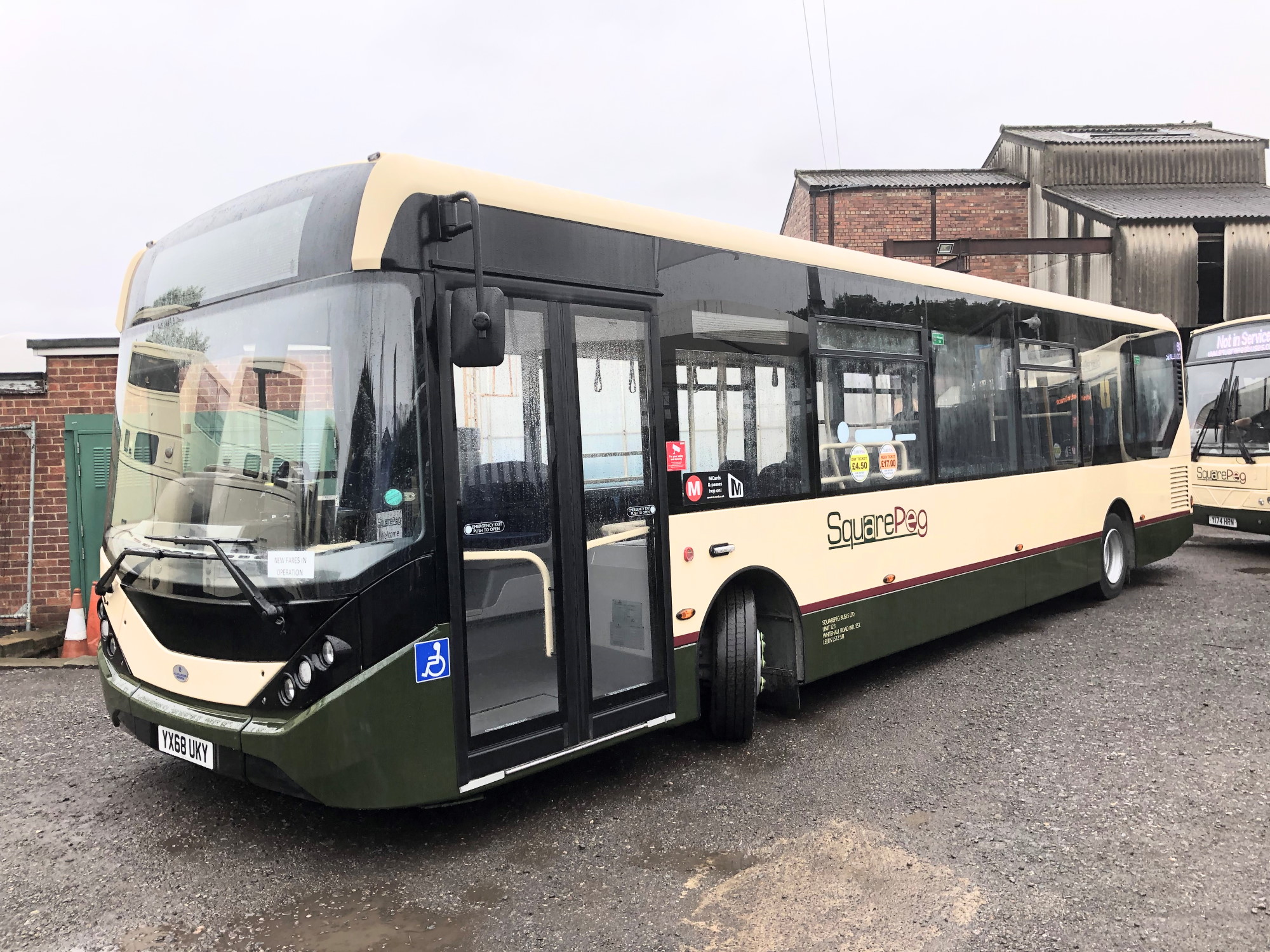
Squarepeg Buses digitalises scheduling and allocation with Omnibus
Leeds independent Squarepeg Buses has chosen omnibus cloud solutions for its scheduling and operations.
The company, which has a peak vehicle requirement of 13, will use Omnibus for timetabling, vehicle scheduling, rostering, mapping, depot allocation, and data sharing after it said it needed software to "work smarter" in the aftermath of the COVID-19 pandemic.
Says Director of Squarepeg Buses Simon Daymond: "We’ve always embraced technology and our approach has been to find opportunities through software, rather than scrambling for solutions when problems occur. COVID-19 brought this to the fore and gave us an opportunity to pause and reflect on what we do as a business.
"We were impressed by the clear superiority of the Omnibus products and the cloud benefits they will provide our family-focused business. We’re driven by the needs of our passengers; the team at Omnibus has a strong background in the bus industry and deep understanding of the challenges operators face which will make a major contribution to the continued high quality of our services.”
Adds Peter Crichton, Founder of Omnibus: "We are delighted that Squarepeg Buses has chosen Omnibus to address its scheduling and operational requirements to support its future growth and recovery from the COVID-19 pandemic.
"Our technology is designed specifically for schedulers and is quick and easy to use with efficient processes which improve productivity."
Squarepeg buses provides public, private and school services in Leeds and the surrounding areas.

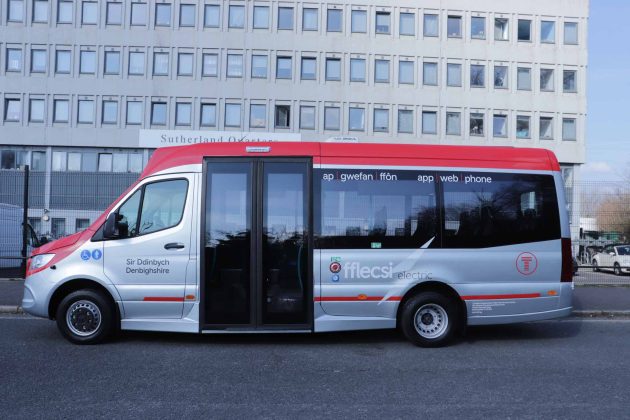
Fflecsi DRT debuts first battery-electric vehicle in Ruthin
The Fflecsi demand responsive minibus product in Wales has welcomed its first zero-emission vehicle after an EVM e-Cityline battery-electric minibus was placed into service on an extension of the concept to Ruthin in Denbighshire.
Denbighshire County Council operates the 16-seater in-house under the brand Fflecsi Trydan, or Fflecsi Electric. In Ruthin, Fflecsi has replaced three fixed-route services in the town, but one Fflecsi journey in the morning will operate to defined times. Passengers using it will then use the demand responsive service to return. Introductory fares are £1.50 for any journey from villages into Ruthin and £1 within the town.
Purchase of the e-Cityline was made possible by the Welsh Government and the Welsh Government Energy Service. The battery-electric minibus will “provide useful feedback on the suitability of such vehicles in other similar situations and locations across Wales,” Transport for Wales (TfW) and Denbighshire County Council say.
Other Fflecsi services in Denbighshire currently operate in Denbigh and Prestatyn. Where the concept has previously been introduced in rural areas it has delivered increased passenger demand when compared to fixed-route services.

Adds TfW Chief Executive James Price: “This innovative service is an important part of TfW and the Welsh Government’s vision to reduce car usage and promote greener forms of travel, while also supporting the local economy and ensuring access to public transport.
“We have been pleased with the success of the Fflecsi pilots across Wales and we are delighted to be able to expand the service with a new electric vehicle.” Fflecsi bookings are made either via app or through a call centre.
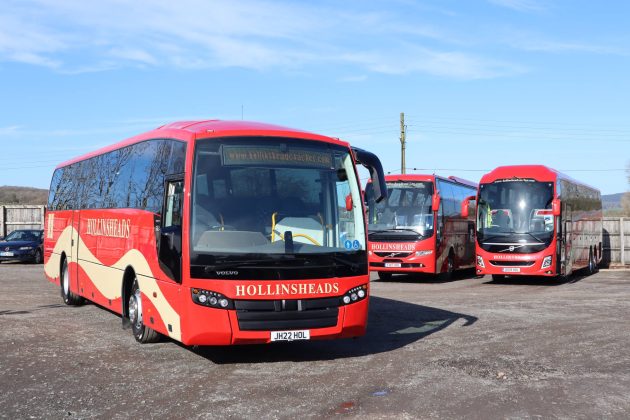
Is there a spring surge on the horizon for new coach sales?
Caution continues to dictate the future of new coach sales in the UK, but as operator bookings strengthen, optimism grows for spring
Society of Motor Manufacturers and Traders (SMMT) statistics recently revealed that 2021 was the worst year on record for new UK coach and bus registrations. But conversations with dealers in the UK show there may be a spring surge on the horizon for new coach sales, and that some markets have shown green shoots of growth.
Sector recovery varies by work?
Simon Wood, General Manager New and Used Coach Sales at Alexander Dennis, reveals Plaxton was able to achieve sales into certain markets in 2021, despite losses fuelled by the COVID-19 pandemic. “The touring market collapsed completely but we were still selling vehicles for scheduled service and particularly schools,” he reveals. “There was very little travel last year and people were reluctant to invest. We are starting to see a few green shoots now – operators are starting to get busier and the enquiry levels have picked up in the last few weeks.”
Mr Wood reveals that production that restarted in January at Plaxton’s Scarborough facility is primarily working through Leopard stock. “It’s a positive to start again and it’s great to see coaches coming down the line at Scarborough. We are still watching this space to see where the market goes, particularly in terms of PSVAR – there’s a bit of uncertainty on that still in terms of dates and extensions – that drives the demand as well.
“Operators need to be more flexible now, and the Leopard held its own last year through the lockdown. “

The outlook in 2022 is more positive according to Mr Wood, but the industry is still in a “transitional period” when it comes to recovery. In spite of this, operator calendars are getting busier, and Plaxton is looking forward to a successful year as the industry starts to recover and “full coaches return to destinations all across the UK.” Adds Mr Wood: “There is still uncertainty. People need to get the confidence back to travel on vehicles as well.”
In spite of SMMT’s statistics, one supplier to identify a slight improvement over 2020 registrations is Irizar UK. Managing Director Andrew Blundell and Sales Director Julie Hartley reveal that 2021 industry-wide registrations included 362 coaches, up from 320 in 2020.
“We had a flurry of activity in terms of orders being placed for this year up to the end of November,” Mrs Hartley reveals. “Then with the rise of Omicron, people started to sit on their hands and through January that carried on. Within the last three to four weeks we’ve started to see the confidence coming back. Late February seems to have been quite busy with enquiries and orders taken.”
For Irizar UK, there is now confidence that fleet replacement is due, owing to the length of time since many operators last upgraded. “We sense a degree of commercial caution at the moment that operators have been hanging on to see how this pans out,” explains Mr Blundell. “But many operators in conversation are suggesting they have healthy bookings moving forward. Hopefully that is a very strong sign that the industry will bounce back and with the ending now of the COVID-19 restrictions we are almost sensing a spring surge.”

That brings on the question of how the previous 24 months and the reduction in vehicle production will affect supply and demand. “For the last 24 months there has been an oversupply of vehicles against reduced demand, and now we might see the reverse, with healthy demand and automotive supply chain challenges,” Mr Blundell adds. “That could firm up values on new coaches and on used vehicles.”
According to Mr Blundell, an ongoing concern is around the timetable moving into 2022, and the risk of delayed actions: “If operators continue to wait and see, then before long the season will have vanished. We will be in August, and operators will be thinking about 2023. There is still a degree of uncertainty over how 2022 will pan out in terms of volume.”
More enquiries, more orders?
As with the other dealers, vehicles equipped for PSVAR compliance are still the strongest demand that BASE is seeing from operators, and Mr Dodgson also highlights the lack of clarity that is ongoing from central government around this issue. He argues that resolving PSVAR would boost confidence in investment: “Operators and local authorities are having to take decisions into their own hands.
“We are seeing with some local authority tenders that customers have shown us that the councils are making the decision for them, and only asking for quotes with PSVAR-compliant vehicles.
“Other operators have said they can’t risk acquiring a vehicle that isn’t Euro VI or PSVAR. And 90% of the used vehicles we sold last year had been converted to PSVAR.”
Lending situation delicate
There is consensus among all dealers that the lending sector continues to recover tentatively.
Mr Dodgson reveals that while some lenders have returned to the sector, there is little negotiation for lease options, and hesitancy remains over having residuals on financiers’ books.
But there is some sign of growing confidence, according to Mr Wood, as residuals begin to recover. Mr Blundell says Irizar UK has seen a “bottleneck” when it comes to lenders, where a significant degree of caution still exists around the impact of recent events on residual values.
Adds Mrs Hartley: “There is definitely a sense that the financiers want to know the inside leg measurement now, whereas before they just needed the collar size.”