
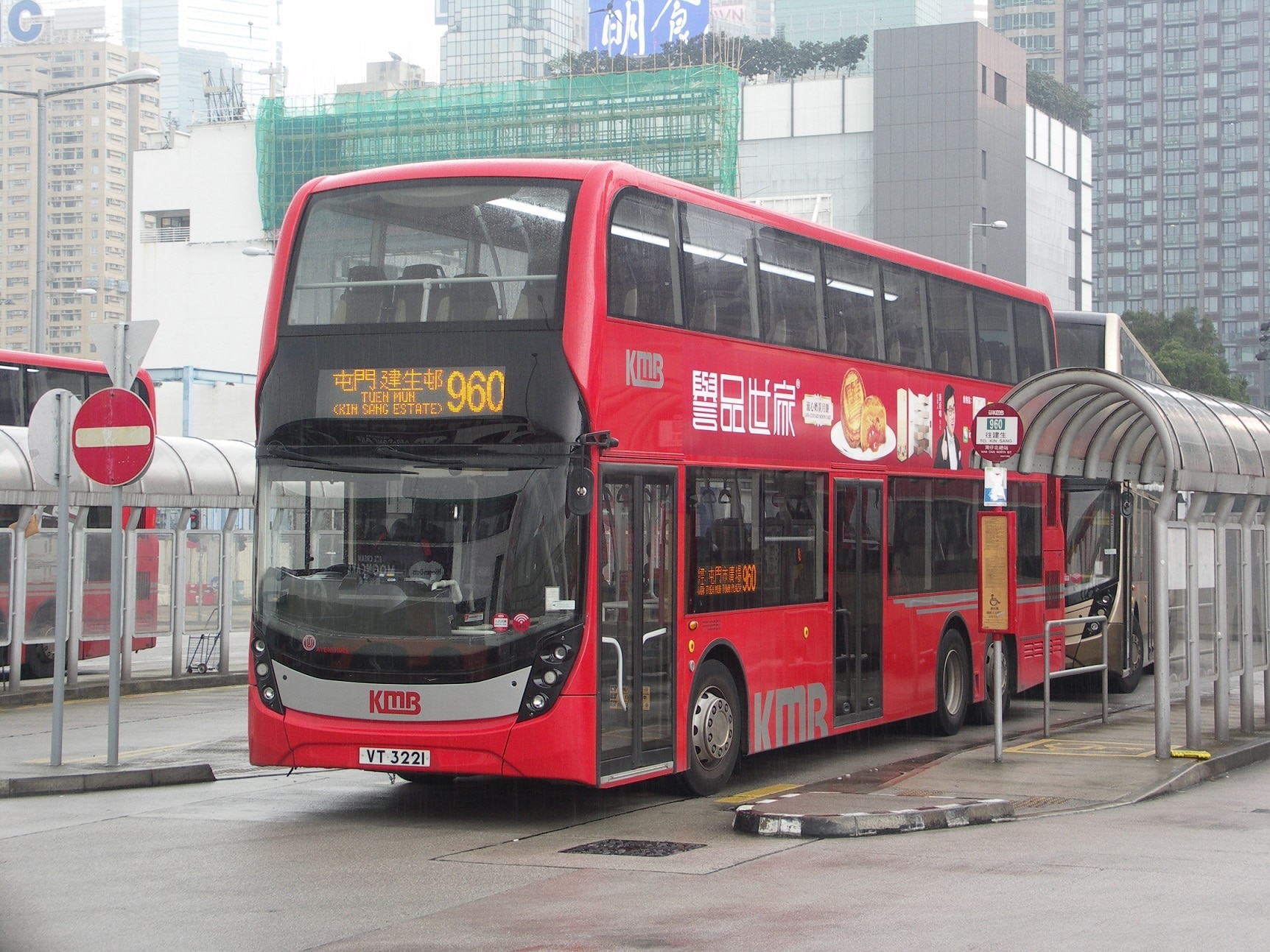
ADL 'global ZE platform' at heart of KMB Enviro500EV order
Alexander Dennis will continue the rollout of what it terms “a global zero-emission vehicle platform” through an initial batch of 10 battery-electric Enviro500EV tri-axle double-deckers for Hong Kong operator KMB.
The order represents ADL’s first zero-emission double-deck business in the Asia Pacific market. It will see vehicle delivery during 2023. The OEM will fully integrate the driveline in-house and, it says, the buses will “introduce a striking new design language reflecting their zero-emission credentials.”
Each Enviro500EV for KMB will carry up to 130 passengers. They will have what ADL describes as “new and innovative features” for efficiency, safety and comfort.
While fuller specification details are awaited, an ADL spokesperson says that the buses will not utilise the same driveline as fitted to those Enviro500EVs already built for the North American market. The latter product, which uses Proterra batteries with around 650kW/h of energy storage, is “a standalone development.”
However, the KMB Enviro500EVs will share key suppliers and components with ADL’s Enviro400FCEV hydrogen fuel cell-electric double-decker for the UK market, as part of the manufacturer’s advancement of a global zero-emission platform. In battery-electric format, the platform will “in general” facilitate both plug-in and opportunity charging solutions, the spokesperson continues.
Adds ADL President and Managing Director Paul Davies: “We are delighted that KMB is continuing its commitment to innovation by choosing ADL for the development of an electric double-decker that will meet Hong Kong’s demanding operational requirements.
“With the next generation of electric bus technology, fully integrated by our own engineers, we are now in a position to deliver a zero-emission solution for Hong Kong’s world class transport system.”

Bus priority has high level of public support, research shows
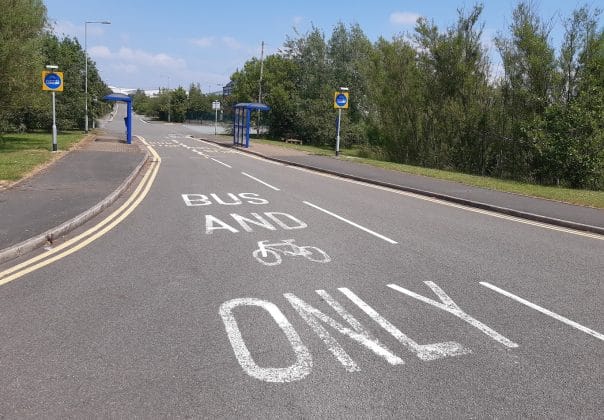
Provision of bus priority measures enjoys strong public support, research conducted on behalf of the Confederation of Passenger Transport (CPT) has shown.
The work captures England outside London, Wales and Scotland. It shows that more than three times as many people support bus priority as oppose it, a ratio that rises to four to one for businesses. The region-based research shows that the 79% of the general public who expressed a view support bus priority. Among all respondents, including those that neither support nor oppose priority, 54% are in favour with only 15% opposing it.
Support for bus priority among the public is highest in Wales, followed by Scotland and South West England and Yorkshire and Humberside. It is lowest in the West Midlands, although that region still sees vastly more support than opposition. Wales also enjoys the lowest level of opposition.
CPT says that the results underline a need for more bus priority measures to be introduced, work that is already proceeding in Scotland via the £500m Bus Partnership Fund.
The Confederation notes that despite this widespread support for priority measures, local authorities (LAs) can find it difficult to introduce more because of a vocal minority that oppose it. To help mitigate that, CPT has produced a set of toolkits (available here) that include recommendations on how to best promote the measure's benefits, and a case study.
Commenting on the research findings and the development of the toolkits, CPT CEO Graham Vidler says: “This research shows that councils can enjoy public and business support when it comes to giving buses priority on our roads, helping them to meet their own net zero targets and the UK’s overall climate change goals.
“Understandably, people can have concerns about schemes where the impact of construction is unclear or the benefits to them and their local community are not clearly set out. Our toolkit will help LAs to ensure widespread community support for measures they want to introduce.”
Ground broken at Switch Mobility's Valladolid site
Switch Mobility has held a groundbreaking ceremony to mark the beginning of construction of its new manufacturing facility in Valladolid, Spain.
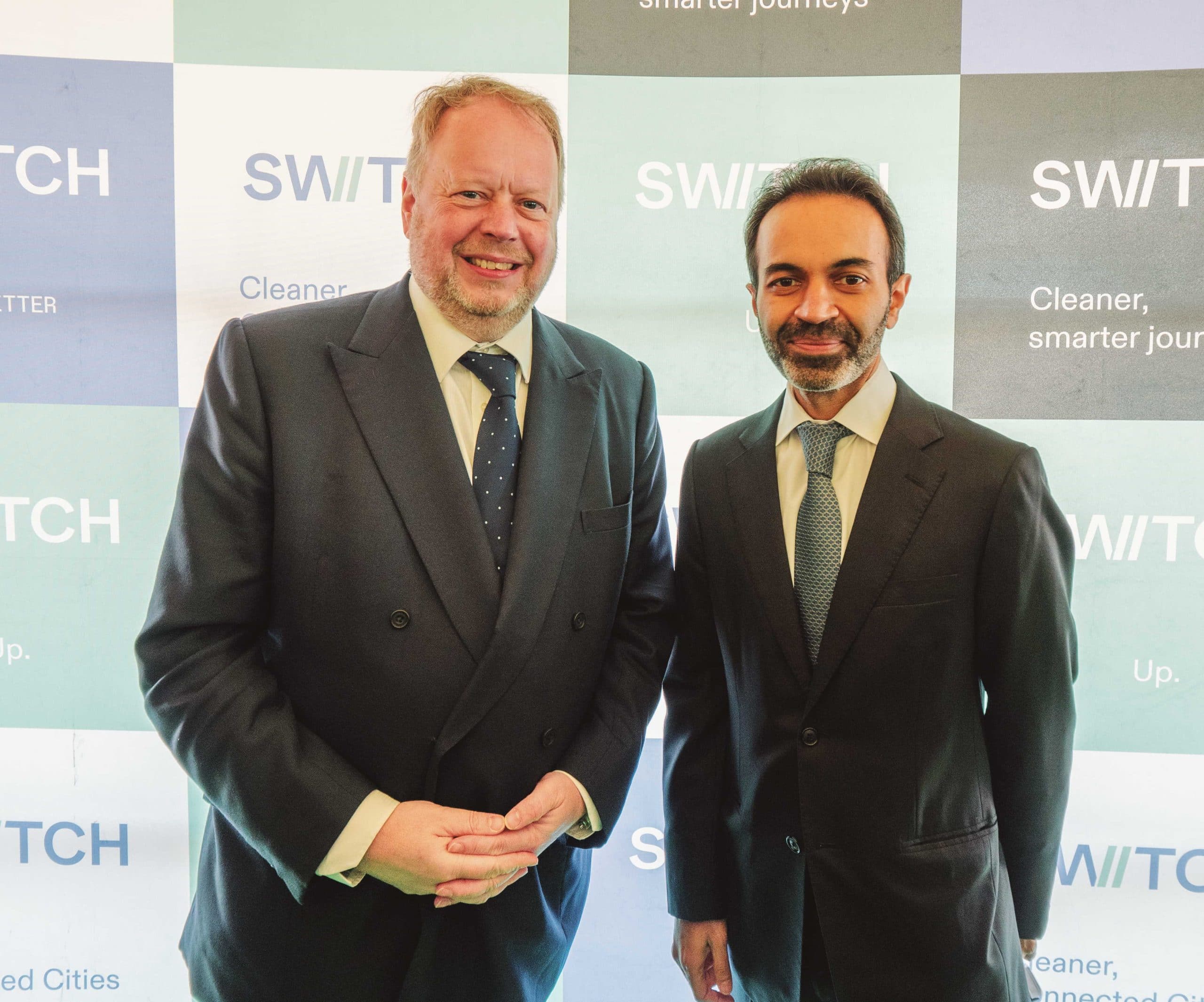
Dheeraj Hinduja, Chairman of Switch Mobility, laid the foundation stone of what is the manufacturer's first production site in continental Europe. Construction proper is set to commence in earnest within the next 12 months, alongside the production of the plant's first buses.
Phase 1 of development will house the creation of Switch's new 12m bus, designed with the European market in mind. Battery assembly capability and production of a zero-carbon light commercial vehicle will follow in phases 2 and 3, respectively.
The 35-acre site will have two production lines, will be "carbon neutral from inception" and will receive some €100m (approx. £840,000) worth of investment over the next decade. Switch hopes it will rejuvenate the Soto de Medinilla area surrounding Valladolid and create 7,000 direct and indirect jobs.
Also in attendance was Raquel Sanchez Jimenez, Hon. Minister for Transport, Mobility and Urban Agenda; Alfonso Fernandez Mañueco, President of the Region of Castilla y León; and Oscar Puente, Mayor of Valladolid.
“With a rich automotive history, strong supply chain and availability of engineering talent, Valladolid is an ideal location for the facility, and I would like to express my appreciation to the national and regional governments for supporting the project," says Mr Hinduja. "I am hopeful that this facility will address the increasing requirements in Europe, which is poised for significant growth in the EV Mobility segment."
Adds Andy Palmer, Vice Chairman and CEO of Switch Mobility: "The past year has been one of considerable progress for Switch. We have established a presence in the UK, India and now Continental Europe, have an order book of over 500 electric buses and have covered more than 50m kilometres with our current electric products.
"Beginning the development of our site in Spain is a key milestone in our global growth strategy."
