
Three more Yutong GT12 coaches join the Passenger Plus fleet
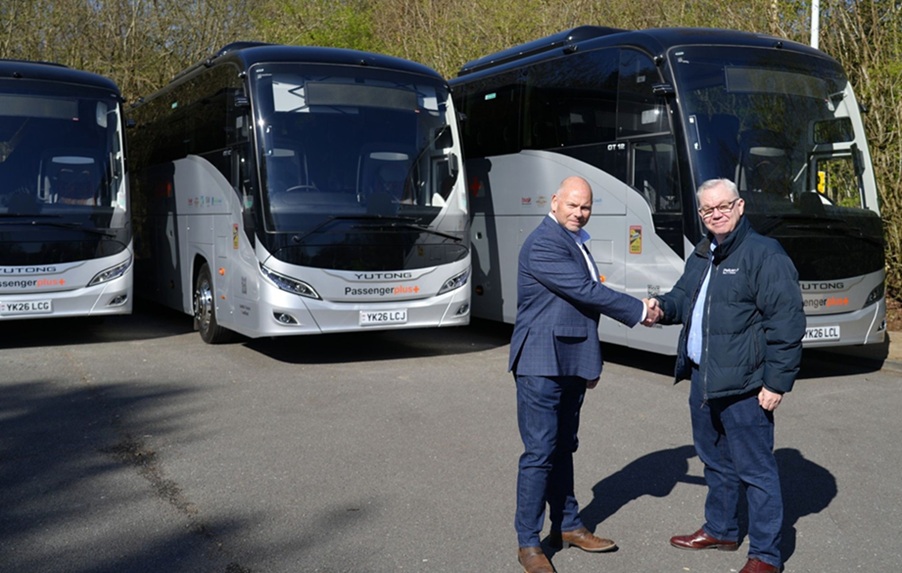
Passenger Plus has added a further three Yutong GT12 models to its fleet, supplied by Pelican Bus and Coach.
They follow what the operator says has been excellent performance from earlier examples of the type, and strong support from Pelican.
The new arrivals are finished in the business’s silver and black livery. Each has a camera monitoring system option in lieu of mirrors. Also fitted is integrated driver performance and safety monitoring.
Power is from the DAF MX-11 engine developing 450bhp coupled to the ZF EcoLife automatic gearbox. Interior trim is in a grey-based scheme with orange inserts on the seats.
Handover of the Yutong GT12 trio to Passenger Plus Managing Director Mark Drury (pictured, left) was by Pelican Area Sales Manager Steve O’Neill (pictured, right).
[adrotate banner="44"]

Yorkshire Rose Holidays takes delivery of its first Yutong GT14
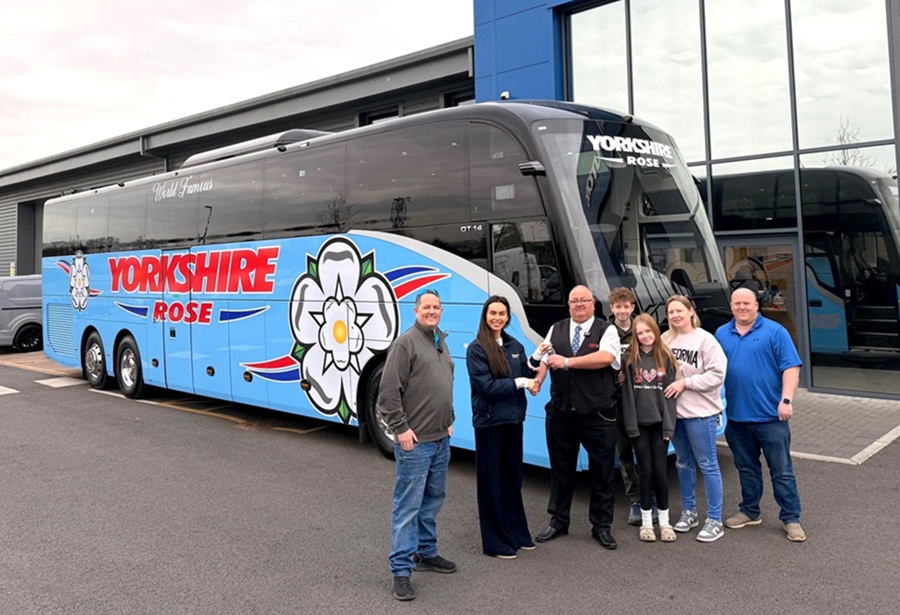
Yorkshire Rose Holidays has continued its favour of the Yutong marque with the purchase of a first GT14 diesel tri-axle, supplied by Pelican Bus and Coach.
The new arrival follows earlier TC9 and GT12 deliveries into the Barnsley fleet. It matches those coaches in the operator’s distinctive light blue-based livery and has prominent Yorkshire Rose branding and motifs.
Fitted are a camera monitoring system, USB-A and USB-C sockets along with 240-volt outlets, wi-fi, a Bosch entertainment system, and a 360-degree bird’s eye view of the exterior.
The interior trim is grey with blue piping, flecks and inserts for the seats. Interior feel is furthered by a high-specification lighting set-up that includes illumination above the luggage racks and within the sidewalls.
Power is from the DAF MX-13 engine developing 483bhp coupled to a ZF EcoLife automatic gearbox.
[adrotate banner="44"]
Jones Coach and Bus appointed dealer for Higer range by Harris
Jones Coach and Bus of Llanrwst has been appointed by Harris Bus and Coach as a partner to sell and support its Higer product portfolio.
The Conwy business is a sister to coach operator Llew Jones. Its addition to the Higer network is part of what Harris Bus and Coach says is a “rapid UK and Ireland expansion” and within a commitment to establishing a 50-location national footprint for Higer.
Jones Coach and Bus will deliver new vehicle sales on behalf of Harris as well as aftersales service and parts support. It has extensive infrastructure to back that responsibility, including multiple service facilities, bodyshop capability, recovery scope, and more.
Announcement of the North Wales business as a partner comes amid strong momentum for Higer products in the UK under Harris Bus and Coach, which now has examples of the V-10, V-12 and V-14 diesel coaches and battery-electric buses on the ground here.
It recently announced a five-year/500,000km warranty on new coach products and has outlined plans for further development of its bus range beyond existing Azure battery-electrics.
Forming a partnership with Jones Coach and Bus strengthens a network that Harris says will leave customers never more than 90 minutes or 150km from Higer support. Coupled to the warranty offer, the importer says that offers “an extremely compelling business proposition.”
Award-winning operator Llew Jones has more than 50 years’ experience in the sector. Such knowledge will bring real-world insight into vehicle performance and reliability and directly inform the sales and support approach to the Higer range, Harris Bus and Coach says.
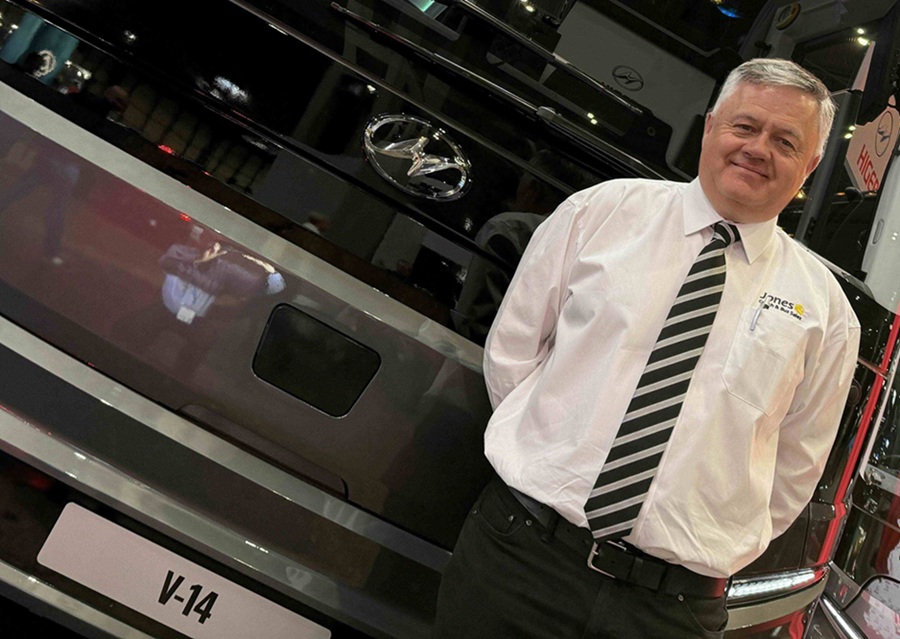
Steve Jones (pictured), who is Managing Director of Llew Jones and Director of Jones Coach and Bus, describes the collaboration with Harris as “a significant step for our business.”
He continues: “What sets this apart for us is that we are evaluating the product not just as a dealer, but as an operator with over 50 years’ experience. That gives us real confidence in what we are bringing to market.”
Llew Jones will take delivery of a first V-14 as part of the collaboration. That coach has been specified to suit touring, with 57 seats, a centre sunken toilet, and 13 cubic metres of luggage space. Mr Jones says that the 14m tri-axle model has strong appeal for the business.
“I am seriously impressed with the V-Series range, particularly the V-14,” he continues. “The specification fits hand-in-glove with our operation and the five-year warranty makes it impossible to ignore. There is massive potential for it in this sector.”