
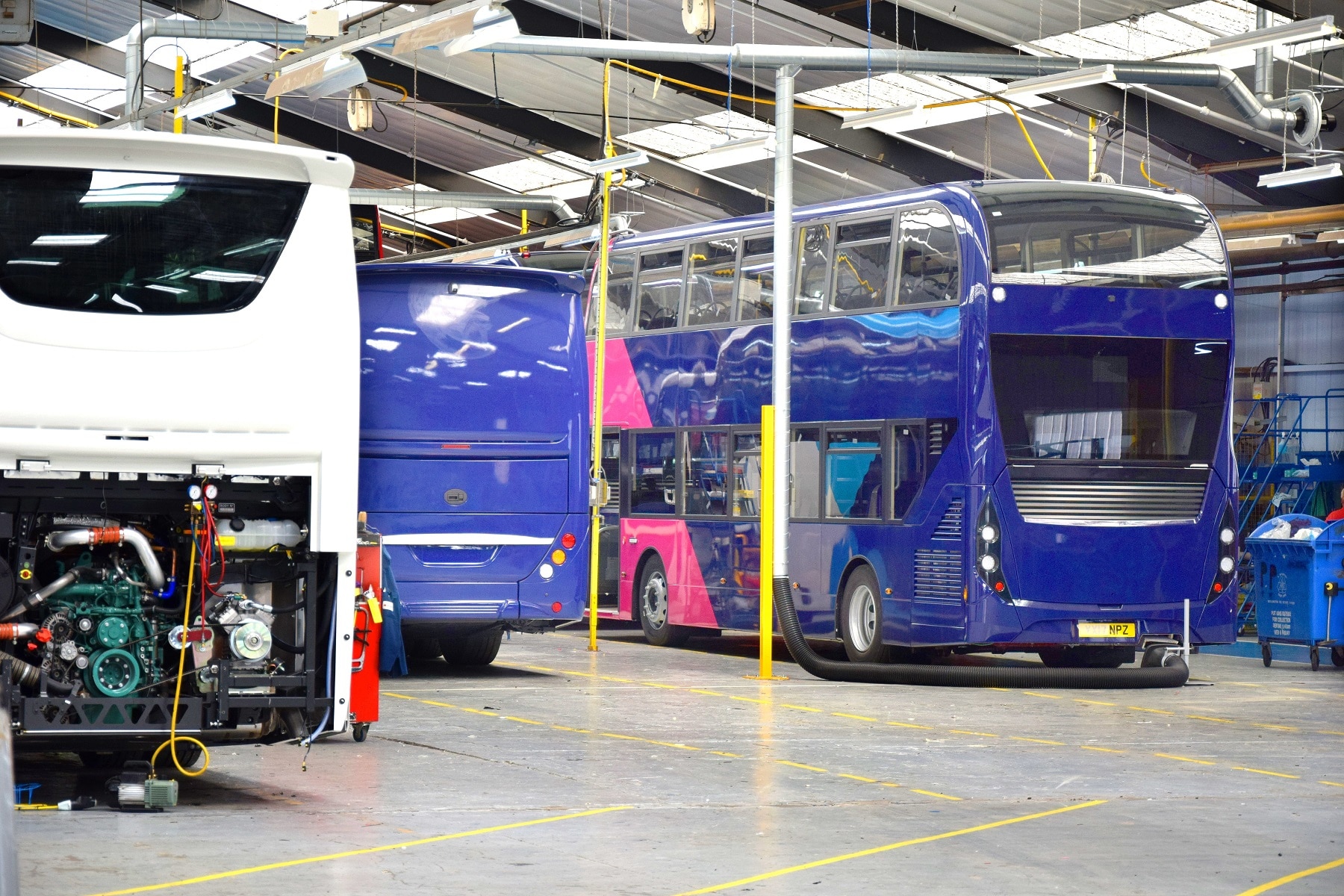
Diversity will win fight for talent, ADL HR chief tells industry
The fight for talent "is real” and employers with diverse and modern approaches are best placed to win it, Alexander Dennis Group Human Resources Director Rachel Smith told ALBUM conference delegates at the group's recent gathering.
That extends to both recruits that are already progressing their careers and those that are entering at apprentice and graduate level, Ms Smith explains. The bus industry “is not as diverse as it needs to be,” and negotiating that challenge will be a major task ahead of the sector over coming years, she adds.
ADL has seen the number of senior roles held by women grow considerably over the past five years, Ms Smith continues. A big part of that has come via work to highlight it as an employer of choice, and with educational establishments from schools to universities, as part of a focus on a younger generation of recruits.
“If we do not talk about the industry, people will not know about it,” she says. ADL has also worked hard to develop leaders from within, but there is an increasing importance on considering modern approaches and the removal of unconscious bias in the workplace.
A “command and control” managerial policy is no longer accepted by many employees. Instead, empowerment and flexibility - including hybrid working - is increasingly relevant, and existing managers need skills that reflect their current and future teams.
None of that comes easily, and Ms Smith accepts that the industry may still be laying barriers to some potential talent “without noticing.” However, the changes made by ADL to its approach have also been beneficial commercially. More home-grown employees have delivered a reduction in recruitment costs, she concludes.

Energy density a 'primary focus' for battery-electric bus OEMs
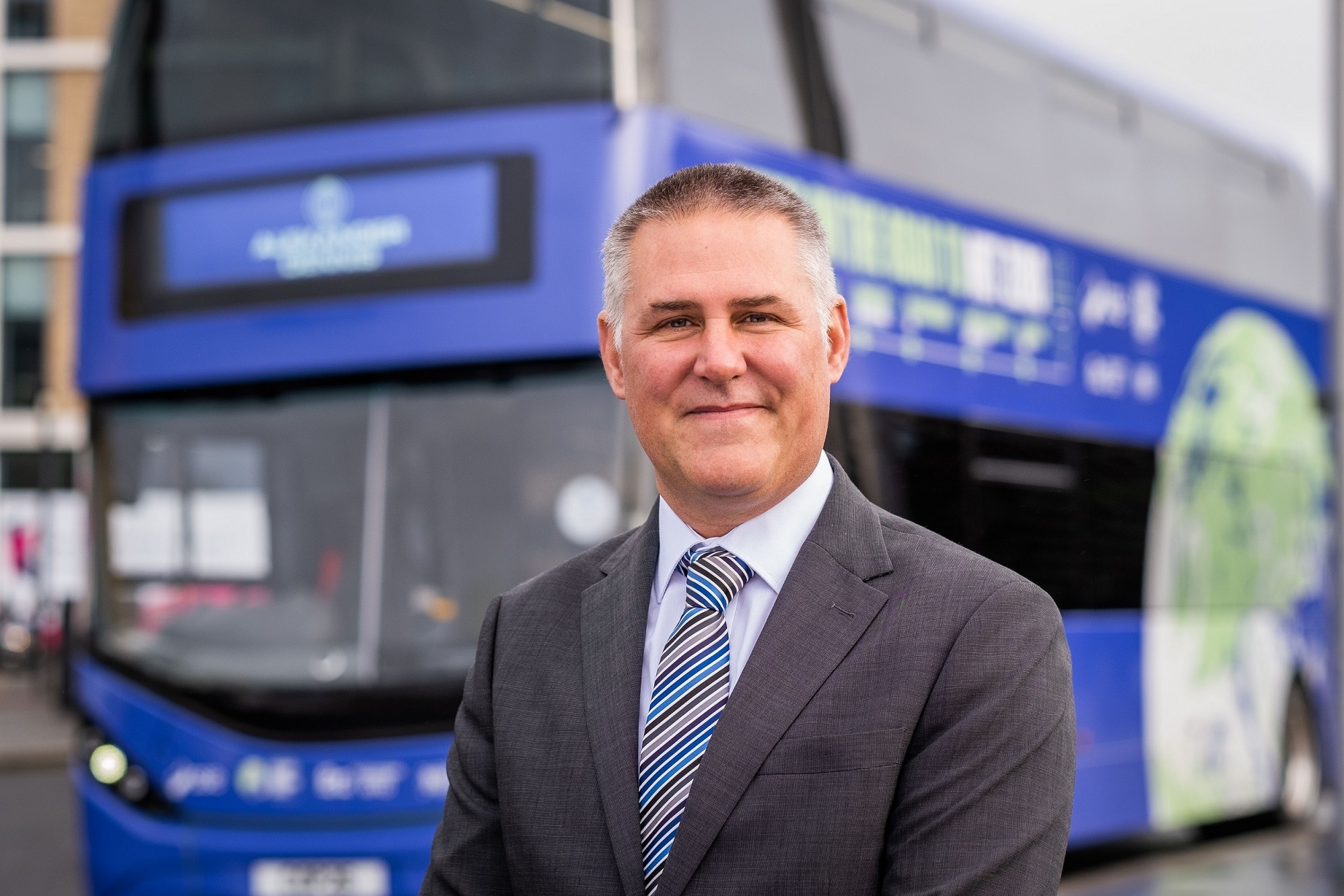
Increasing the energy density of batteries is a “primary focus” of bus manufacturers in the battery-electric segment, Alexander Dennis Group Engineering Director Chris Gall (pictured) told the ALBUM conference on 28 April.
Mr Gall - who joined ADL in 2021 - also notes that in addition to energy density, predictability of battery performance is a further imperative for the electric bus sector, and that such a position will allow vehicle OEMs to provide operators with “the best solution.”
Such work is already underway, he continues. Alexander Dennis predicts that over the next five to 15 years, energy density will increase by 50% and that the battery cost per kW/h will drop by around one-third from their current positions. Over a 15–30-year horizon, energy density is anticipated to grow to double what it is now, while cost per kW/h should reduce to one-third of its current level.
Such advances will allow increases in either range or passenger capacity, Mr Gall continues. Further major change to the total cost of ownership of battery-electric buses will come through the transition to solid-state storage. That is likely over the longer term and ADL has set its partners a target of achieving a 15-year battery life within that horizon, he adds.
But while energy storage is at the centre of ADL’s work on battery-electric vehicles, Mr Gall observes that improved overall efficiency is a further consideration. Much energy is consumed by the driveline and reducing that will also translate to greater range or passenger capacity.
Autonomy is a lesser consideration, and Mr Gall believes that it will likely come first in confined depot environments. However, the use of software to modify a vehicle’s response to driver inputs is another consideration. That would not disturb the feeling that the bus is still under the driver’s control but could increase efficiency significantly.
Irizar i6S efficient launched as 'the coach of the future'
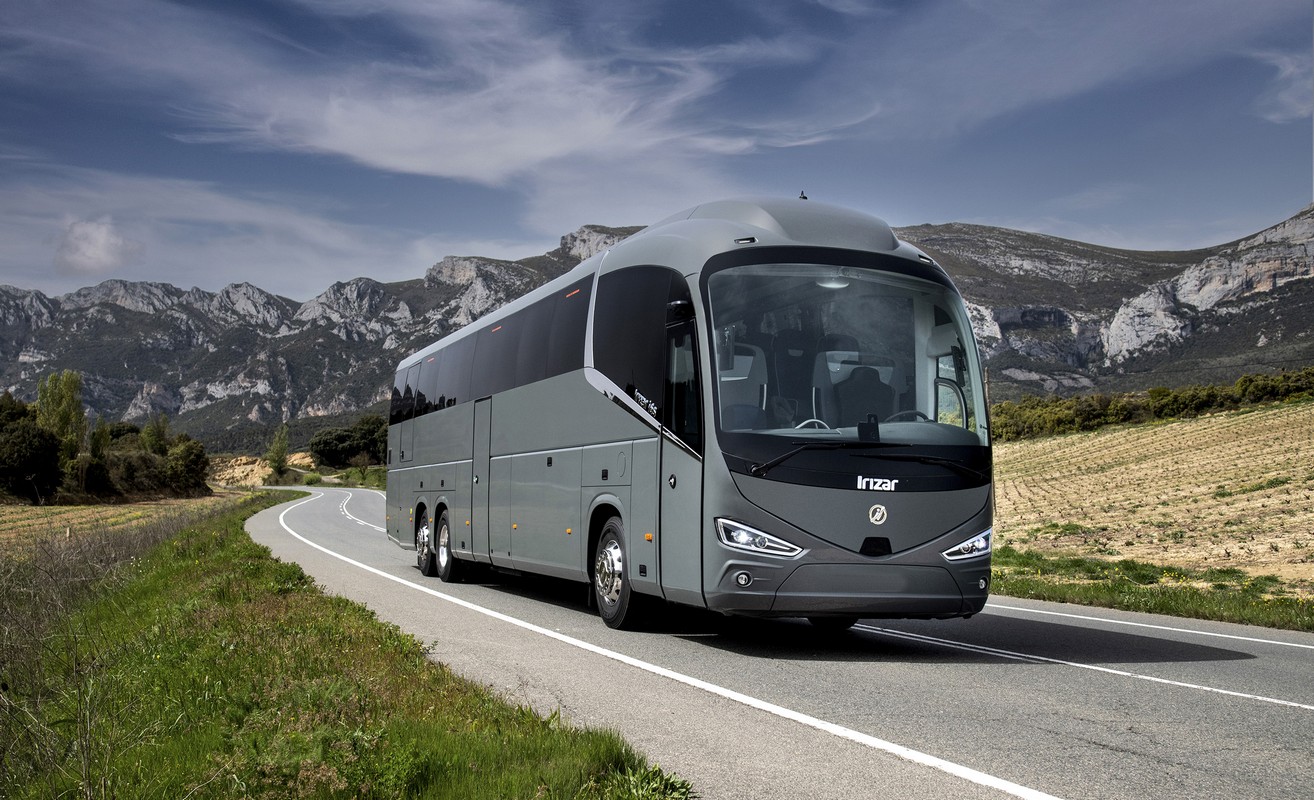
With promised reductions in fuel consumption and emissions of up to 13%, Irizar’s lighter and more aerodynamic i6S variant was unveiled last week. Is this another game-changer for the industry?
Irizar has unveiled its new i6S Efficient, a vehicle it describes as “the coach of the future.” The newcomer takes the established i6S model and introduces a number of improvements to deliver what Irizar says is a like-for-like weight reduction of 950kg. The i6S Efficient retains Irizar’s traditional design cues, but redesign work at the front and rear, and to the roof, has contributed to a reduction in its aerodynamic coefficient by 30%. A key element of this is a more pronounced curvature of the windscreen and the reworking of other front windows.
Irizar says that the combination of the weight reduction and improved aerodynamic coefficient will result in a reduction in fuel consumption and emissions of up to 13%.

Improved driver visibility
The traditional rear view mirrors have been replaced with digital vision cameras feeding through to two monitors in the driver’s cab. These modifications provide improvements in the driver's direct and indirect field of vision. Standard mirrors remain available as an option although going down that route will clearly affect the claimed improvements to fuel efficiency. The driver’s seat has also been moved forward slightly, something that Irizar says gives “excellent space, magnificent comfort and excellent visibility.”
The rear exterior of the coach and the rear window, bumper, panels, covers and doors also have significant modifications geared towards achieving better aerodynamic efficiency.
While the changes reduce the environmental footprint of the i6S Efficient, Irizar notes that they also cut running costs and deliver increased luggage carrying capacity and passenger space.

Reinforced structure
Weight reduction has come via analysis of every component in the vehicle and includes the use of high-strength steel and composite materials instead of traditional structural materials. The vehicle’s reinforced structure is said to improve its response to torsion, flexing and head-on collisions, as well as improving its passive safety.
Adding to the benefits of the new design, the weight of the vehicle has also been redistributed. The coach has completed extensive fatigue and durability testing.
A more efficient range of Hispacold climate control units features, along with a redesigned cab area. Efficiency is furthered by the new model’s connected architecture that includes remote diagnostics and self-diagnosis.
Irizar says that having the electronics in the central console means the accessibility of the controls and the virtual dashboard lets drivers interact with the vehicle and quickly obtain all the information they need and to access the entertainment and comfort system.
Connectivity systems have been developed by Datik and involve cloud storage of data and usage statistics relating to the coach.
Looking ahead, and in addition to being prepared for diesel, biodiesel, natural gas and biogas, Irizar says that the i6S Efficient is designed to be adapted to future zero-emission models. The new product will be available in two- and three-axle form in both DAF-powered integral format and as a body on Scania chassis supplied by Scania Great Britain. Length will be offered from 10.8m to 14.9m.

Touring the UK this summer
Julie Hartley, Sales Manager with Irizar UK, told routeone that the i6S Efficient will succeed the ‘conventional’ i6S in the Irizar UK integral range with the standard i6 remaining available as an ‘entry-level’ executive.
“We have a 12.9m, two-axle, 57-seat, PSVAR-compliant i6S Efficient in-build as a demonstrator,” she says. “We’re planning to take that around the country in the summer to show to operators, and then to have it on our stand at Euro Bus Expo at the NEC in November.”

Lee Wale, UK Sales Manager with Scania Great Britain, says: “We’ve very proud to be working with Irizar here in the UK, building vehicles together since 1992. We are therefore very excited about the launch of the i6S Efficient. It’s a coach that we will be offering in the UK with the new generation Scania chassis that will be launched later this year. We currently have in build in the factory a tri-axle version of the i6S Efficient that will be displayed at Euro Bus Expo at the NEC in Birmingham in November. Customers will welcome the fuel savings that the combination of our new generation chassis and the i6S Efficient will offer.”