
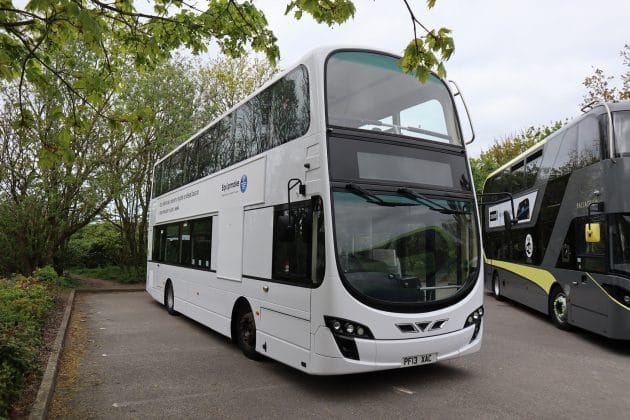
Equipmake debuts battery-electric repower on Volvo B5LH
Equipmake has debuted the first bus to receive its battery-electric repower package in the form of a Volvo B5LH double-decker. It was shown at the ALBUM conference in Blackpool on 26-27 April.
The former Preston Bus vehicle dates from 2013 and was built as a diesel-electric parallel hybrid. It now has the same electric driveline fitted by Equipmake to its Jewel E battery-electric double-decker. That includes the HTM-3500 single motor that delivers a maximum of 400kW. Battery capacity is 382kW/h and DC charging is via a CCS2 connection.
The Snetterton manufacturer says it is working on repowers for other models. It has underlined a belief first expressed by Managing Director Ian Foley in February 2021 that retrofitting existing diesel-fuelled vehicles to achieve zero emissions will play an “important and cost effective” part of the bus industry’s decarbonisation.
Equipmake adds that its repower programme involves an inspection of each bus type to ensure its adaptability to the scalable zero-emission driveline. When in full swing, up to five such conversions per week will be completed by the OEM, with a focus on ensuring that those vehicles are out of service for as short a period as possible.
Each repower is tailored to the operator’s requirements. Equipmake adds that guaranteed ranges of between 150-250 miles are achievable. The work costs less than half the price of a new battery-electric bus, it continues, which makes viable the repower of a diesel or diesel-electric hybrid bus “halfway through its working life.”

Adds Mr Foley: “Repowering is an important and cost-effective transitionary technology that can bridge the gap between diesel and a new electric bus fleet.
"We are delighted to showcase our new double-decker repower system, unveiled for the first time at the ALBUM conference on a Volvo B5LH.
“We know that there is a clear appetite for the technology, with strong demand from operators, which is leading to the expansion of our facilities in Norfolk. Alongside recent changes to BSOG [in England], we believe that interest will only increase and, next to the associated financial benefits of a repowered bus, such vehicles can very quickly bring cleaner air to every town and city in the UK.”

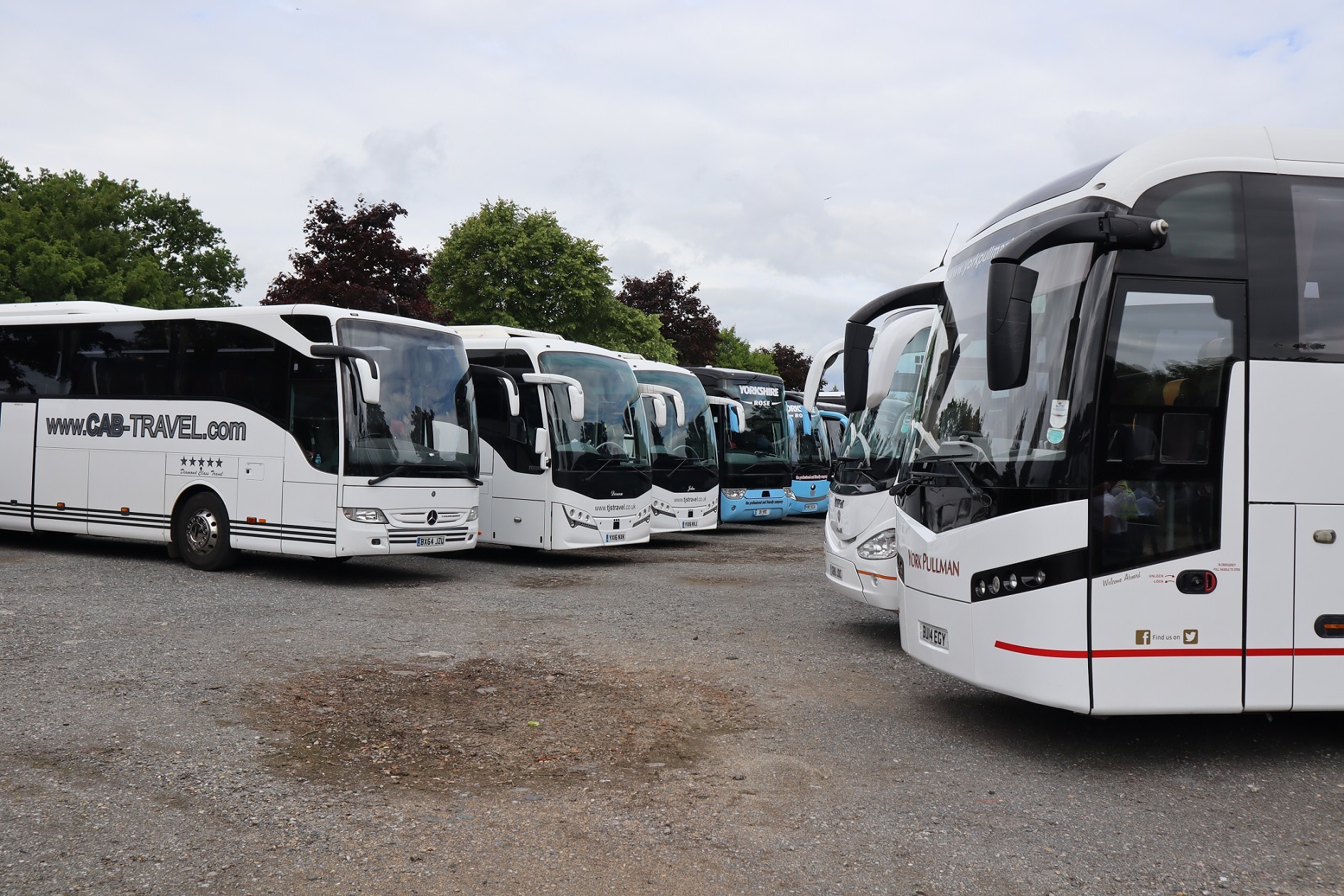
CPT calls on Sunak to slash fuel duty rate for coaches
Fuel duty applied to diesel used by coaches should be cut to the same 11.1ppl rate as incurred by the rail industry, the Confederation of Passenger Transport (CPT) has said.
That call was directed at Chancellor Rishi Sunak in a letter from Head of Policy Alison Edwards in late April. Diesel consumed by coaches is currently subject to the standard 52.95ppl rate of duty. Steep increases in costs over the past 12 months have hit the sector hard, and those must be mitigated for it to “continue to provide sustainable and reliable services that connect the public with education, employment and other essential services,” says Ms Edwards.
CPT has calculated that if the duty applied to fuel used by coaches was reduced as it is asking for, that would be worth approximately £260m per annum to the industry. That sits against a contribution to the economy from coaches’ tourism-related activities alone that reached £14bn in 2019, the Confederation estimates.
CPT’s figures suggest that in a typical year at the current rate of duty, the coach industry would contribute around £330m in fuel duty to the Exchequer. “It is only right that coach and rail are treated equally given their crucial role in delivering sustainable transport solutions,” Ms Edwards has told Mr Sunak.
“We ask that you correct this anomaly in the fuel duty system by putting in place fuel duty relief on diesel for all coach operators, so that coach pays the same amount as rail and is on a level footing,” she continues. Rising diesel prices have led to coach operators’ costs increasing “by 10% or more in some cases,” CPT says.
The Confederation wants to see its proposed cut to fuel duty for coaches applied permanently. In the short term, parity with rail would provide the industry “with breathing space." In the longer term, “it would allow the sector to continue its vital work in connecting communities, supporting tourism and giving the UK a greener transport network.”
The outright cost to the Exchequer of such a duty reduction would reduce over time as the coach industry improves its fuel consumption and transitions away from diesel, CPT continues. It says the latter work is being led by its Zero Emission Coach Taskforce.
Failure to assist the coach sector with fuel costs potentially compromises the viability of some of the services it provides, including home-to-school and rail replacement, Ms Edwards notes. They were the only two workstreams that Under-Secretary of State for Transport Baroness Vere described as “essential” among comments made in early 2021 that caused widespread anger in the industry.
Some coach services are now running at “a significant loss” because of spiralling diesel costs, CPT continues. As an alternative to the Confederation’s call for a major cut in fuel duty across the board for coaches, one operator earlier suggested that a diesel price escalator be applied to home-to-school contracts run on behalf of local authorities to reflect ‘real time’ fluctuations.
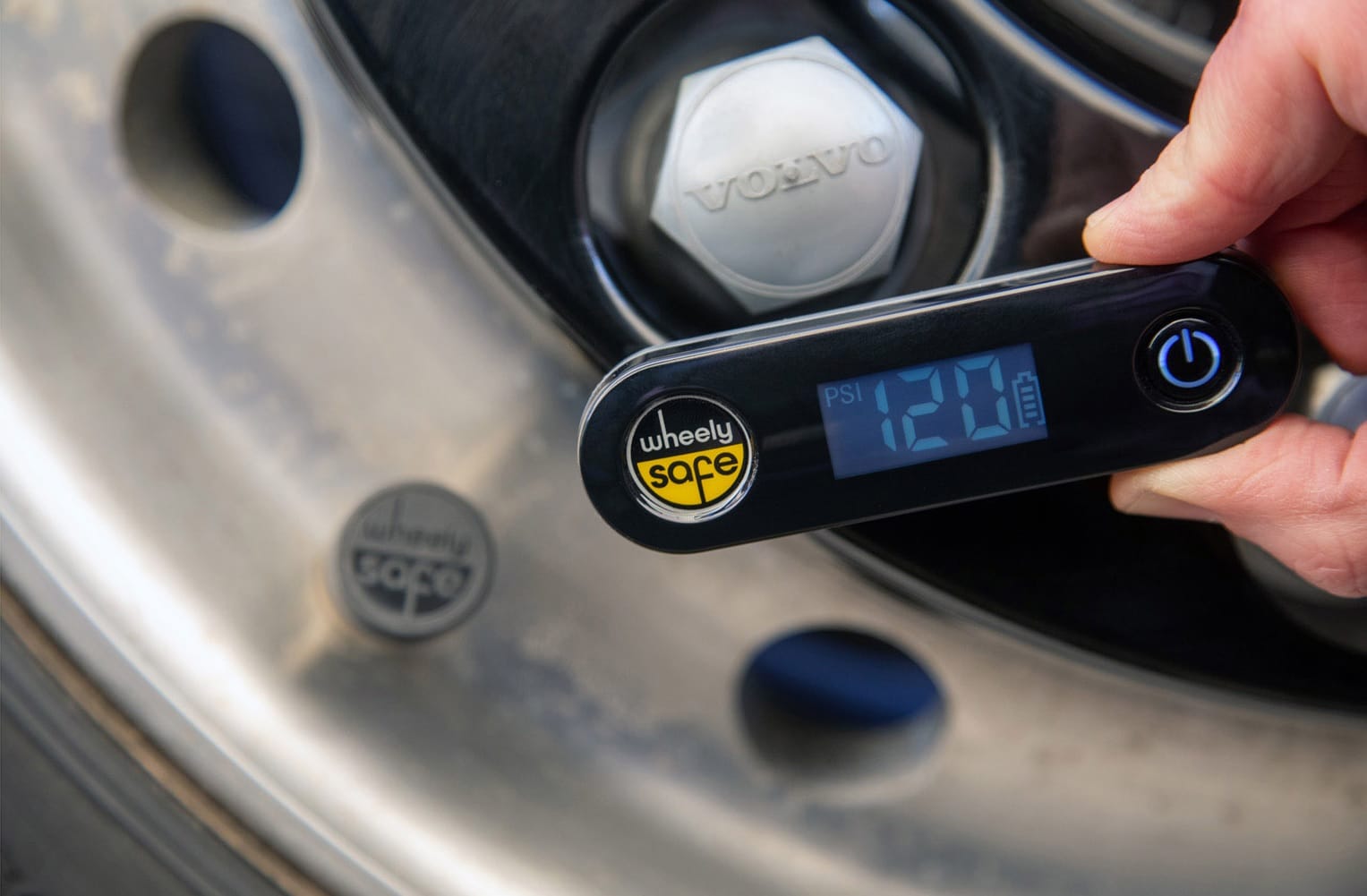
Freeway Fleet Systems integrates Wheely-Safe monitoring
Freeway Fleet Systems has integrated Wheely-Safe wheel security and tyre pressure monitoring into its fleet maintenance platform. It will deliver what Freeway calls “vital intelligence” to help improve the safety of coaches and buses by assisting with the prevention of wheel failures and tyre degradation.
Wheely-Safe’s unit detects the onset of wheel loss before detachment. If a wheel nut starts to loosen, a signal is sent to a display unit in the cab. It also incorporates a heat sensor to detect brake and hub issues involving low or high temperatures. Optional is an inbuilt intelligent tyre pressure monitoring system.
Freeway can receive wheel and tyre pressure data from the wheel-fitted device either directly via a vehicle’s telematics or CAN bus, or wirelessly on return to the depot. Tyre pressure data can also be transmitted to a driver’s mobile phone for recording via the Freeway walk-round check app.
Says Freeway Fleet Systems Managing Director Patrick Tandy: “Wheely-Safe adds crucial data to Freeway’s pool of vehicle maintenance data. It is all the more important as Wheely-Safe picks up defects that are not that evident to the human eye, and are therefore easily missed during driver first use safety examinations.
“Wheel loss is, of course, a particular worry, but whether reducing this risk or identifying incorrect tyre pressures, Freeway is very much a system that helps operators to improve safety while reducing unnecessary costs.”
Adds Wheely-Safe MD Steve Jackson: “Our patented and multi award-winning technology offers a full suite of protection against major road safety issues that no single solution has ever tackled before.
“Many of the UK’s largest public transport operators are already protecting their vehicles with Wheely-Safe, and working with Freeway as one of the driving forces in the digitalisation of fleet maintenance represents a perfect partnership for both of us.”