
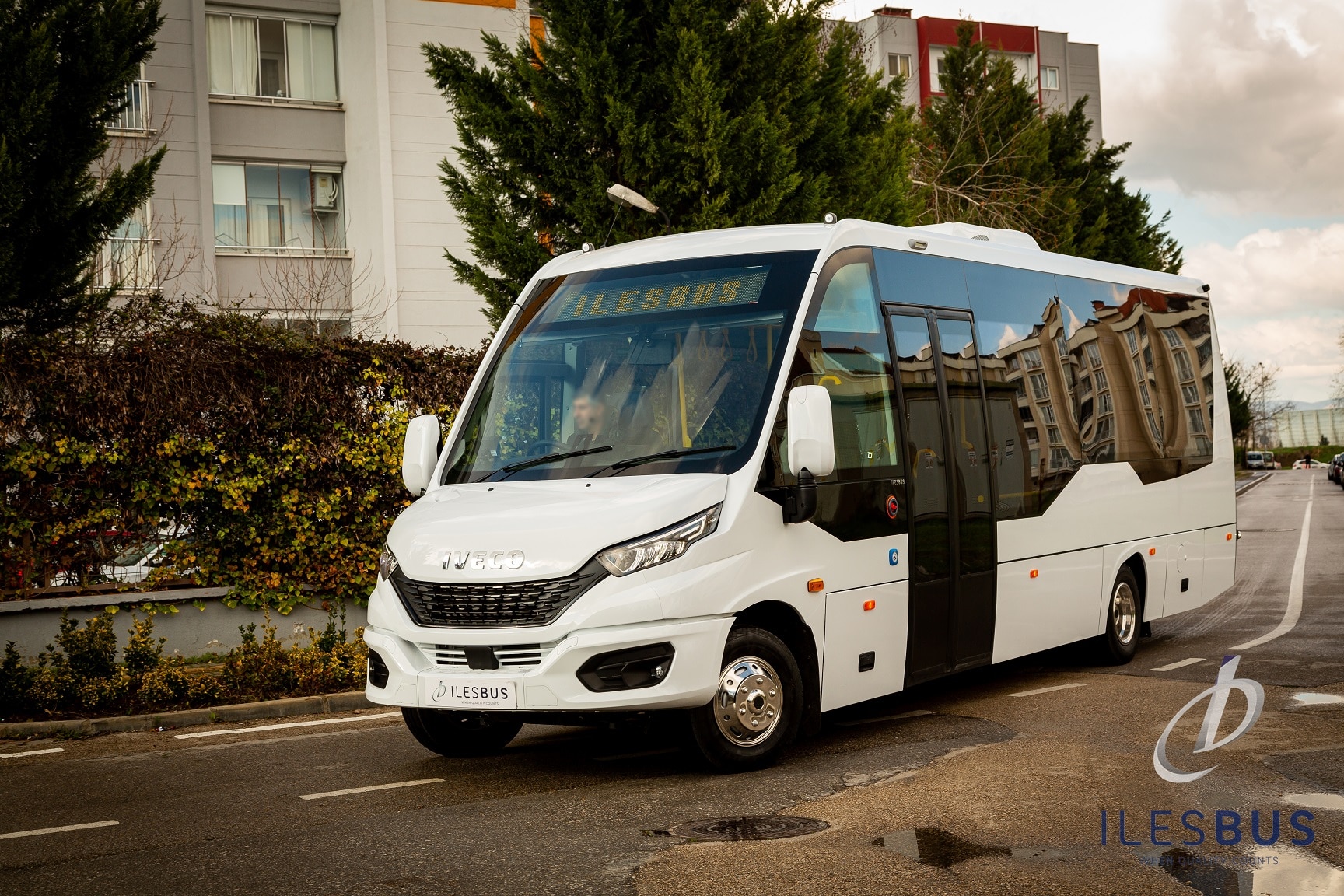
Ilesbus launches Iveco-based I-City Max low-floor midibus
Ilesbus UK has expanded its low-floor range with the introduction of the I-City Max. It is built on a front-engined Iveco Daily underframe and can carry a maximum of 32 seated passengers with provision for up to two wheelchair users.
The coachbuilt new product builds upon the existing low-floor I-City, which uses the Mercedes-Benz Sprinter as a base vehicle. In the I-City Max, Ilesbus’s factory in Turkey fits a longer and wider low-floor ‘box’ within the chassis area to deliver step-free access. The positioning of that module has allowed a Telma retarder to be fitted despite the need to route the prop shaft beneath it.
Four completed I-City Max vehicles are in transit currently, with the first to be delivered in the UK set to go to Runcorn operator Anthony’s Travel. Others have been sold, including a large batch for Ilesbus UK’s partner in Ireland JJ Kavanagh and Sons. One of the four is a demonstrator that the supplier expects to have available for trial in February.
“The I-City Max is a larger version of the I-City. The two models share a lot of design commonalities as we wanted to retain as much of the I-City's styling as possible in the larger vehicle,” says Ilesbus UK Sales Director Gary Johns. He adds that the new model is available at two lengths. In addition to the longer variant offering up to 32 seats, a shorter version gives a maximum of 25.
Ilesbus uses a Daily 70C21 chassis that is uprated to 8,000kg GVW for the I-City Max. It comes with a 210bhp engine and the Hi-Matic automatic gearbox as standard. Saloon air-conditioning and an auxiliary coolant heater are also part of the package, along with USB charging points at every seat. Ilesbus UK will supply the I-City Max with a Certificate of Conformity and it complies with PSVAR.
The new model also has rear air suspension and its seating choice extends as far as the range offered on Ilesbus’s mini and midicoach line-up. A boot as part of a coach-style rear is also fitted. The Iveco warranty is unaffected by the work to install a low-floor section.
“Customer demand has led us to develop the I-City Max,” adds Mr Johns. "The I-City was also based on demand, but some operators have told us that they wanted something to the same format but a little bigger.”
Video of the I-City Max available here.

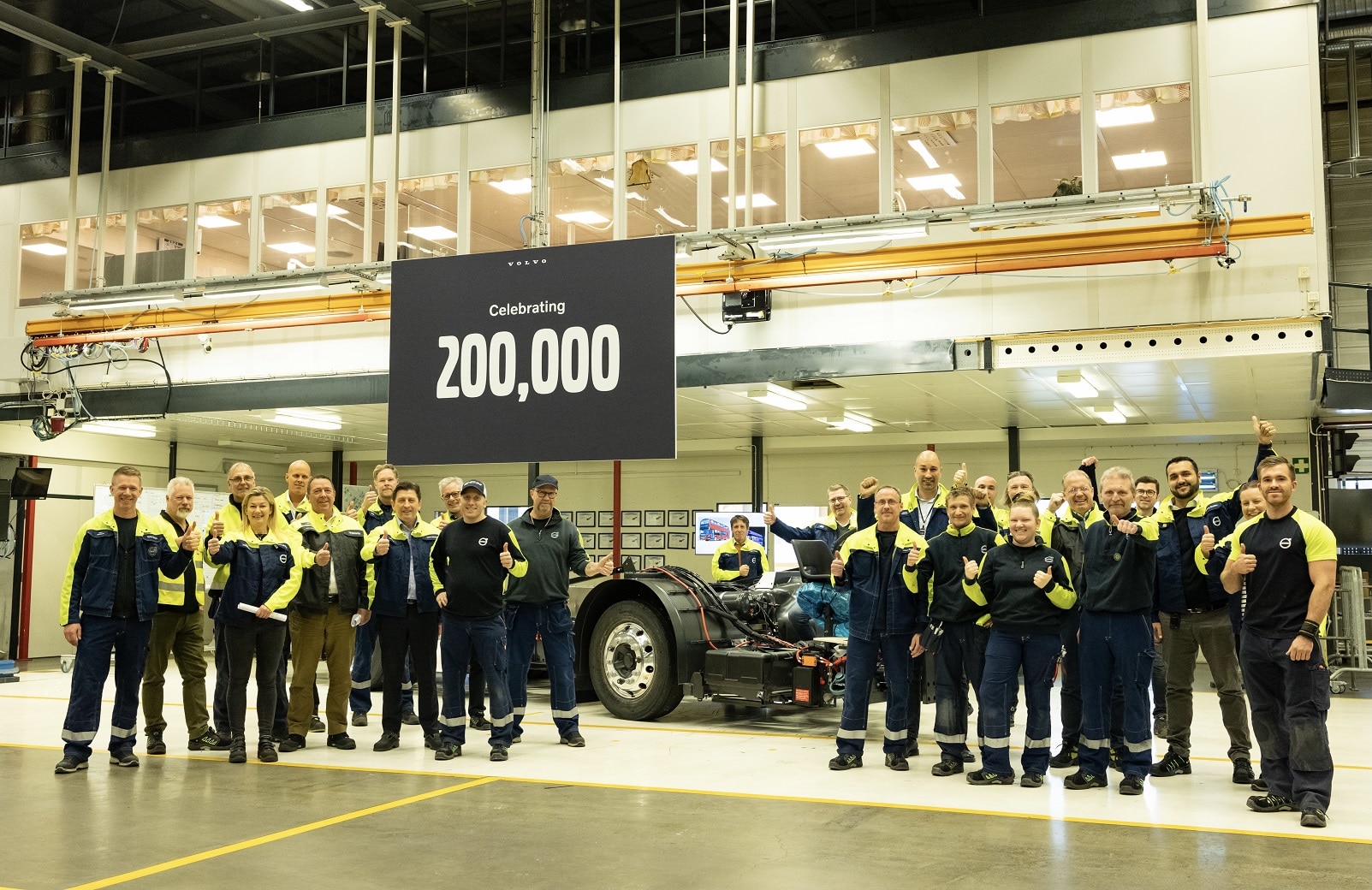
Volvo celebrates 200,000 coach and bus chassis from Borås
Volvo has celebrated production of 200,000 coach and bus chassis at its Borås plant in Sweden. The landmark underframe is a member of the BZL battery-electric bus range, one of over 50 models that Borås has manufactured for global markets since 1977.
Borås is Volvo Buses' industrial hub for chassis production. The OEM claims that it is one of the first bus manufacturing facilities in the world that relies solely on renewable energy, which is obtained from sources including hydropower and biofuels.
While the 200,000th chassis forms part of the BZL programme, a spokesperson says that was coincidence rather than planned. “But [it was] of high probability, since we are ramping up production after the recent launch,” they add. Volvo Buses President Anna Westerberg was present to witness it rolling off the line.
Popular models that have been constructed at Boras include the B7R and B7RLE and the B11R, but many operators and drivers will regard the B10M range - used in coaches and buses and in single-deck, double-deck and articulated applications - as its finest product. Some B10Ms were also manufactured in the UK in the late-1990s.
In addition to a transition to the use of renewable energy sources at Borås, other work has been carried out to reduce overall consumption and to minimise the facility’s environmental footprint. The factory currently has a capacity of approximately 10,000 chassis per year and it employs around 300 people.
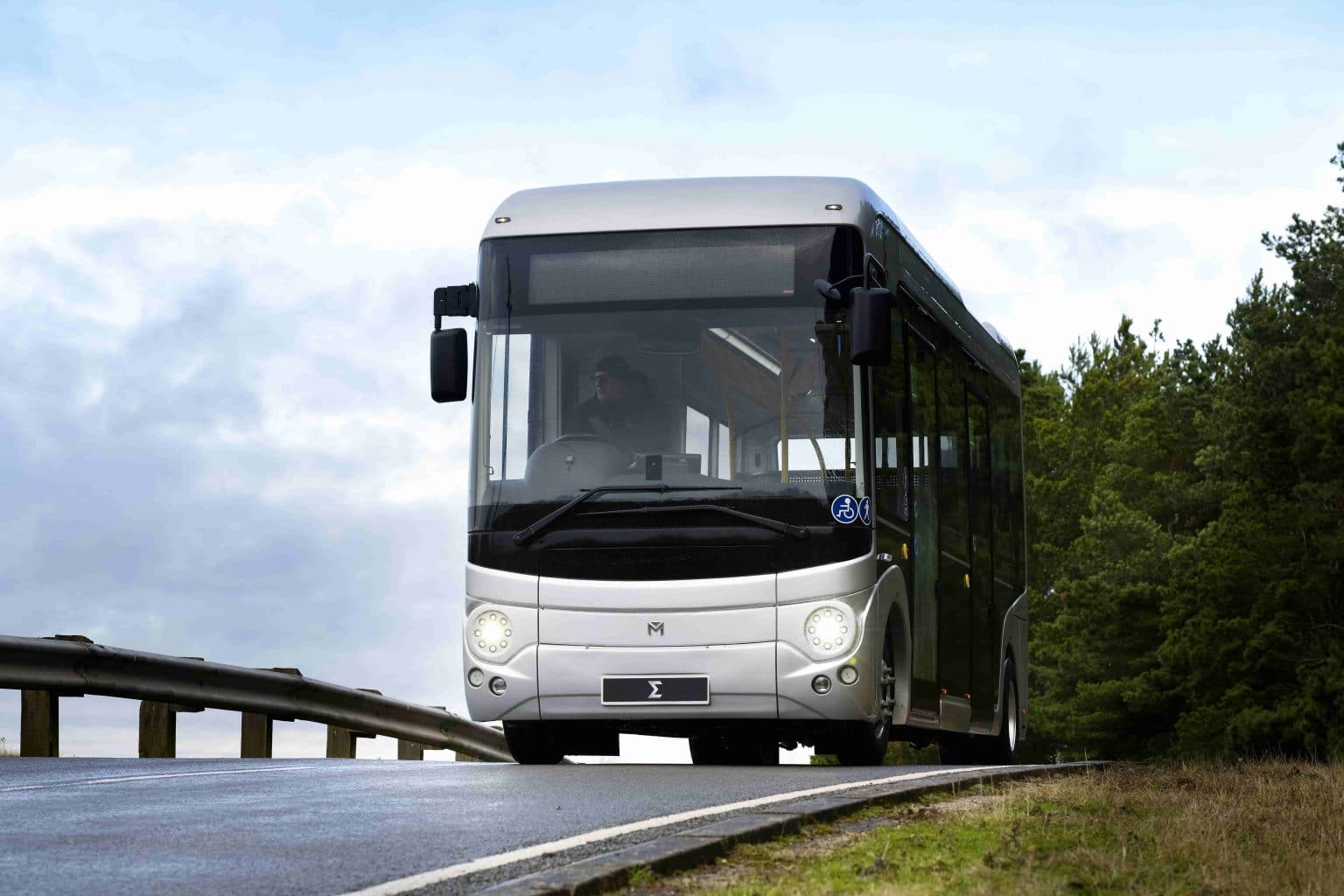
Mellor Sigma: Zero emissions with zero compromise?
On 9 December Mellor unveiled its new Sigma range of battery-electric vehicles. Size and weight reduction is at the heart of its design
What does 60 years of knowledge in the lightweight bus market look like when put towards a disruptive new design? routeone was able to find out in December 2021, when the veil was lifted on Mellor’s new range of battery-electric buses, Sigma.
Teased in the latter half of 2021, Sigma represents Mellor’s ambition to become a manufacturer of choice for UK operators of zero-emission buses. The two models introducing this all-new family (which will eventually comprise six vehicles of different sizes) are Sigma 7 and Sigma 10, being the 7m and 10m variants respectively. That nomenclature around nominal length will follow in the rest of the range, which will go up to 12m and cover weights of eight to 19 tonnes.
The first two models serve to show the logic behind Sigma and where it plans to position itself within the existing battery-electric bus segment. Key is Mellor’s long-time mantra of making vehicles that are “size and cost appropriate”, with smart weight and size reductions leading to what Mellor repeatedly has described as a “virtuous circle” of efficiency.
Here routeone takes a look at the two introductory models, the theory behind their design, and Mellor’s ambitions for their success.
Sigma - smaller size a natural fit?
Sigma will eventually see a phased introduction of vehicles in seven, eight, nine, 11 and 12 metres. According to Mellor, that will deliver one of the largest ranges of low-floor battery-electric buses from any European manufacturer and puts the brand firmly in the midibus segment serving the UK and overseas.
The smallest vehicle in the range, Sigma 7, will touch the retail, local authority and fleet markets at different levels. While the example model is equipped with two doors for durability test requirements, Woodall Nicholson bus division Managing Director Mark Clissett expects most Sigma 7s to be specified with a single door configuration in a 15-seat capacity with 15 standees. “The whole philosophy around the Mellor vehicle product range is around it being size-appropriate and cost-appropriate,” he explains. “We’ll see fleet operators running [Sigma 7] in areas where either electric vehicles (EVs) are uneconomical because of the cost of the vehicles they need to operate, so they drop the service, or they run a completely inappropriately sized vehicle.”
Of note is Mellor’s belief that the Sigma 7 provides an answer to larger operators of rural routes struggling to find appropriate EVs in terms of width, length, seating and standing capacity. When it comes to granting funds to zero-emission vehicles, Sigma 7 hopes to give local authorities and operators access to vehicles better suited to those applications and the funding allocated for them. The bus will be a natural fit for local authorities used to using and operating 7m and 8m buses: “Very few local authorities are operating large buses, so as a result often they’re running multiple small vehicles – two or three van conversions – so I think that’s another market for Sigma 7,” adds Mark.
Another market for the Sigma 7 will be within larger retail organisations and for corporate clients interested in off-site parking and shuttle services at distribution and warehouse facilities. Sigma 10, meanwhile, is touted as an ideal EV service bus for urban applications and airport shuttles.
Reduced batteries, maximum range

The emphasis for the range has been size and weight reduction combined with smart engineering to allow for smaller battery capacity and reduced energy consumption. Regardless of size, the range on a single charge for the Sigma family is a claimed 160 miles, with battery capacity varying from Sigma 7’s 114kW/h to an expected 420kW/h on Sigma 11 and 12.
The reasoning behind reduced battery capacity and lighter vehicles is based on customer feedback. “We wanted to work on a principle of what our customers are telling us they need,” Mark says. “Typically our competitors will take a diesel bus and introduce a battery and electric driveline into it. We feel that brings the inefficiencies, weight and production issues of a diesel bus to one which now has a battery and motor in it.
“By starting with a blank sheet of paper, we can engineer lightness into the vehicle from the beginning. The whole philosophy in Mellor starts with us making it as light and strong and durable as possible. When it’s light, it uses less energy.”
Sigma 10, for example, uses a battery pack rated at 210kW/h, significantly less than one equivalent competitor’s bus at a similar length, yet relies on weight savings (being rated at 16,500kg GVW) for reduced energy consumption. This also reduces the vehicle charge time to approximately 1hr25mins.
To keep vehicle weight down, Mellor has relied on tried-and-tested methods from its 60-year history of manufacturing vehicles. All Sigma buses are made from duplex stainless steel, resulting in a design that is “lightweight and strong”. Other measures include weight-reducing carbon fibre finish, composite flooring, and lightweight axles.
We never believe that we’re at the bottom of the bucket in terms of where we can get with that weight. Every kilo is a prisoner to us in the design process.
“When you start with this weight saving circle and you look at every facet of the vehicle built, every kilo that you save helps you,” Mark says. “You get to this virtuous circle of weight saving and we never believe that we’re at the bottom of the bucket in terms of where we can get with that weight. Every kilo is a prisoner to us in the design process; we want each one off the table without compromising the robustness or the components within the vehicle.”
Woodall Nicholson Chief Technology Officer John Randerson, whose team has been instrumental in engineering in those efficiencies, points out that if batteries on a vehicle are reduced by 40-50%, that cost is also money saved into operators’ pockets – as well as into taxpayers’ pockets funding the gap from internal combustion engines to EVs. “We’re doing it now with Zero Emission Bus Regional Areas scheme funding,” he says. “It’s been an interesting journey to drive to a cost model that, from acquisition to cost of ownership, asks if there is an energy benefit. And of course there is, because we’re not putting in energy to cart extra batteries around on a platform where we don’t need to.”


Virtuous circle
Weight reduction is part of a philosophy that Mark describes as “zero emission, zero compromise”, and leads to cost reductions throughout the ownership experience. “We have not compromised on anything to get the weight reduced,” he says. “It’s because of some of the more exotic materials that John and his team have been using to design and engineer the vehicle.”
The result of reduced charging times from the energy benefit will therefore have a positive knock-on effect on charging infrastructure. Shorter charging times means opportunities to charge vehicles almost back to full capacity during drivers’ breaks, and may even remove the need to replan routes and driver shifts. There are also, Mellor suggests, savings in infrastructure to be made – with vehicles able to spend less time at charging points, money otherwise spent on charging infrastructure could instead be used for more vehicles.
Mellor claims the reduced size also provides a smoother and quieter ride for passengers and one that is less fatiguing for drivers due to reduced vibration and noise. There are also lower maintenance costs associated with smaller sizes: One example being the use of 17.5in tyres on Sigma 7 and 19.5in on Sigma 10, as opposed to a more industry typical 22.5in tyre size.

Could it also be addressing a perceived gap between sevenmetre and 10-metre buses? John believes so, owing to the nature of how each Sigma design is unique, rather than being a shortened version of an existing, longer model: “Sigma 8 is not Sigma 10,” he says. “Each vehicle is built from the ground up. When you look at the specifications, you will see a different rear axle in a Sigma 8 and Sigma 9 to what you see in a Sigma 10. You will see a different rear axle between a Sigma 7 and a Sigma 8. Every model has been developed to give the best possible performance, lightest weight, and maximum carrying capacity at the lowest cost base.”
Vehicles are fitted with known industry standard products. Construction takes place both with the firm’s partner in China and in the UK, and will play a key role in Mellor’s new Scarborough production facility. Construction of components is in partnership with Webasto, ZF, Dana and Ventura, offering full European Type Approval.
A new journey

Mellor is particularly proud of the fact each vehicle began life as a blank canvas. That means each vehicle has been fully optimised based on its own design brief, and it says components have been chosen not due to production volumes but to make the greatest efficiencies in each model.
“When you have a blank piece of paper you can look at construction methods and materials that you wouldn’t normally look at,” John explains. “We have a background in the Mellor and Treka organisation of weight because our products, for years and decades, have been constrained by weight. And our customers, for years and decades, have demanded that we stretch maximum value for their operations by giving them maximum carrying
capacity.
“When you have a team of talented people that think in those ways and have a blank sheet of paper, what comes out of the other end in terms of a design of a bus is lightweight by design. We carry the same number of passengers, and we’ve optimised the vehicle to give operators the best of all worlds.
“Operators are under significant pressure – we have an agenda that is driving the introduction of zero-emission buses. Government grants and government funding will assist, but it’s our job to help as well. We think that our skillset could best be deployed in developing this range of vehicles because we understand what it’s like to make a lightweight, robust, serviceable product, that is cost-effective and cost-appropriate. Those aren’t buzzwords that come out of the Mellor organisation; it is what we do. And because we’ve done it for so long in diesel format, I would say we found a relatively easily pathway to these products. It’s been a lot of work – but here they are.”
Start of the journey
 Mellor has talked about entering the EV market for a number of years, and the introduction of Sigma follows on 18 months from concept. This was aided by Mark’s return to parent Woodall Nicholson last year, releasing John from his day-to-day responsibilities for the Mellor and Treka businesses. “That allowed me very much to focus on technology, the growth of the ProMech division, invest in the people, and premises that are required to deliver in a practical sense these products,” John says.
“We’ve been on an 18-month journey rearranging our business, getting key people into position, allowing me to grow the engineering team further. We already have a very strong engineering platform. Working with some fantastic professionals ahead of this launch, and by that I mean aftercare and customer support people, the sales team and the marketing team, all of this has been planned meticulously for a significant period of time.”
For 60 years Mellor has been
living in a world where its
philosophy around cost- and
size-appropriate vehicles is writ
large with everything it does
For Mark, 18 months from concept to two of a range of six working buses is phenomenal. And he stresses that Sigma is not an existing product that has been rebadged. “For 60 years Mellor has been living in a world where its philosophy around cost- and size-appropriate vehicles is writ large with everything it does,” he says. “So the leap of faith was not that great of a leap, but for some of our competitors it would be an anathema to them. Likewise, if someone asked us to build us a heavy bus, we wouldn’t know what to do.”
The business is trying to be realistic in its approach to sales and has already secured orders in left-hand and right-hand drive formats. Mark says the business would be disappointed in the coming years not to move 200 or more units annually from a standing start. “Then who knows,” he adds. “Beyond that, I think our capacity for production within our partner is almost limitless. Our imagination is what might hold us back, and our desire to not compromise by chasing volume – but this is making sure we’ve got the very best product and we will enhance the product. It’s almost like our customers are our regulator – they drive a lot of the change. If they come back and say there’s an issue, we’ll find a solution.”